

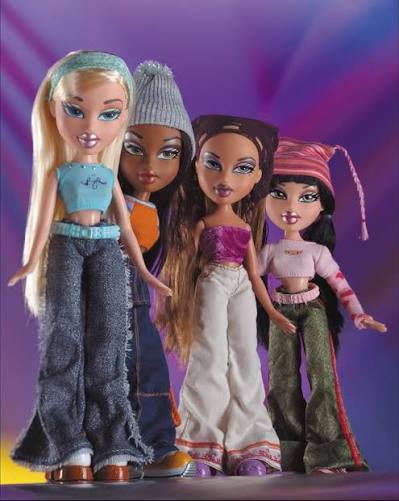
A federal judge once ordered a toy company to pull an entire product line off every shelf in America and hand the brand itself over to its biggest rival. That’s not a hypothetical worst-case scenario for MGA Entertainment — it actually happened, on paper, before an appeals court stepped in. The fight was over Bratz, the pouty-lipped, oversized-eyed dolls that launched in 2001 and cut hard into Barbie’s market share. What followed was one of the strangest reversals in toy industry legal history, and the numbers involved are almost cartoonishly large for a fight that started over sketches one designer drew on his own time.
How a doll line became a $100 million verdict
Mattel sued MGA Entertainment in 2004, arguing that Bratz creator Carter Bryant had designed the dolls while still employed at Mattel, meaning the company technically owned the concept under his employment contract. A Riverside jury agreed. In July 2008, that jury awarded Mattel $100 million — far short of the $1.8 billion Mattel had actually sought, but enough for Mattel’s lawyers to press for something far more damaging than money.
The district judge granted it. The court didn’t just order MGA to pay damages — it ordered the company to stop selling Bratz products entirely, recall dolls already on store shelves, and transfer ownership of the entire brand to Mattel. For a company where Bratz was the flagship product, that ruling amounted to a corporate death sentence dressed up as a copyright remedy.

The stay that kept Bratz alive
MGA didn’t get the chance to comply — or rather, it never had to. On December 10, 2009, a three-judge panel of the Ninth Circuit Court of Appeals stayed the recall and brand-transfer order, giving MGA more time on shelves while the appeal played out. MGA’s CEO Isaac Larian called the stay a win for fair competition; more practically, it meant the company kept its core business alive through the appeal rather than watching it get seized before a higher court could even weigh in.
The Ninth Circuit didn’t just delay the damage — it eventually undid the whole verdict. The appeals court ruled that the district judge had erred by automatically granting Mattel ownership of the Bratz concept based on Bryant’s employment agreement alone, and sent the case back for a retrial.
The counterattack: $309 million the other way
The retrial in Santa Ana in 2011 flipped the entire case. This time the jury rejected Mattel’s trade secrets claims outright and instead found that Mattel itself had engaged in corporate espionage — sending employees to spy on MGA’s designs and marketing plans at toy trade shows using false credentials. The jury awarded MGA roughly $88.5 million in damages, and because it found Mattel had acted willfully and maliciously, the judge had grounds to add punitive damages on top.
By the time the dust settled, a federal judge finalized MGA’s total award at more than $309 million on August 4, 2011 — $85 million in reduced jury damages, another $85 million in punitive damages, and $137 million in attorneys’ fees layered on top, a bill Mattel was left to pay after nearly forcing MGA out of business seven years into the fight.
Two companies spent the better part of a decade and hundreds of millions of dollars arguing over a doll line, and the side that started out with a court order strong enough to erase its opponent’s flagship product ended up writing the bigger check. The industry rarely gets a cleaner demonstration of how far a copyright case can swing between a trial court and an appeals court — from corporate death sentence to nine-figure payout, without a single doll ever leaving the shelf.

Leave a Reply