


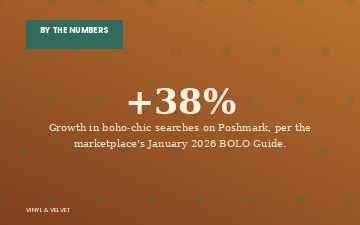
Boho-chic resale is up 38%, according to Poshmark’s own January 2026 BOLO (Be On the Look Out) Guide, the platform’s periodic report flagging which categories its sellers should be sourcing and stocking. For a style associated with two very different decades — the original 1970s boho movement and its early-2000s festival-era revival — the current spike suggests both eras are being chased by resale shoppers at once.
What Poshmark’s BOLO Guide Actually Tracks
Poshmark’s BOLO Guide is built directly from platform data — what shoppers are searching, saving and buying — and is published periodically to help the app’s community of individual resellers decide what to prioritize when they’re sourcing inventory from thrift stores, estate sales and their own closets. Because it comes straight from the marketplace rather than a third-party trend forecaster, it functions less like a style prediction and more like a real-time snapshot of what’s already moving. A 38% jump in boho-chic search and sales activity, in that context, reflects actual buyer behavior rather than an editorial guess about what’s coming next season.
Two Eras, One Aesthetic
Boho style first took hold in the late 1960s and 1970s, drawing on flowing silhouettes, paisley and floral prints, suede fringe, and an eclectic mix of embroidery and folk-inspired accessories that stood in deliberate contrast to structured, formal dressing. It resurfaced hard in the mid-to-late 2000s, when a wave of it-girls associated with the Coachella festival circuit — flowing maxi dresses, fringed suede bags, layered turquoise jewelry, floppy hats — turned the look into a defining silhouette of that era’s celebrity street style. Both versions of boho share the same core vocabulary: natural fibers, visible craftsmanship, and an intentionally undone, lived-in quality that resists anything too polished or corporate.
That shared vocabulary is likely part of why resale demand is climbing across both eras simultaneously rather than favoring one decade over the other. A fringed suede vest from 1974 and one from 2007 can serve nearly the same purpose in a shopper’s closet today, which widens the pool of items that qualify as “on trend” and makes the category easier for resellers to source consistently rather than chasing one narrow micro-era.
What Sellers Should Be Sourcing
Following the BOLO Guide’s own logic, the categories most likely to benefit from this spike are the ones that read as unmistakably boho at a glance: fringe-trimmed suede jackets and bags, crochet and macramé pieces, paisley and floral maxi dresses, embroidered peasant blouses, and layered turquoise or beaded jewelry. Denim also plays a role here — flared and bootcut styles, patched or embroidered, sit comfortably within the boho silhouette and overlap with the broader bootcut resurgence resale platforms have been tracking across multiple categories this year.
Condition and authenticity details matter more in this category than in some others, since boho pieces were often handmade, hand-embellished, or produced in smaller runs by independent designers rather than mass-market labels. Visible hand-stitching, natural fiber content, and any maker’s tags or labels from independent boutiques tend to signal genuine vintage sourcing rather than a mass-produced reproduction, and sellers who highlight those details in their listings are likely to see stronger results as this category continues to climb.
Why Boho Keeps Cycling Back
Part of what makes boho such a durable resale category, compared to more tightly dated trends, is that it was never really about a single silhouette. Where a specific cut of jeans or a particular sneaker model can feel dated the moment its decade is over, boho’s core appeal — natural materials, visible handwork, a mix-and-match approach to prints and textures — translates across eras with only minor adjustments. A shopper today can pair a 1970s suede vest with a 2000s peasant blouse and a pair of contemporary boots without the outfit reading as costume-y, which isn’t true of most other resale categories currently trending.
That flexibility also explains why Poshmark’s BOLO Guide treats boho as a category worth flagging repeatedly rather than a one-off spike. Categories that resurface across multiple guides tend to represent steadier, more foundational shifts in what shoppers want in their closets, as opposed to a single viral moment tied to one influencer or one red carpet look. A sustained 38% increase, tracked directly from real search and purchase behavior rather than social media buzz, suggests boho’s current moment has more staying power than a typical seasonal fad.
Whether this particular climb holds steady through the coming seasons or proves to be tied to a specific cultural moment, Poshmark’s own data makes one thing clear: boho isn’t a single trend cycle anyone can neatly date. It’s a recurring aesthetic that resale shoppers keep returning to, whichever decade the pieces happen to come from.

Leave a Reply