

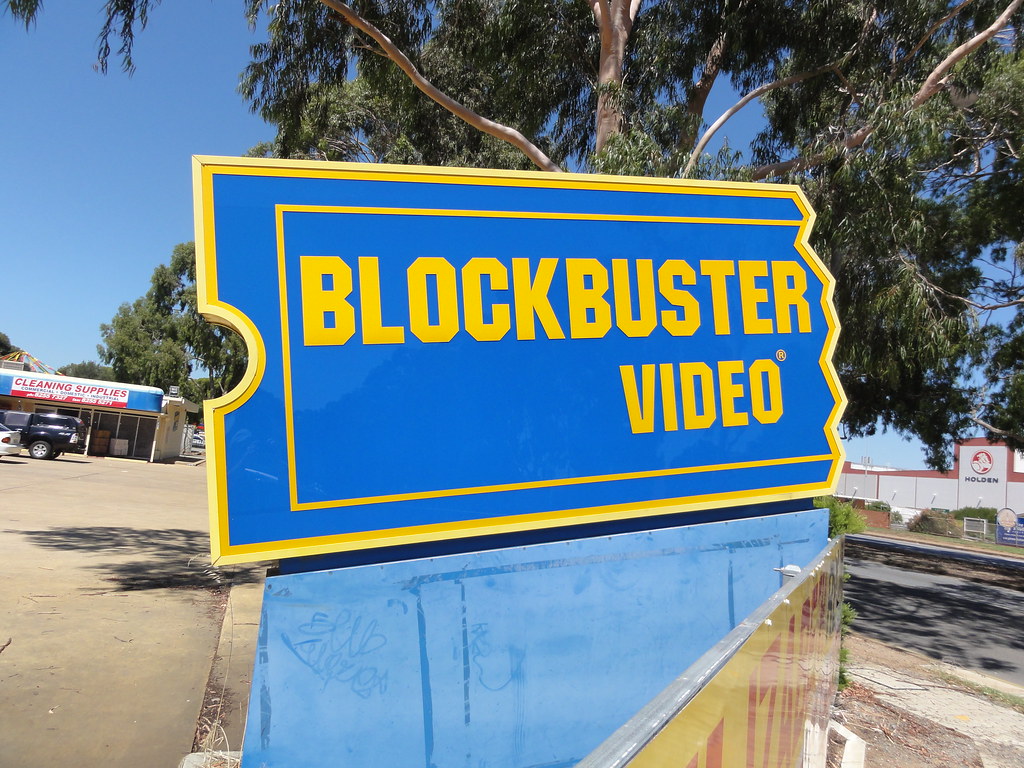
Blockbuster opened its first store in Dallas in 1985 and, at its peak, operated roughly 9,000 locations worldwide — a rental chain so dominant that renting a movie on a Friday night was practically synonymous with the blue-and-yellow ticket-stub logo. Today exactly one of those stores is still open, in Bend, Oregon, and it has become enough of a cultural landmark that it inspired its own Netflix documentary — a detail that lands with a specific irony once you know how the story actually ends.
The Deal Blockbuster Turned Down
The most-cited turning point in Blockbuster’s decline is a meeting that, by most accounts, took about as long as a movie itself. Around 2000, according to NPR’s reporting on the rivalry, Blockbuster repeatedly turned down the chance to buy Netflix — then a small, unproven mail-order DVD startup — walking away from what would become one of the more expensive corporate misjudgments in retail history. Blockbuster wasn’t wrong that its own business, built on thousands of physical storefronts and reliably profitable late fees, looked far more solid than a mail-subscription upstart in 2000. It was wrong about how fast that would change, and how little time it would have to course-correct once streaming entered the picture on top of the DVD-by-mail threat.
By 2007, Netflix had become a serious competitive threat rather than a curiosity, and the gap only widened from there. Blockbuster spent the back half of the 2000s trying to retrofit itself — its own DVD-by-mail service, an in-store kiosk push, and, starting January 1, 2005, eliminating the late fees that had defined the rental experience for two decades. That policy shift alone shows how cornered the company already felt: late fees had generated roughly $250–$300 million a year in operating income, according to contemporaneous NBC News reporting, and then-CEO John Antioco still called dropping them “the biggest and most important customer benefit we’ve ever offered” — a bet that store traffic and retail sales would offset the lost revenue. It didn’t fully close the gap, and the company filed for bankruptcy in 2010.
From 9,000 Stores to One
The collapse that followed the 2010 bankruptcy filing was fast by retail standards. Dish Network bought what remained of the corporate chain out of bankruptcy in 2011 and spent the following years closing the vast majority of company-owned locations, a wind-down that left only a scattering of independently franchised stores standing by the mid-2010s. One by one, those franchise locations closed too — until, as KTVZ’s coverage of the chain’s 40th-anniversary block party confirms, the Bend, Oregon location — which had only joined the Blockbuster franchise system in 2000 — became the last one standing on Earth.
That store has leaned all the way into its novelty status rather than fighting it. KTVZ reported the location marked its own 40-years-since-the-brand’s-founding milestone in October 2025 with a full block party: an ’80s costume contest, karaoke with a live band, movie trivia, food trucks, and a DeLorean parked out front for photos, with proceeds benefiting the Humane Society of Central Oregon. “It’s amazing to see how much people still care about Blockbuster and what it represents,” store manager Sandy Harding told KTVZ, adding that the event was “celebrating Bend, our shared history, and the simple joy of watching movies together.”
The Last Store Isn’t a Coincidence
What’s easy to lose in the meme version of the Blockbuster story — turned down Netflix, got flattened by streaming — is how much of the collapse actually came down to real estate and debt rather than any single bad phone call. A chain built around 9,000 physical leases carries enormous fixed costs that a subscription-mail startup simply didn’t have to fund, and a revenue model leaning on hundreds of millions in annual late fees was never going to survive a customer-friendly pivot gracefully once it finally arrived. Once viewing habits shifted, Blockbuster wasn’t just competing on convenience; it was trying to service that entire footprint with revenue that had started migrating elsewhere years earlier. The Bend store surviving isn’t really an accident of geography, either — it survived by turning into the thing customers actually still wanted: not a rental transaction, but a specific, nostalgic evening out, with popcorn and a DeLorean in the parking lot.

Leave a Reply