

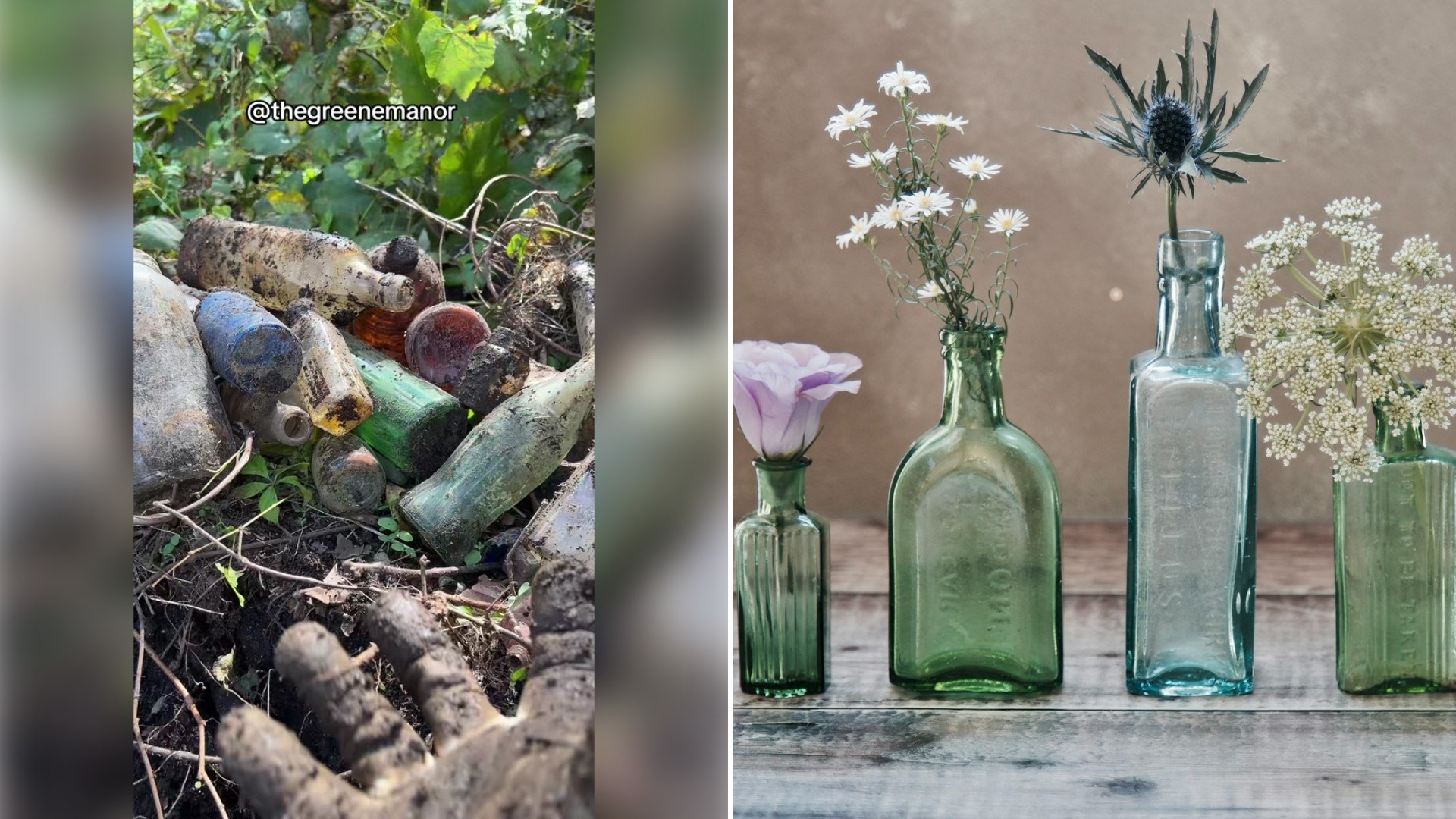
There’s something almost meditative about watching a bottle digger work, and creator @thegreenemanor captured exactly that in a video that turns a quiet backyard hobby into a genuine mystery. Kneeling over a dug-out patch of dirt, narrating as she goes, she carefully unearths a row of antique glass bottles and jars, one trowel-full at a time, each find getting wiped clean and set carefully aside before the next round of digging begins.
Bottle digging is one of those hobbies that most people have never heard of until they stumble across it online, but it has a surprisingly deep history behind it. Long before curbside trash pickup and modern landfills existed, households routinely disposed of broken or empty glass by simply burying it in the backyard, tossing it down old wells, or dumping it into designated trash pits at the edge of a property. Over the decades, as those properties changed hands and new construction covered old ground, those buried bottle dumps became accidental time capsules, waiting for someone with a trowel, patience, and a decent guess about where to dig.
@thegreenemanorGood morning!!!
What makes this particular clip so watchable is the rhythm of it. Each scoop of dirt carries the possibility of turning up nothing at all, just soil and rock, or of revealing another intact piece of glass that’s been sitting untouched for who knows how many decades. That uncertainty, repeated over and over throughout the dig, is what gives the video its quiet tension. It’s not a jump-scare kind of surprise; it’s the slower, more satisfying kind, the sort that builds patiently and rewards people who stick around to see what comes up next.
There’s also a genuine detective element running through the whole thing. Old bottles and jars carry clues in their shape, their glass color, their embossed lettering, and even the style of their seams, all of which specialists use to date a find and sometimes even trace it back to a specific manufacturer or era. A narrator working through a fresh haul, setting each piece aside for identification, is essentially building a small archaeological puzzle in real time, and viewers get to follow along as the picture starts coming together. Who lived on this property? What did they buy, drink, or store? When did they bury this particular pile of glass, and why did it end up here instead of somewhere else on the land?
Backyard bottle digging sits at an interesting intersection of hobbies. It borrows the patience of gardening, the thrill of treasure hunting, and the research instincts of amateur historians, all rolled into one activity that requires nothing more than a shovel, a trowel, and a plot of land old enough to have accumulated some buried history. It’s also refreshingly low-cost compared to a lot of other collecting hobbies. There’s no auction house, no bidding war, no need to track down a seller. The treasure is quite literally already in the ground, waiting for someone willing to put in the physical work of finding it.
For viewers who’ve never tried anything like this themselves, there’s an obvious appeal in imagining what might be buried under their own yard, especially if they live somewhere with an older home or a property that’s changed hands multiple times over the decades. Most people never think to look, mainly because it never occurs to them that there’s anything down there worth finding. Videos like this one are a reminder that the ground underneath a lot of older properties is quietly holding onto small pieces of the past, and that unearthing them doesn’t require any special expertise, just a willingness to dig and the patience to keep going even when a scoop or two turns up nothing.
There’s also something worth noting about the pace of a hobby like this in an era where so much of daily life is built around speed and instant results. Bottle digging can’t be rushed. Each layer of soil has to be worked through carefully, both to avoid damaging anything fragile that’s still intact and because rushing tends to mean missing things entirely. That slower pace is part of the appeal for a lot of people who take up the hobby, and it’s part of what makes the videos so calming to watch even for people who will never pick up a trowel themselves. In a world that moves as fast as social media does, there’s something genuinely restful about watching someone spend an afternoon patiently coaxing forgotten history out of the ground, one careful scoop at a time.
There’s also a quiet lesson in this kind of hobby about paying attention to what’s easy to overlook. Most people walk across a backyard without ever wondering what might be a few feet beneath their shoes. Bottle diggers train themselves to notice small clues, a dip in the ground, a patch of soil that looks different, that suggest something might be buried nearby, and that habit of noticing extends well beyond the hobby itself.
For anyone tempted to try it, the entry cost is refreshingly low compared to most collecting hobbies: a trowel, some patience, and a willingness to come up empty a few times before finding anything worth keeping.
The hobby also has its own organized side that surprises a lot of newcomers, with regional bottle-digging and collecting clubs scattered across the country that hold regular swap meets, publish newsletters on local dump sites, and maintain informal registries of known manufacturers’ marks. Longtime members often serve as the real authorities on dating a find, since identifying an embossed maker’s mark or a specific seam pattern usually comes down to pattern recognition built up over years of handling glass from a particular region, knowledge that rarely exists in any single published guide and instead gets passed along person to person at club meetings and digs.

Leave a Reply