

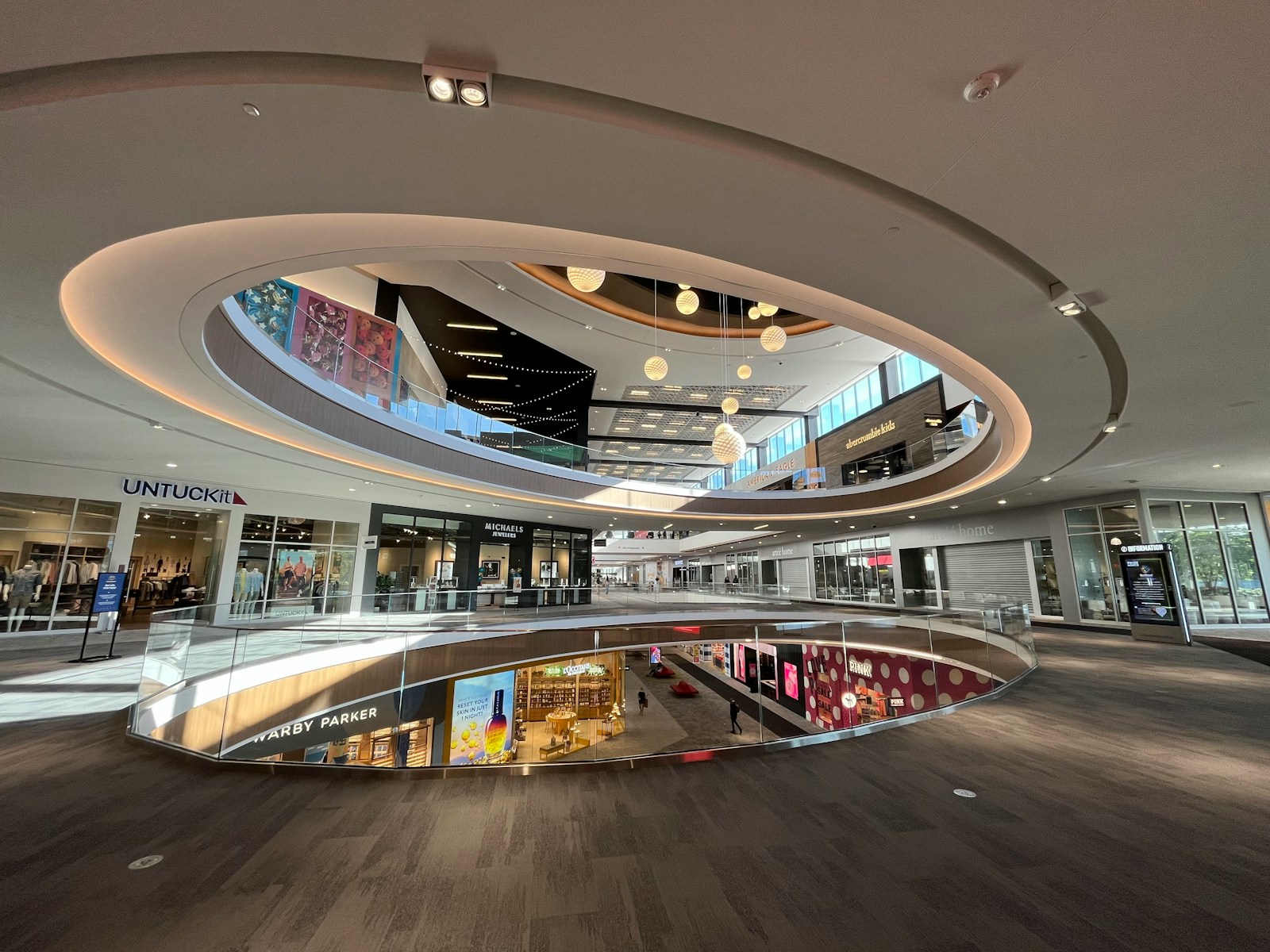
Southdale Center opened outside Minneapolis in 1956 as the first fully enclosed, climate-controlled shopping mall in the country, and 75,000 people showed up on opening day, according to Smithsonian Magazine’s history of American malls. What followed was one of the fastest building booms in American retail history. Roughly 1,500 enclosed malls went up in the decades after Southdale, according to the same Smithsonian reporting and separately confirmed by the Federal Reserve Bank of Richmond’s economic history of the shopping mall. Most of that construction happened fast, then stopped almost entirely. The current count tells the rest of the story.
The Building Boom, By the Numbers
Mall construction started small and accelerated hard. Only 60 malls were built nationwide between 1950 and 1955, but that number jumped to 240 between 1961 and 1970 alone, according to the Richmond Fed’s research. Construction kept climbing through the 1970s and into the early 1980s, which industry writer Alan Ehrenhalt has identified as the single peak year for American mall openings, per his reporting in Governing magazine. By 2005, the Richmond Fed’s count put the cumulative total at 1,500 enclosed malls built since Southdale — the same figure Smithsonian arrived at independently, describing “another 1,500 enclosed malls” spreading across the landscape in the roughly four decades that followed 1956.

Then Construction Essentially Stopped
New enclosed mall construction fell off a cliff after the mid-2000s. Few, if any, conventional enclosed malls have opened in the United States since 2007, according to Governing’s reporting, and the commercial real estate firm RockStep Capital has separately noted that no new enclosed malls have been built in the country since the mid-2000s, when the national total peaked at approximately 1,500, per RockStep’s own market analysis. The one widely cited exception, American Dream in New Jersey, didn’t open until 2019 after decades of delays, and RockStep describes it as functioning more like a mega-entertainment complex than a traditional mall.
Where the Count Stands Now
Estimates for today’s total vary depending on how narrowly “enclosed mall” is defined, but they all point the same direction. The Richmond Fed put the current U.S. total at around 1,150 malls, a figure it described as having “stayed consistent over the past three years” as of its 2022 report. RockStep’s more conservative count, which filters for larger regional and super-regional properties, puts the current number between 700 and 800 — nearly a 50 percent drop from the mid-2000s peak, according to its analysis. Vacancy data adds texture to the decline: mall vacancy hit a record 11.4 percent in the first quarter of 2021, up from 10.5 percent the quarter before, per Smithsonian’s reporting, and Green Street Advisors has found that the country’s top 37 highest-performing malls now account for nearly 30 percent of all mall value nationwide — meaning the properties that remain are increasingly concentrated among a shrinking group of winners.
The Anchors Went First
Much of the visible decay came from the department stores that anchored these malls rather than the malls themselves. Green Street Advisors calculated that 360 mall-based department stores closed between 2016 and 2020 alone, according to Smithsonian’s reporting — a wave that emptied out the very stores originally built to pull shoppers past every storefront on the way in. Some analysts had expected the damage to run even deeper: Credit Suisse forecast before the pandemic that upward of 25 percent of American malls, more than 200 properties, would close by 2022, per data compiled by the research firm Capital One Shopping.
Malls Aren’t Gone — They’re Consolidating
The mall isn’t dead so much as it’s been sorted. A relatively small number of dominant properties keep pulling foot traffic and sales, according to the concentration data from Green Street cited by Smithsonian, while hundreds of weaker malls built during the same rushed decades have been demolished, converted, or left to decline. The properties that survived have shown real signs of stabilizing: Coresight Research found mall sales and foot traffic rose 10 to 12 percent in 2022 compared with the prior year, according to RockStep’s market analysis, and a 2018 ICSC study cited by Smithsonian found that three-quarters of teenagers still preferred shopping in physical stores over shopping online. Americans still spent roughly $2.5 trillion at malls in a single year according to ICSC figures cited by Smithsonian, which suggests the format never actually lost its customers — it lost the ones-per-town density that defined its original thirty-year building spree.

Leave a Reply