

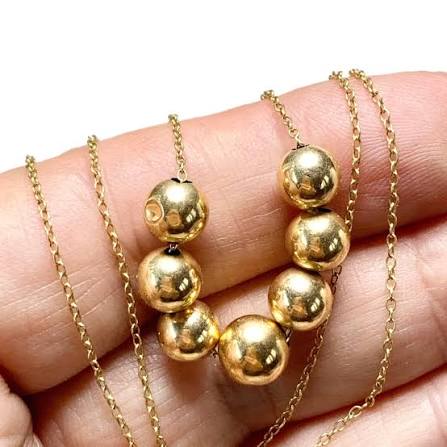
A starter Add-A-Bead necklace typically shipped with a plain 14-karat gold chain and a handful of gold beads, sometimes as few as five, priced low enough for a birthday card from a grandparent. That was never the whole sale. The necklace was a starter kit, and every bead purchased afterward was the actual business. What reads today as a slightly dated 1980s jewelry trend was, underneath the gold-tone charm, a retail idea built to keep customers coming back to the same display case for years.
The Mechanism Wasn’t New, Just Renamed
The “buy the base, then keep adding to it” model didn’t start with beads. Trademark filings show a company called Juergens & Andersen Co. registered the mark ADD-A-PEARL in 1980, with a filing date of September 1978 and, notably, a first-use-in-commerce date stretching back to 1915. An Add-A-Pearl necklace worked on a simple, decades-old premise: a child received a bare gold chain, and family members added a single cultured pearl for each birthday or milestone until the strand was full. Add-A-Bead borrowed that exact skeleton and swapped in cheaper, more colorful gold and gemstone beads, turning a genteel, slow-build family tradition into a mass-market mall trend that a middle schooler could drive on her own allowance.
A Clasp Designed Around Repeat Business
The engineering behind the necklace mattered more than it got credit for. Vintage pieces from the jewelry brand ADDA used what dealers describe as a slim, squeeze-style clasp that compressed just enough to let a bead or small pendant slide onto the chain, then sprang back to keep everything from sliding right back off. That single mechanical detail is what made the whole category work: a kid could walk into a jewelry counter, hand over a few dollars, and leave with a bead already threaded onto the necklace she was already wearing, no jeweler required. Estate jewelry dealers note that collectors weren’t limited to plain gold spheres, working in pearl or jade beads depending on the occasion, which meant a single necklace could track years of specific gifts rather than one uniform purchase.
By the time the trend hit its stride, it had become close to a rite of passage rather than a niche accessory. Vintage dealers cataloging surviving examples from the decade describe a necklace nearly every girl either owned or wanted, which lines up with how the pieces show up today: half-finished, with gaps where a bead was clearly meant to go next, or crowded with a decade’s worth of additions crammed onto one short chain.
Everyone Wanted a Piece of the Format
Add-A-Bead’s success didn’t go unnoticed by competitors. Within a few years, other jewelers filed their own spins on the same concept. A company called E & W Imports filed for the mark ADD A STRAND in September 1981, covering gemstone bead strands meant to be added to a multi-strand necklace one piece at a time — essentially the same slow-collection logic, dressed up slightly differently. That particular filing was abandoned by 1983, an early sign that the market couldn’t support an unlimited number of near-identical add-on jewelry brands competing for the same allowance money. Still, the fact that a competitor tried to trademark a variant within a year or two of the original catching on says a lot about how quickly retailers recognized what they were looking at: a jewelry format that manufactured its own repeat customers.
The Craze Faded, but It Never Fully Died
By the 1990s, the specific mania around gold add-a-bead chains had cooled, pushed aside by newer teen jewelry trends and, eventually, charm bracelets that borrowed the same collect-over-time appeal. The format didn’t disappear so much as go dormant. As recently as 2010, an individual applicant filed to trademark the phrase “ADD A BEAD TO YOUR LIFE’S STORY” for a new jewelry line, an attempt to revive the exact same emotional pitch that sold the necklaces to parents three decades earlier. That filing was abandoned within a year, but its existence is telling: someone believed there was still money in convincing a customer that a necklace could tell a story one purchase at a time.
What actually lasted was the model itself. Long after mall jewelry counters stopped stocking Add-A-Bead displays, the same logic resurfaced in charm bracelets and build-your-own pendant lines, both selling a base piece cheap and the additions forever. A decade-long fad turned out to be a permanent lesson in how to sell jewelry twice.

Leave a Reply