

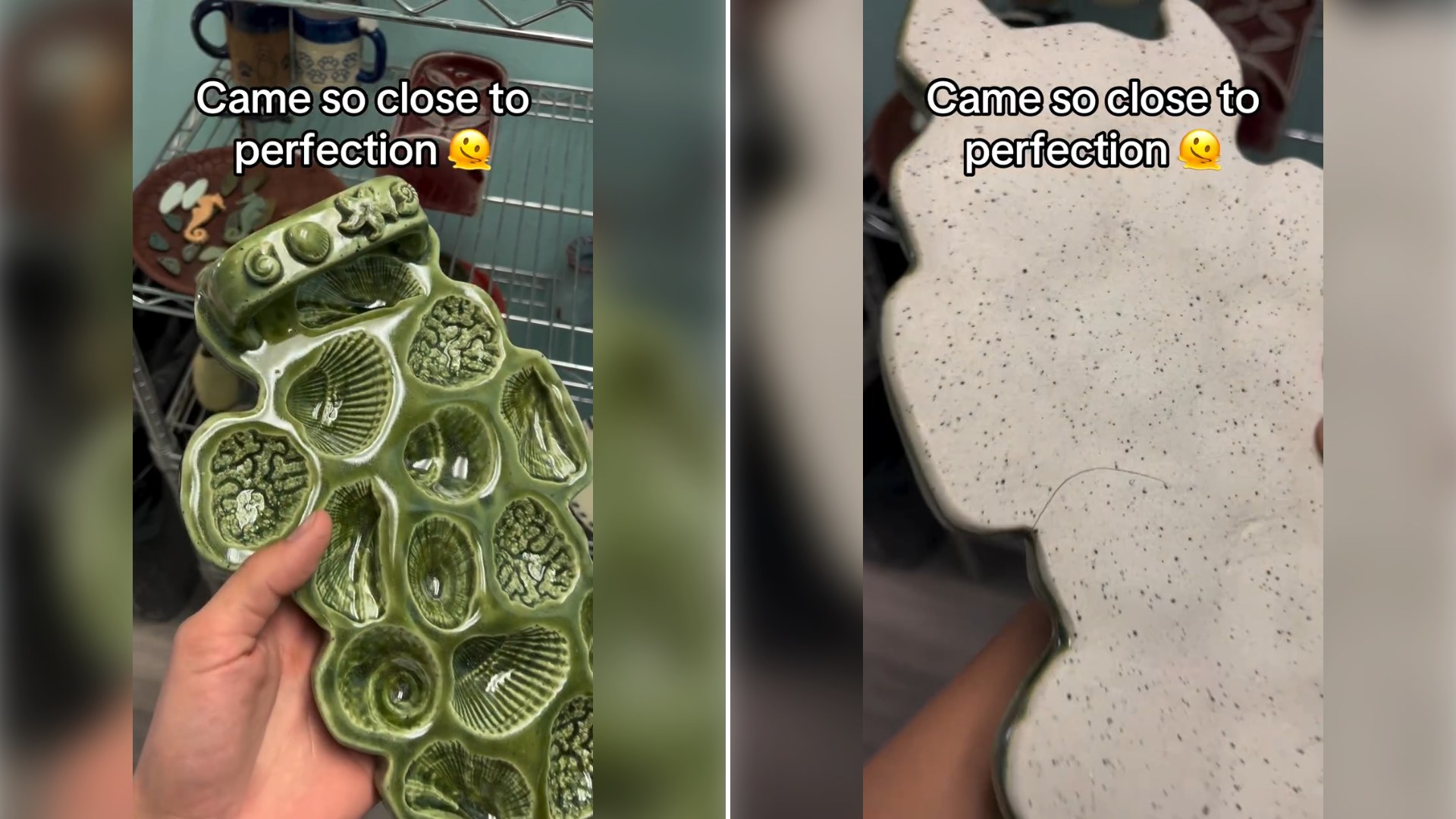
Perfection is overrated, and @sturdyhandspottery makes a genuinely convincing case for that in this video. Showing off a vintage ceramic dish she picked up while out shopping, she points out a small crack on the back that did not stop her from bringing the piece home, choosing character and history over a flawless, unblemished surface.
Shell-shaped ceramic serving dishes occupy a well-loved, recognizable niche within vintage tableware collecting, having peaked in popularity across the mid-twentieth century as a staple of coastal-themed dining sets and holiday entertaining pieces. Their distinctive sculptural form, deliberately mimicking natural seashell ridges and curves, gives them a decorative presence that flatter, more generic serving pieces from the same era often lack, which helps explain their continued appeal among vintage ceramics collectors today.
The decision to purchase a piece despite visible damage reflects a genuinely important, if sometimes overlooked, philosophy within vintage and antique collecting more broadly. While condition obviously affects resale value in a strictly financial sense, many collectors, particularly those buying for personal use and enjoyment rather than investment, prioritize character, history, and aesthetic appeal over flawless preservation, recognizing that a small crack rarely diminishes a piece’s actual decorative or sentimental worth.
There is also a meaningful connection here to the Japanese concept of wabi-sabi, which finds genuine beauty in imperfection, impermanence, and the visible marks of age and use, a philosophy that has gained real traction within Western vintage and antique collecting circles over recent years. A small crack on an otherwise beautiful ceramic piece can, under that lens, function as evidence of a genuine, lived history rather than simply a flaw to be minimized or hidden.
Vintage ceramics collecting specifically rewards buyers willing to look past surface-level condition issues, since genuinely mint, unblemished examples from decades-old production runs become increasingly rare and correspondingly expensive the longer a piece has existed in daily use or storage. A collector focused purely on perfect condition often ends up with a significantly smaller, more expensive collection than one willing to embrace minor imperfections in exchange for broader access to genuinely interesting pieces.
This kind of transparent, honest showcase content also builds real trust within the broader vintage shopping community. Openly pointing out a flaw rather than conveniently cropping it out of frame signals genuine authenticity, modeling exactly the kind of honest disclosure that keeps secondhand shopping communities functioning well, both online and in person.
Ultimately, a video like this makes a quiet but persuasive case for embracing imperfection within vintage collecting. A small crack does not erase decades of history or diminish genuine beauty, and sometimes the most meaningful finds are the ones that carry visible, honest evidence of everywhere they have already been.

Leave a Reply