

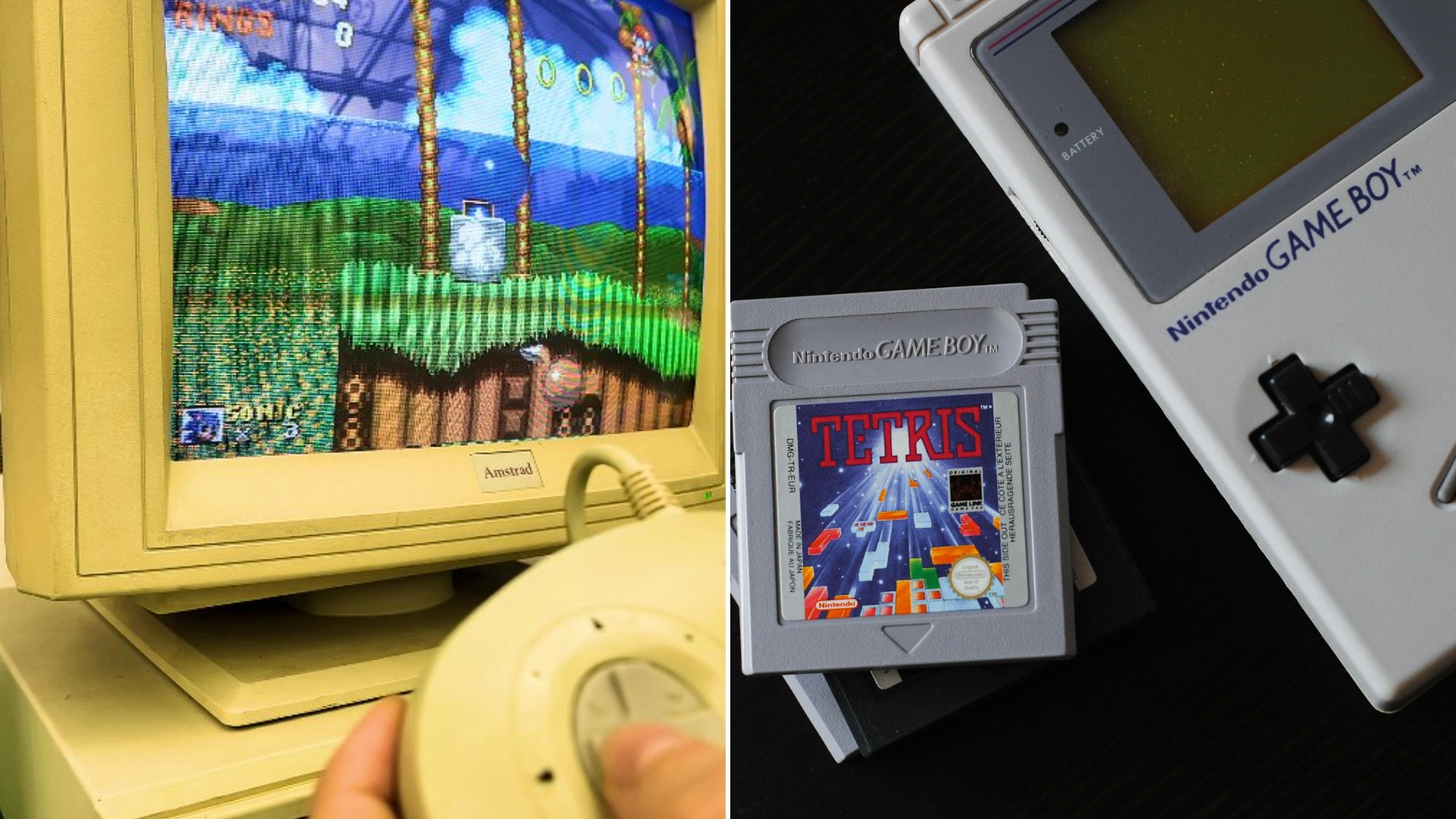
For most people, the original Sonic the Hedgehog conjures memories of a standard Sega Genesis console, but creator @nostalgianerd showcases a far rarer way to play it in a recent Instagram reel: loading the classic cartridge into an Amstrad Mega PC, an obscure hybrid machine that most retro gaming fans have never even heard of, let alone seen in action.
The Amstrad Mega PC, released in the early 1990s, represented one of the stranger experiments in early home computing and gaming convergence: a single unit combining a functional IBM-compatible PC with a built-in Sega Mega Drive, the European equivalent of the Genesis, allowing owners to run business software and play Sega cartridges from the exact same machine. It was a genuinely ambitious, if commercially modest, attempt to solve the problem of households needing to choose between productivity and gaming hardware, years before such hybrid devices became more commonplace.
What makes a device like this so fascinating to retro computing enthusiasts is precisely its commercial failure and subsequent obscurity. The Mega PC never achieved significant market success, and its relative rarity today makes it a genuinely prized object among collectors specifically interested in the stranger, less successful byways of computing and gaming history rather than the well-documented mainstream systems that dominate most retro gaming nostalgia. Finding one in working condition, let alone successfully running an original Sonic cartridge through it, represents a meaningful achievement for anyone invested in this particular corner of hardware history.
Sonic the Hedgehog itself needs little introduction, having launched in 1991 as Sega’s flagship mascot and direct answer to Nintendo’s Mario franchise, kicking off one of gaming’s most enduring and recognizable series. Playing the original game on genuinely obscure period-correct hardware rather than through modern re-releases or compilations adds a layer of authenticity that serious retro gaming collectors particularly value, since emulated or remastered versions, however faithful, can never fully replicate the exact hardware behavior, input latency, and visual characteristics of the original cartridge running on its intended, or in this case unintended but compatible, hardware.
This kind of content occupies a valuable niche within retro gaming communities, which increasingly distinguish between broadly nostalgic content aimed at casual audiences and more specialized, historically rigorous content aimed at serious collectors and hardware enthusiasts. A video spotlighting an obscure machine like the Amstrad Mega PC speaks directly to that more dedicated audience, offering genuine educational value about computing history that mainstream retro gaming nostalgia, focused overwhelmingly on well-known consoles, often overlooks entirely.
There’s also something worth appreciating about the broader historical pattern this device represents. The early 1990s saw numerous attempts by various manufacturers to blend computing and gaming functionality into single hybrid units, almost all of which failed commercially as dedicated gaming consoles and increasingly powerful personal computers eventually won out as separate, specialized categories. Devices like the Mega PC serve as fascinating historical footnotes, illustrating paths the industry considered and ultimately abandoned, which makes them genuinely valuable artifacts for understanding how the current clear division between gaming consoles and computers actually emerged.
Collectors and restorers of obscure vintage computing hardware like this one often face significant practical challenges, since documentation, replacement parts, and community knowledge are considerably scarcer for commercially unsuccessful products compared to mainstream systems with large, well-established collector bases. Successfully maintaining and operating a device like the Mega PC therefore requires a level of technical dedication and troubleshooting resourcefulness well beyond what’s needed for more common retro systems.
It’s also worth noting how content spotlighting genuinely obscure hardware serves an important preservation function within the retro computing community, documenting and keeping visible machines that might otherwise fade entirely from collective memory as the small number of surviving units and the even smaller number of people who remember or understand them continue to dwindle over time.
Ultimately, @nostalgianerd’s demonstration succeeds precisely because it goes beyond simple console nostalgia into genuinely niche technological history, rewarding viewers with deeper hardware knowledge while still offering casual audiences the simple, universal pleasure of watching a beloved classic game load up and run. It’s a small reminder that gaming history is far stranger and more varied than the handful of iconic consoles most people remember.

Leave a Reply