

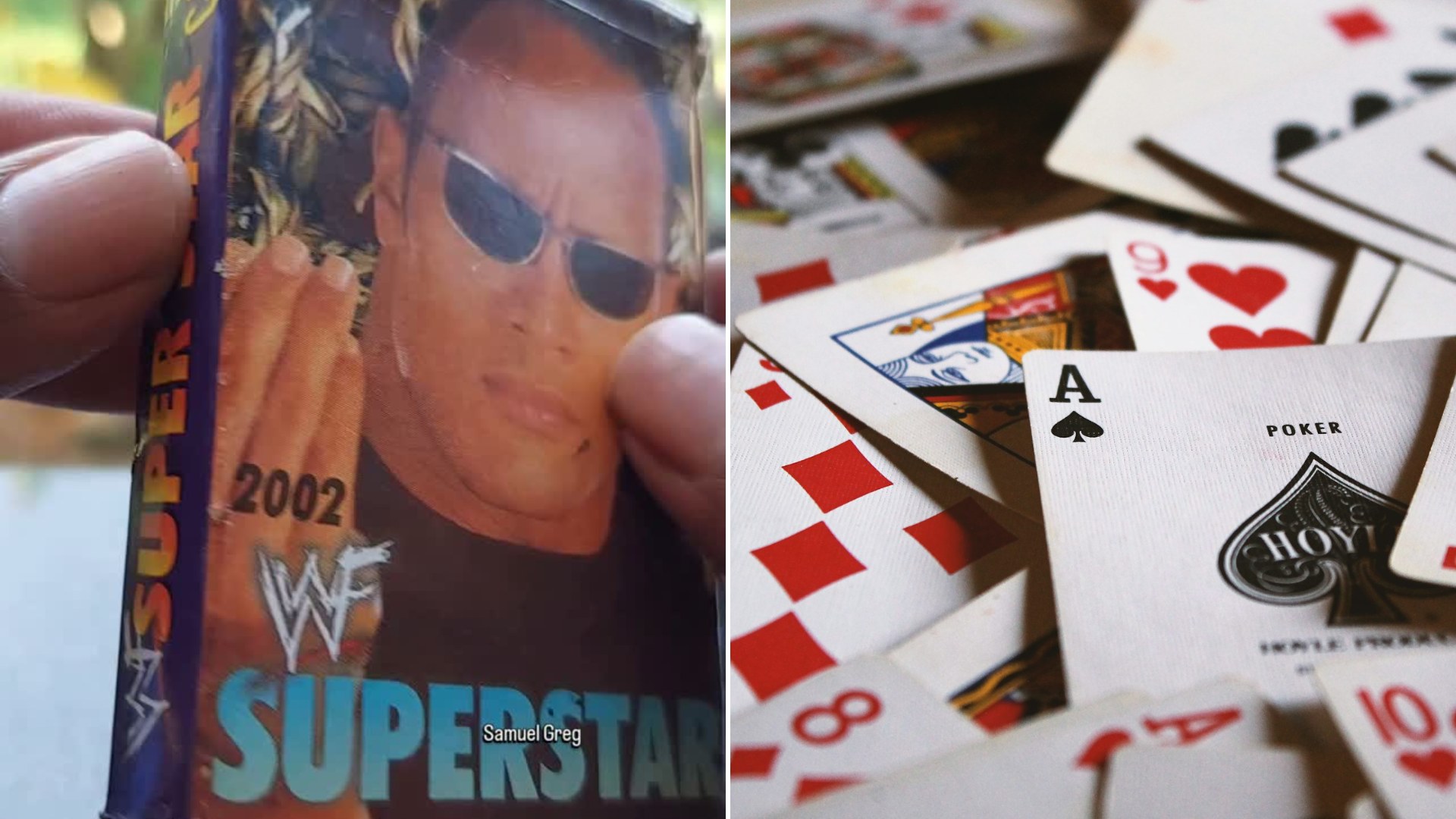
Some collectibles are inseparable from the specific cultural moment they came from, and @creative_goenkar leans fully into that pairing in this video. Revisiting a specific 2002 pack of WWE wrestling-themed playing cards, he flips through each card one by one while the soundtrack leans hard into early-2000s pop-punk nostalgia, making the whole clip feel like a time capsule from two directions at once.
Wrestling merchandise from the early 2000s captures a particularly vibrant moment in the industry’s history, often referred to as the Attitude Era’s tail end, when WWE’s roster featured some of the most recognizable and commercially successful personalities the sport has ever produced. Playing cards featuring these superstars were a common, relatively affordable licensed product during this period, sold in convenience stores and big box retailers as an accessible entry point for younger fans who could not afford more expensive action figures or memorabilia.
Novelty playing card sets like this one occupy an interesting, often underappreciated corner of sports and entertainment collecting. Unlike traditional trading cards designed primarily for collecting and trading, branded playing cards served a dual purpose, functioning as both a usable deck for actual card games and a piece of licensed fan merchandise, which gives surviving examples a slightly different collector appeal rooted in nostalgia for actual use rather than purely display value.
The deliberate pairing of this specific collectible with an early-2000s pop-punk soundtrack reflects a broader, increasingly sophisticated trend within nostalgia content, one that treats music, visual media, and physical objects from the same era as a complete, interconnected cultural package rather than isolated artifacts. That layered approach to nostalgia tends to resonate more deeply than a single reference alone, since it recreates a fuller sensory impression of what actually living through that specific cultural moment felt like.
Wrestling collectibles in general have experienced a genuine resurgence in collector interest over the past several years, driven partly by renewed mainstream attention to the sport and partly by the same broad millennial nostalgia wave reshaping demand across nearly every category of early-2000s pop culture merchandise. Items once considered disposable convenience-store impulse buys are increasingly being recognized and actively sought after as legitimate collectibles worth preserving.
There is also something specifically satisfying about the physical act of flipping through a complete card set on camera, an unhurried, methodical reveal that lets viewers absorb each individual superstar’s photo and card design at a comfortable pace, very different from the quicker, more chaotic energy typically associated with trading card pack openings in other collecting categories.
Content like this ultimately demonstrates how specific, seemingly minor collectibles can carry outsized emotional weight when paired thoughtfully with the broader cultural context they originally existed within, turning a simple deck of novelty cards into a genuinely immersive trip back to a very particular moment in early-2000s pop culture.

Leave a Reply