

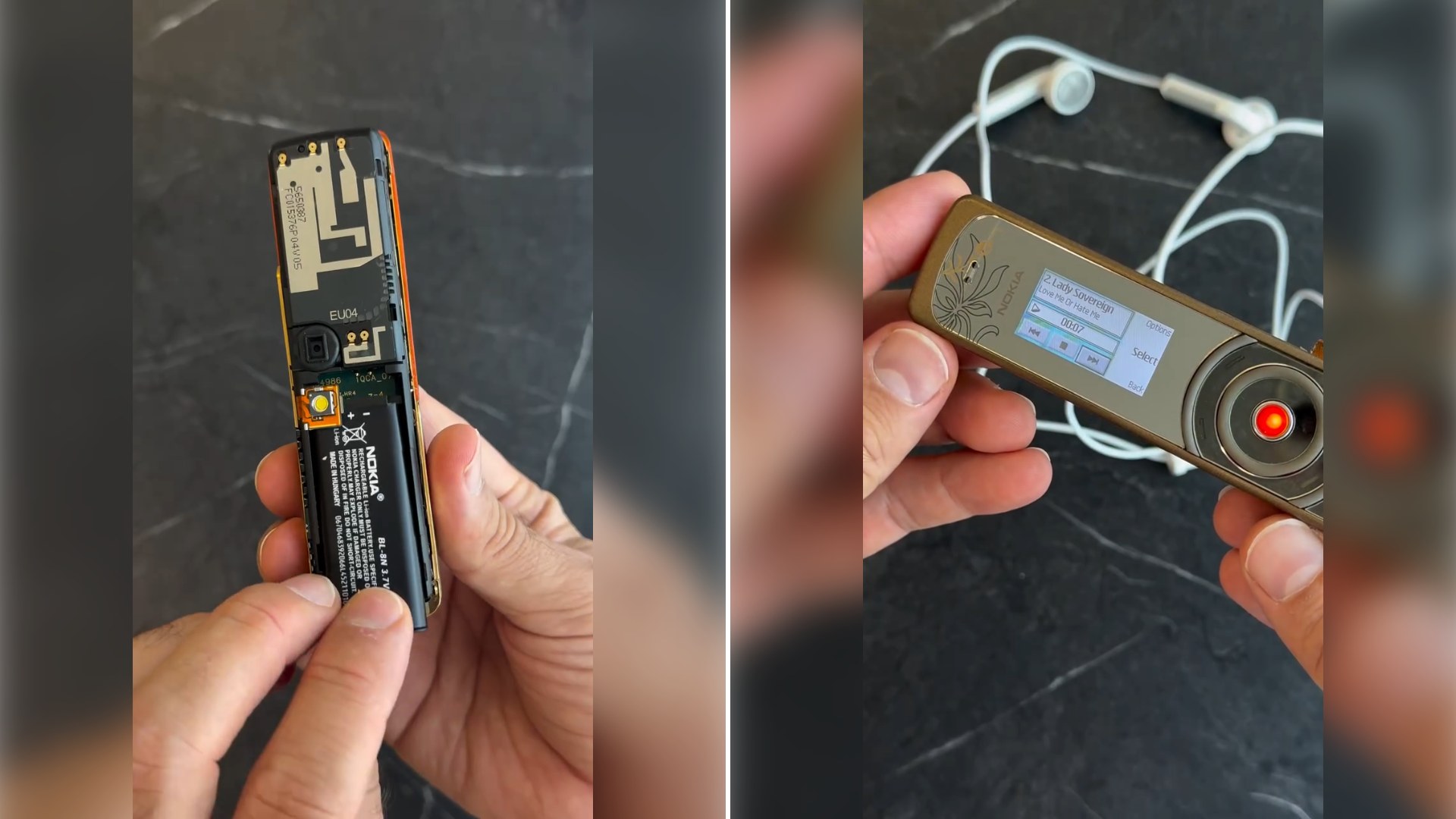
Some vintage phones are interesting because of what they could do, and others are interesting because of how strange they looked trying to do it, and the Nokia 7380 falls firmly into the second category. In this clip, @titovman demonstrates the genuinely oddball 2005 device, a phone famous for ditching a visible keypad entirely, walking through the process of inserting a SIM card and navigating its unusual touch-sensitive interface step by step.
The Nokia 7380, part of the company’s short-lived L’Amour fashion-focused collection, was built around a radical design decision: eliminate the traditional numeric keypad entirely and replace it with a touch-sensitive slider mechanism paired with a tiny, almost jewelry-like form factor. At the time, it was marketed less as a traditional phone and more as a fashion accessory, a genuinely unusual framing in an era when phone marketing focused almost exclusively on features and specs.
Vintage mobile phone collectors specifically prize devices like this one precisely because of how experimental and ultimately unsuccessful their design approach turned out to be. The keypad-less interface never caught on broadly, and Nokia largely abandoned the concept in later devices, which makes surviving examples of the 7380 genuinely scarce compared to the company’s more conventional, higher-volume models from the same era.
There is a particular appeal within retro tech collecting circles for devices that represent a genuine dead end in design evolution, a path manufacturers explored and ultimately walked away from. Unlike phones that represent a clear, direct lineage toward modern smartphones, something like the 7380 exists almost as a historical curiosity, evidence of how uncertain the future of mobile phone design actually felt in the mid-2000s before touchscreens and app ecosystems settled into the dominant paradigm.
Demonstrating basic functionality, inserting a SIM card, navigating the unusual interface, serves a genuinely useful documentary purpose for a device this unusual. Written descriptions and static photographs struggle to convey exactly how the touch-sensitive slider actually worked in practice, which makes video demonstration an essential tool for anyone trying to understand devices like this that fall outside the familiar keypad-and-screen template most people picture when they think of 2000s mobile phones.
The L’Amour collection as a whole represents an interesting, often-overlooked chapter in Nokia’s broader history, a period when the company was still experimenting confidently with radically different form factors before the smartphone era consolidated design conventions across the entire industry. Collectors specializing in this narrow slice of Nokia’s catalog often find it offers more genuine surprises than the company’s better-known, more conventionally successful models.
Videos like this one do real service to retro tech appreciation by resisting the urge to only celebrate devices that succeeded commercially or technologically. Sometimes the most interesting objects in a collection are the ones that took a genuine creative risk, even when that risk ultimately did not pay off in the broader market.

Leave a Reply