

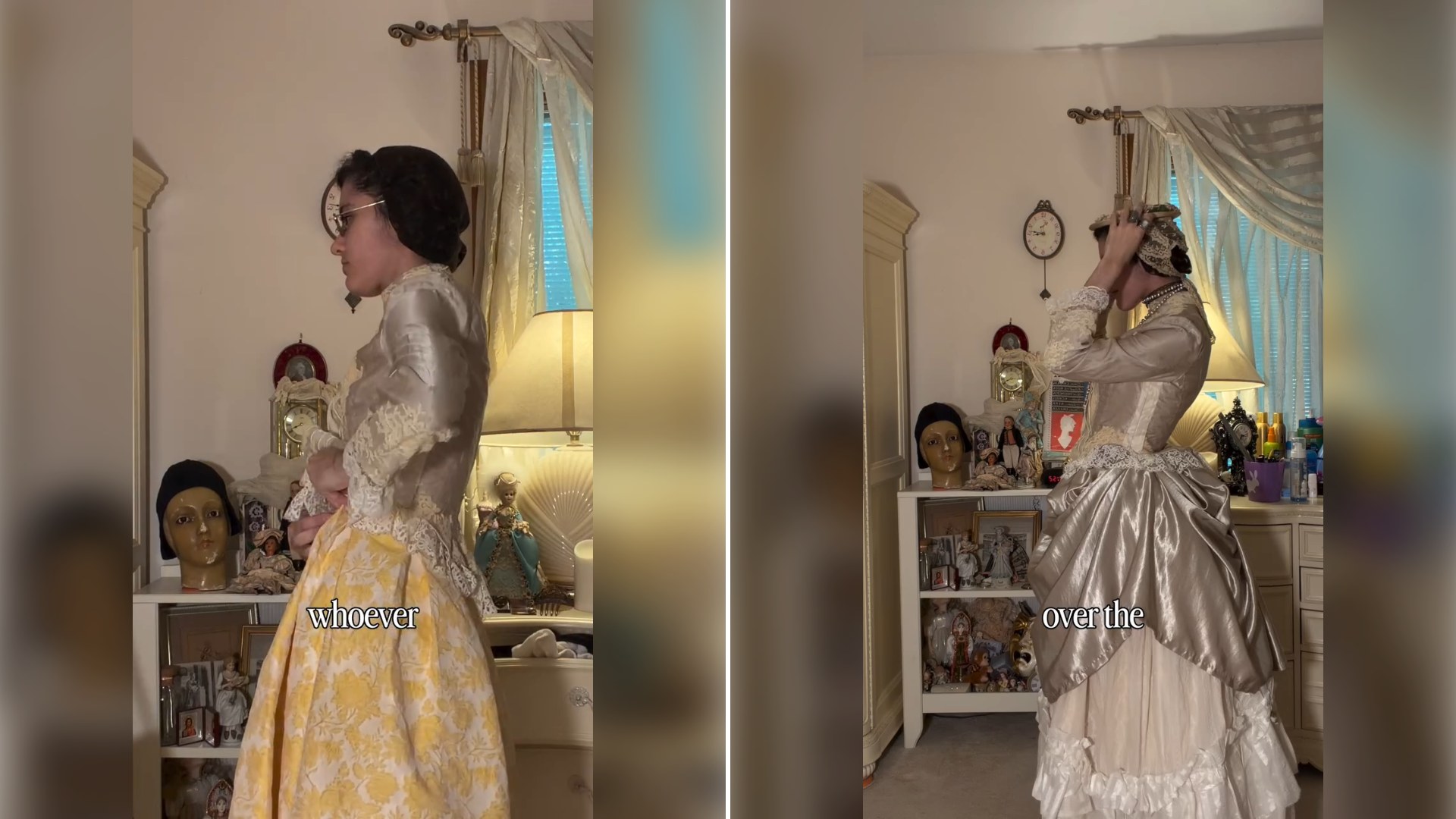
Styling a full period-inspired look takes more than simply pulling old-looking pieces off a rack, and @reine.adrienne demonstrates exactly what separates genuine historical fashion knowledge from costume guesswork in this clip. Assembling a complete turn-of-the-century-inspired ensemble, she walks through where each individual vintage garment came from and the specific era it was pulled to evoke, turning a simple styling video into a genuine history lesson.
Victorian and turn-of-the-century fashion remains one of the most endlessly fascinating eras for vintage enthusiasts precisely because of how dramatically silhouettes, undergarments, and construction techniques shifted across the period’s roughly six-decade span. A genuinely knowledgeable collector can look at a single garment and place it within a surprisingly narrow window of years based on sleeve shape, bodice construction, or skirt silhouette alone, a level of expertise this kind of educational styling content helps demystify for a broader audience.
What distinguishes serious period fashion recreation from generic costuming is precisely the kind of piece-by-piece historical explanation on display here. Rather than simply presenting a finished look, breaking down each individual garment’s origin and era-appropriate context demonstrates real scholarship, the kind that separates someone genuinely passionate about historical accuracy from someone simply chasing an aesthetic without understanding its underlying construction or cultural context.
Sourcing authentic or convincingly reproduction Victorian-era pieces presents genuine challenges that more recent vintage eras simply do not. Garments from this period that have survived over a century in wearable condition are increasingly rare and often fragile, pushing many enthusiasts toward high-quality reproductions or carefully selected later pieces that evoke the same silhouette through more durable, more available vintage materials from subsequent decades.
Historical fashion content like this has found a genuinely enthusiastic audience online over the last several years, part of a broader cultural fascination with period-accurate dress that spans everything from costume drama fandoms to the historical reenactment community. Social media has given individual enthusiasts a platform to share this kind of specialized knowledge that previously lived mostly in academic texts or small, dedicated hobbyist circles.
There is also something genuinely instructive about watching how these historical silhouettes get reconstructed using modern sourcing methods, mixing true antique pieces, careful vintage finds, and knowledgeable reproduction choices into a single cohesive ensemble. That hybrid approach reflects how most serious period fashion recreation actually works in practice, rarely relying on a single perfectly preserved original outfit but rather assembled piece by piece from multiple sources over time.
Content like this ultimately does real service to the broader vintage fashion community by modeling genuine historical literacy rather than surface-level aesthetic appropriation. Explaining the actual history behind each piece transforms a simple outfit video into something closer to a wearable history lesson, giving viewers a far richer appreciation for just how much craftsmanship and cultural context lives inside a single carefully assembled period look.

Leave a Reply