

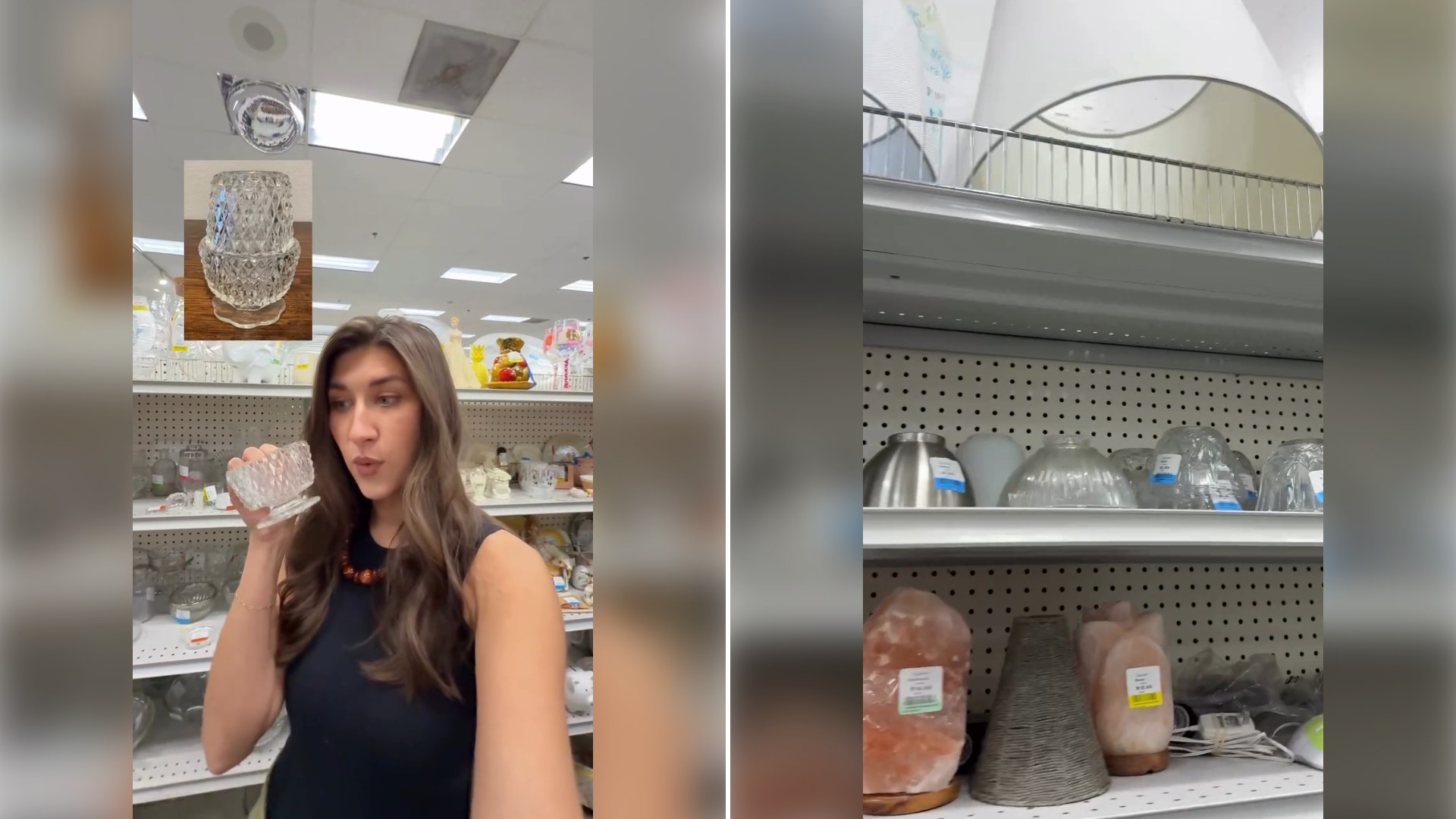
Every serious thrifter knows the particular jolt of adrenaline that hits the moment a genuinely special piece appears on a shelf, and @drab.to.dreamy captures that feeling perfectly in this clip. After spotting a vintage glass lamp base, she is visibly shaking with excitement as she tears through the surrounding shelves in a dramatic, time-sensitive hunt to track down the lamp’s missing matching top piece before anyone else can grab it.
Vintage glass lamps occupy a surprisingly deep niche within the collecting world, one that spans everything from mass-produced midcentury department store pieces to genuinely rare art glass bases crafted by small studio glassworks. Because lamp bases and shades were often sold and shipped separately, or simply broken apart over decades of moves and storage, finding a matching set intact in a secondhand setting is far rarer than finding either half alone. That scarcity is exactly what transforms a routine thrift trip into the kind of frantic search captured in this video.
The visible physical reaction on display here, the shaking, the urgency, the almost competitive pace of the search, will be instantly familiar to anyone who has spent real time thrifting. There is a specific kind of adrenaline that comes from recognizing value other shoppers in the same store have overlooked, paired with the very real anxiety that someone else might beat you to the matching piece before you can locate it. That tension is part of what makes thrift store content so inherently watchable, since the outcome genuinely feels uncertain until the moment it resolves.
Lamps in particular reward this kind of careful searching because so much of their value, both financial and aesthetic, depends on the base and shade working together as a complete visual statement. A striking glass base paired with the wrong shade, or no shade at all, loses much of what made it special in a retail display decades earlier. Thrift store shoppers who specialize in lighting tend to develop a kind of sixth sense for scanning shelves methodically, checking under and behind other items, precisely because mismatched pairs so rarely get reunited by accident.
There is also a broader trend worth noting here: vintage lighting has seen a significant resurgence in interior design circles over the past several years, as homeowners increasingly look for statement pieces with genuine character rather than the mass-produced, interchangeable lamps that fill most big box stores. A glass lamp with real texture, color, or shape tells a visual story that new manufacturing rarely replicates, which has pushed demand, and therefore the thrill of the hunt, steadily upward.
This kind of content also does real service to the broader thrifting community by modeling exactly what attentive, knowledgeable shopping looks like in practice. Rather than simply holding up a finished find, the video shows the actual process: recognition, urgency, searching, and the payoff or disappointment that follows. That transparency is part of what has made thrift-hunting content so popular, since it gives viewers a genuine education in how to shop more effectively themselves.
Whether or not the matching top ultimately turned up, the chase itself is the real story here. It captures something essential about why people keep returning to secondhand shopping even when it would be far easier to simply buy something new: the possibility, however slim, of stumbling onto something genuinely irreplaceable sitting quietly on a shelf, waiting for the right person to notice.

Leave a Reply