

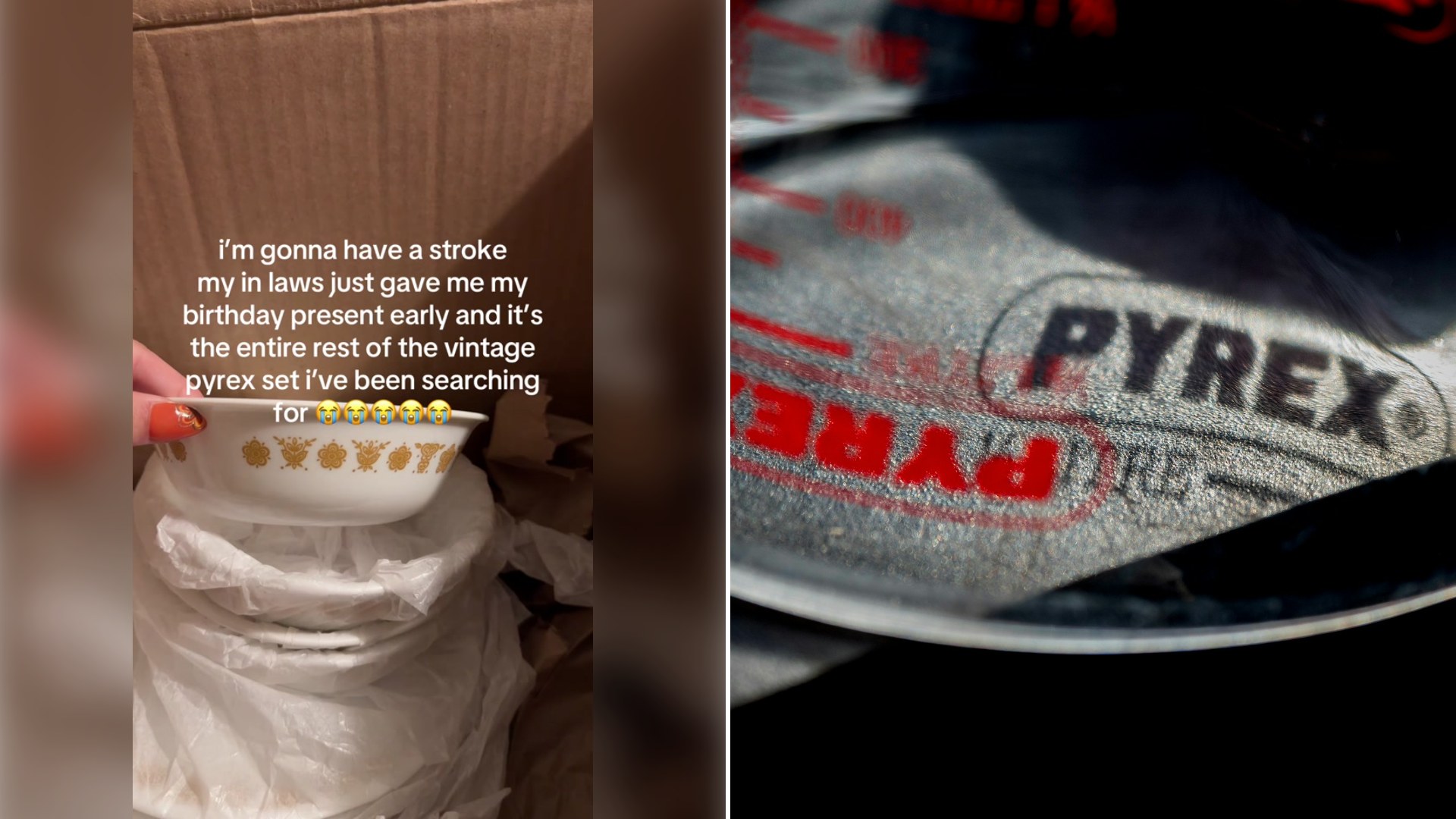
Every thrifter chases that one impossible find, and creator @ughitshails gets to experience it firsthand in a recent TikTok video. While browsing the shelves of a secondhand shop, she stumbles on a set of mugs that she can hardly believe matches a specific, beloved pattern — the kind of coincidence that makes an ordinary thrift run feel like fate intervened on her behalf.
The “I can’t believe I found this” thrift video has become one of the defining content formats of the resale and secondhand shopping renaissance, and it works for a very specific psychological reason: it dramatizes the exact moment when ordinary browsing suddenly becomes genuine discovery. Unlike online shopping, where a search bar instantly surfaces exactly what you’re looking for, thrifting requires patience, luck, and a trained eye, which makes a successful match — especially one as specific as a pattern the shopper clearly already loved or recognized — feel earned in a way that no algorithm-driven purchase ever could.
Dinnerware and mug patterns in particular occupy a fascinating niche within vintage collecting, because many were produced for relatively short runs, discontinued decades ago, and never fully documented in any centralized database. This makes matching an existing set, or simply finding a beloved pattern again after years of searching, a genuine needle-in-a-haystack challenge. Entire online communities have sprung up specifically around identifying and tracking discontinued patterns from brands like Pyrex, Corelle, Franciscan, and countless smaller regional potteries, with members posting photos asking for help identifying a pattern their grandmother owned or that they remember from childhood.
What makes this particular find so satisfying to watch is the universal relatability of the underlying goal: completing or recreating a set. Whether it’s dinnerware passed down from a relative, a pattern discontinued before someone could buy enough pieces, or simply a design someone fell in love with after the fact, the drive to track down matching pieces taps into something almost collector-instinctual — the deep satisfaction of completeness, of finally having the full set rather than a fragmented, mismatched collection.
The secondhand market for vintage dinnerware and mugs has also grown significantly as sustainability-conscious shoppers increasingly favor thrifted and vintage tableware over new purchases, both for environmental reasons and for the simple fact that vintage pieces often carry a visual charm and solidity that mass-produced modern dinnerware frequently lacks. Patterns from the mid-twentieth century in particular — with their bold colors, hand-painted details, and distinctive glazes — have found renewed appreciation among younger collectors drawn to maximalist, eclectic home aesthetics that favor character over uniformity.
There’s also a strong element of luck and timing embedded in stories like this one that makes them so shareable. Thrift store inventory is entirely dependent on what gets donated on any given day, meaning the exact same shelf could look completely different an hour earlier or later. Finding a specific pattern match requires not just a good eye but genuinely good timing, which is part of why successful finds generate such enthusiastic reactions — viewers understand intuitively just how improbable the specific match really was.
This kind of content also serves a practical function within the thrifting community, effectively crowdsourcing pattern identification and resale value information in real time. Comment sections on videos like this one often fill with other collectors confirming the pattern name, sharing their own experiences finding or losing similar sets, and occasionally even offering to trade or sell matching pieces, turning a single viral moment into a genuine marketplace and information exchange.
It’s worth noting, too, how videos like this one function as a kind of ongoing advertisement for the thrifting lifestyle itself, reinforcing the idea that patience and persistence at secondhand stores can genuinely pay off in ways that feel almost magical. For every viral successful find, countless unsuccessful trips go undocumented, but it’s precisely the rarity of a match this clean that makes the eventual payoff so satisfying to witness, even for viewers who have never set foot in that particular thrift store.
In the end, @ughitshails’s discovery resonates because it captures something thrifters chase every single time they walk into a secondhand shop: the possibility, however slim, that today might be the day something genuinely special is waiting on an unremarkable shelf. That hope, renewed with every visit regardless of how many times it goes unrewarded, is really the engine driving the entire thrifting subculture — and finds like this one are exactly the proof that keeps everyone coming back for one more look.

Leave a Reply