

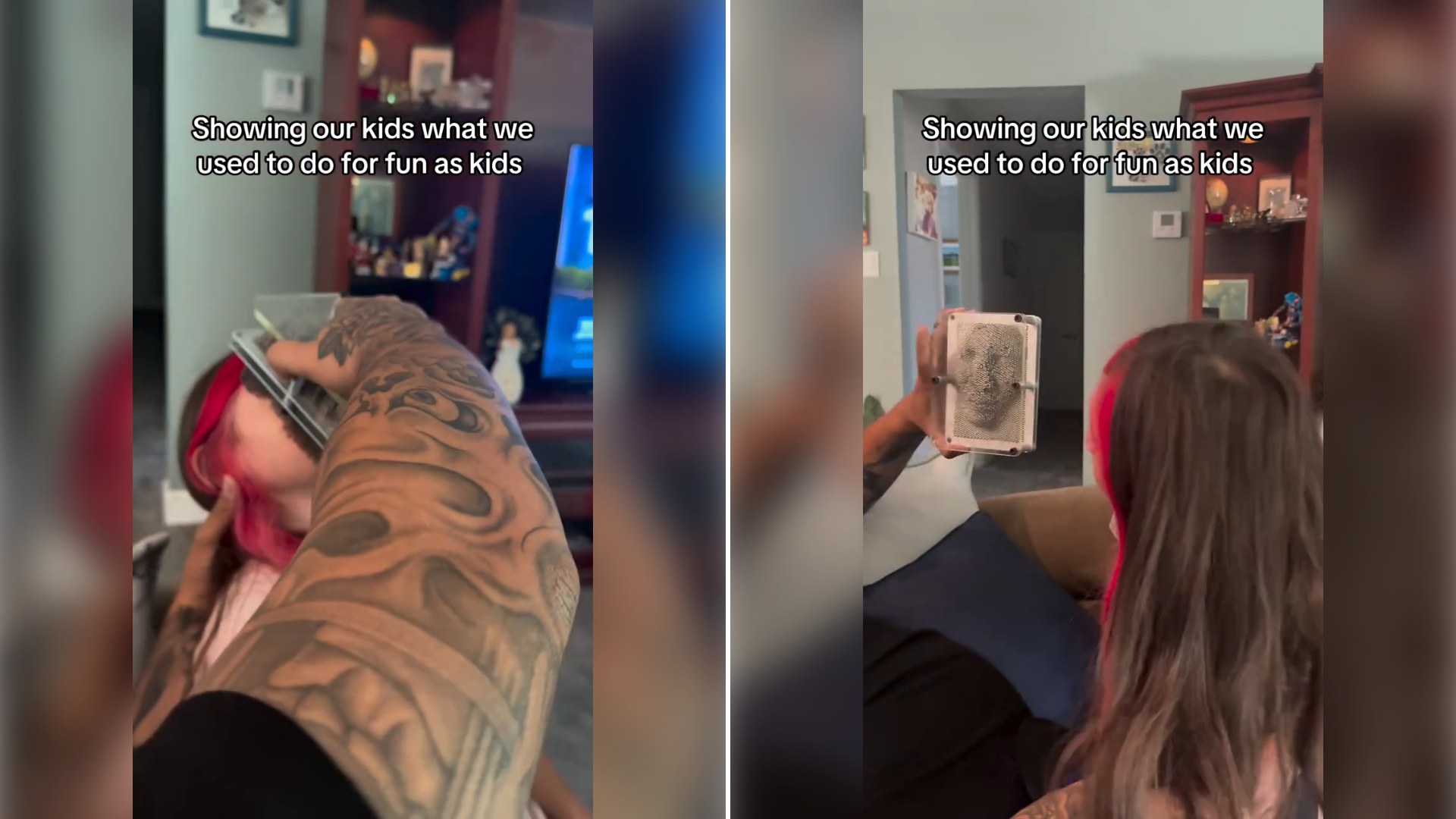
Few toys deliver an instant, universal reaction quite like Pin Art, and creator @_de_la_flor_ captures a perfect introduction to the classic toy in a recent Instagram reel, pressing their child’s face directly into the pin grid for a first-time reveal. The resulting impression, and the kid’s delighted reaction to seeing their own face rendered in a field of tiny moving pins, makes for a genuinely joyful piece of cross-generational nostalgia.
Pin Art, which first became widely popular in the 1980s, remains one of the most instantly recognizable novelty toys of the era, consisting of thousands of tiny, individually sliding pins housed within a frame that captures a three-dimensional impression of anything pressed against it. The toy’s appeal has always rested on a kind of simple, almost magical physical interactivity — no batteries, no screens, just pure mechanical cause and effect that produces an immediate, visually striking result every single time.
What makes Pin Art such enduring nostalgia fuel is precisely that mechanical simplicity, which has allowed the toy to remain genuinely functional and appealing across decades without requiring any technological updates or modifications. Unlike electronic toys from the same era, many of which have become unusable as batteries corrode or circuitry fails, a well-maintained Pin Art toy works exactly as well today as it did when it was first manufactured, making it one of the rare vintage toys that can be handed directly to a new generation without any loss of functionality or appeal.
This kind of first-introduction video taps into a particularly beloved genre within parenting and nostalgia content: watching a child encounter a beloved childhood toy for the very first time and gauging whether it still delivers the same magic several decades later. These reveal moments carry genuine emotional stakes for the parent, who is essentially testing whether something that mattered deeply to their own childhood can translate meaningfully to their child’s completely different cultural and technological context.
Pin Art specifically tends to perform remarkably well in these intergenerational tests precisely because its appeal isn’t tied to any particular media franchise, technological novelty, or cultural trend that might feel dated to a modern child. The simple physical satisfaction of seeing an impression form, and the inherently playful possibility of pressing a hand, face, or object into the pins, translates across generations in a way that more culturally or technologically specific toys often cannot.
There’s also a strong sensory and tactile dimension to Pin Art that aligns closely with current trends in toy design favoring hands-on, screen-free play experiences. In an era when much of children’s entertainment has shifted heavily toward tablets and digital interfaces, a toy built entirely around physical, tactile interaction offers a genuinely refreshing alternative, one that parents increasingly seek out specifically because it encourages hands-on engagement rather than passive screen consumption.
The toy’s visual output also carries an inherent shareability that makes it particularly well-suited to social media content. A Pin Art impression of a child’s face is immediately legible, instantly charming, and visually distinctive in a way that translates perfectly to a short video format, requiring no additional context or explanation for viewers to immediately understand and appreciate what’s happening on screen.
It’s also worth noting how toys like Pin Art have remained in continuous production and availability since their original introduction, unlike many other 1980s novelty items that were produced for a limited run and then discontinued entirely. This continuous availability means parents introducing the toy to their own children today are often purchasing a new unit rather than passing down an original, yet the experience and reaction remain essentially unchanged from the toy’s original heyday decades ago.
Ultimately, @_de_la_flor_’s video captures something genuinely heartwarming about the specific kind of nostalgia that transcends generational gaps entirely. Unlike nostalgia tied to a specific cultural moment that a child could never fully understand, Pin Art offers a rare, direct point of shared childhood delight between parent and child, proof that some toys really are simple and clever enough to remain magical no matter which decade a kid happens to encounter them in.

Leave a Reply