

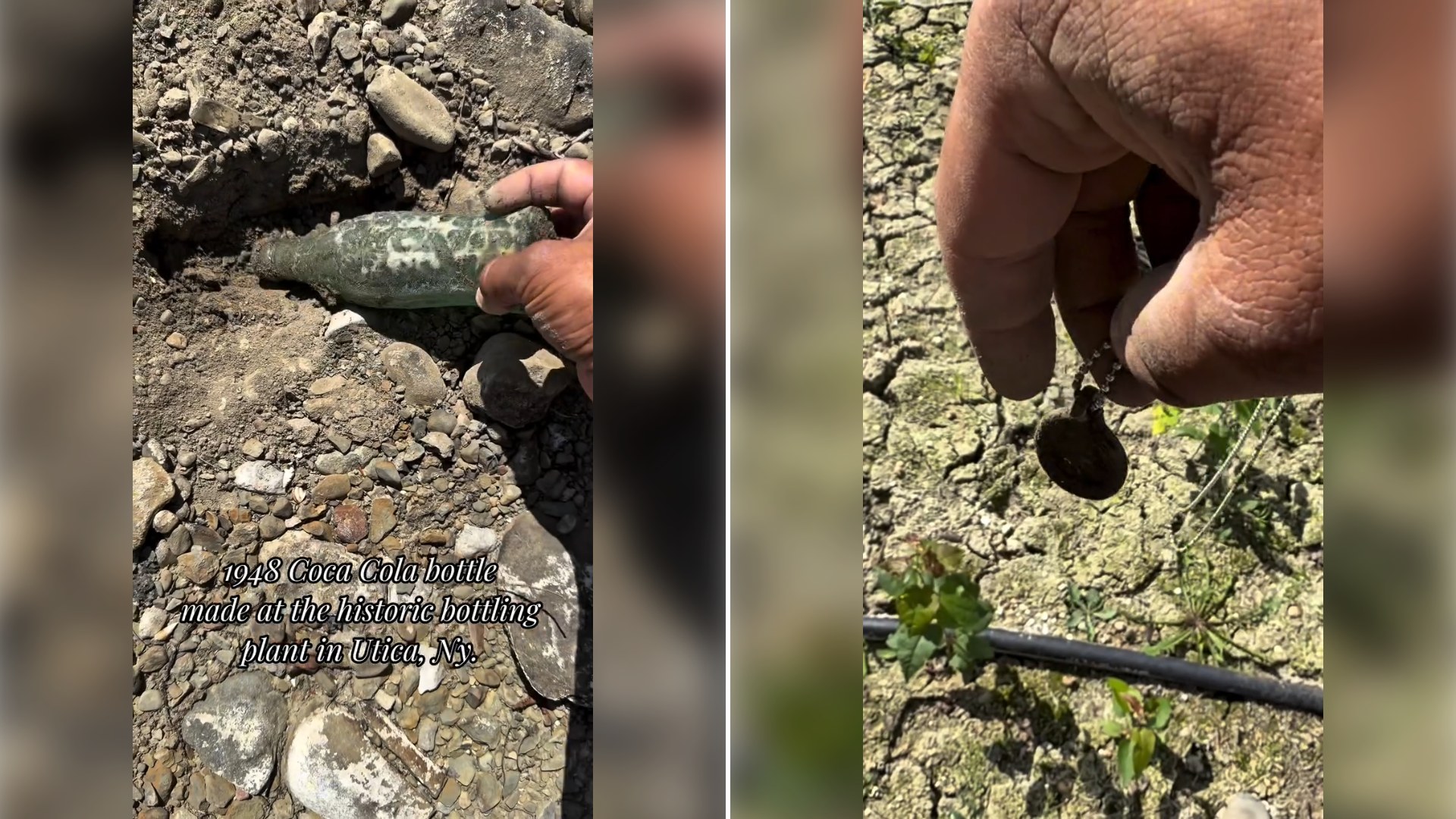
Few environments offer metal detectorists the kind of jackpot opportunity that a newly drained historic lakebed provides, and creator @historyrecoveries makes the most of exactly that chance in a recent Instagram reel. Sweeping a detector across the exposed lake bottom, the haul that emerges is genuinely overwhelming — decades, possibly longer, of lost and discarded vintage items pulled up from mud that had kept them hidden and preserved for generations.
Drained lakebeds represent a genuinely rare and coveted hunting ground within the metal detecting community, precisely because they’re so infrequently accessible. A lake that’s been in continuous use for decades or even centuries accumulates an extraordinary amount of lost material — coins dropped by swimmers, jewelry lost by boaters, tools and equipment that sank during work or recreation — all of it settling into mud and sediment that effectively seals it away from both casual scavengers and the usual erosive forces of weather and foot traffic that degrade items left exposed on dry land.
What makes this kind of find so exciting for both the detectorist and the viewing audience is the sheer unpredictability of what might surface. Unlike detecting in a known historical site with documented activity, a lakebed represents generations of completely unrecorded, accidental deposits — there’s no way to know in advance whether a given sweep will turn up a handful of corroded coins, a lost wedding ring, antique fishing tackle, or something with genuine historical significance. That uncertainty is precisely what makes lakebed detecting such a thrilling, if logistically rare, opportunity within the hobby.
The preservation conditions found in lake sediment also deserve specific credit for how well-preserved many recovered items tend to be compared to objects that have spent decades exposed to open air and sunlight. The anaerobic, low-oxygen environment of lake mud can actually slow corrosion and decay for certain materials, meaning items pulled from a lakebed sometimes emerge in remarkably better condition than comparable objects that were simply lost or discarded on land, where exposure to oxygen, moisture cycles, and temperature swings accelerates deterioration considerably.
Metal detecting as a hobby has experienced a substantial resurgence in visibility over recent years, driven in large part by social media content that transforms what was once a relatively solitary, niche pastime into genuinely compelling entertainment for a broad audience. Detectorists have become skilled content creators in their own right, understanding that the suspense of the search — the beeps, the digging, the moment of uncovering whatever triggered the signal — translates remarkably well into short-form video, even for viewers with no personal interest in ever picking up a detector themselves.
There’s also a quiet historical and archaeological value embedded in content like this, even when the items recovered aren’t individually significant. Collectively, a haul pulled from a single lakebed sweep can offer genuine insight into decades of recreational and community use of a specific body of water, essentially functioning as an accidental, decentralized archaeological record of how people lived, worked, and played around that lake over a long span of time.
It’s worth noting, too, how opportunities like a drained lakebed are often fleeting, tied to specific maintenance schedules, drought conditions, or infrastructure projects that temporarily expose terrain normally submerged. Detectorists who document these rare access windows are, in a sense, racing against the clock, knowing the lake will eventually refill and seal everything beneath the surface again, inaccessible until the next rare opportunity arises, which could be years or even decades away.
This kind of content also reinforces a broader cultural fascination with the idea that history is often hiding in plain sight, quite literally buried beneath our feet or, in this case, beneath the water we walk and swim near every day without a second thought. A lakebed that looked like nothing more than an ordinary body of water for decades suddenly reveals itself as a genuine time capsule the moment conditions allow someone to look beneath its surface.
In the end, @historyrecoveries’s overwhelming haul serves as a powerful reminder of just how much accumulated history sits hidden in the most ordinary, overlooked places. A lake that countless people have swum in, fished from, or simply driven past for generations turns out to be holding an entire accidental museum collection beneath its surface — waiting, patiently, for exactly the right combination of drained water and a curious detectorist to bring it back into the light.

Leave a Reply