

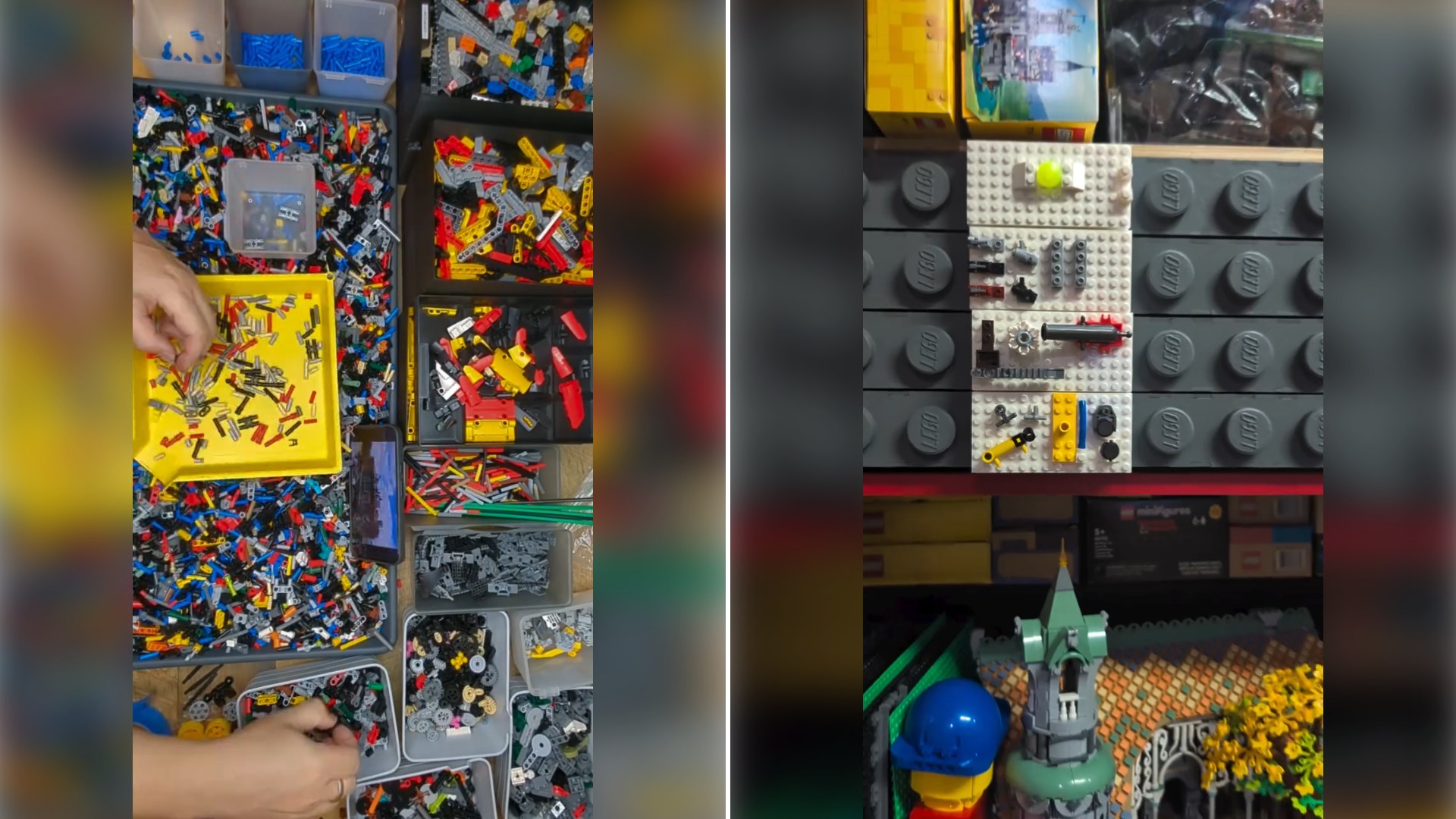
Anyone who has ever stepped barefoot on a stray LEGO brick knows the organizational stakes involved in a collection this large, and @rustydustybricks walks through exactly how he keeps chaos at bay. In this video, he gives a complete behind-the-scenes tour of his system for sorting an enormous personal LEGO collection, turning years of accumulated sets into a genuinely organized, browsable archive rather than an overwhelming pile.
LEGO collecting has grown into one of the most financially significant corners of the entire collectibles world, with certain retired sets appreciating in value faster and more reliably than many traditional investment categories over the past two decades. That growth has pushed serious collectors to treat organization as a genuinely essential skill rather than an afterthought, since a disorganized collection of thousands of individual pieces is effectively unusable, unsellable, and impossible to properly appraise.
The specific sorting methodology on display here, whether organized by color, piece type, set, or theme, reflects decisions that serious LEGO collectors debate extensively within their own community, since each approach carries real tradeoffs. Sorting by color makes custom building projects easier but can make reassembling a specific retired set significantly more time-consuming, while sorting by set preserves easy rebuilding but sacrifices the creative flexibility that many adult collectors value just as much as the sets themselves.
Behind-the-scenes storage content like this serves a genuinely practical purpose for the broader LEGO collecting community beyond simple curiosity. Newer collectors facing the exact same overwhelming scale problem often turn to exactly this kind of video for real, tested storage solutions, from specific container systems to labeling strategies, making content like this a genuine resource rather than purely entertainment.
There is also something satisfying about watching a collection of this scale rendered genuinely navigable rather than chaotic. A storage system capable of handling thousands of individual pieces while keeping specific items findable within minutes represents real logistical achievement, one that often requires years of refinement, false starts, and reorganization before finally settling into a workable long-term system.
LEGO’s appeal as a collecting category spans an unusually wide demographic range, from kids actively building to adult enthusiasts, often called AFOLs within the community, who treat the hobby with the same seriousness as any other dedicated collecting pursuit. A massive, meticulously organized collection like this one represents the far end of that adult enthusiast spectrum, where the hobby has clearly evolved well beyond childhood play into genuine long-term curation.
Tours like this ultimately do real service to anyone newly entering serious LEGO collecting, demonstrating that a seemingly impossible organizational challenge, thousands of tiny, similar-looking pieces, can be tamed with the right system and enough patience, turning what could be an overwhelming mess into a genuinely enjoyable, browsable personal archive.

Leave a Reply