

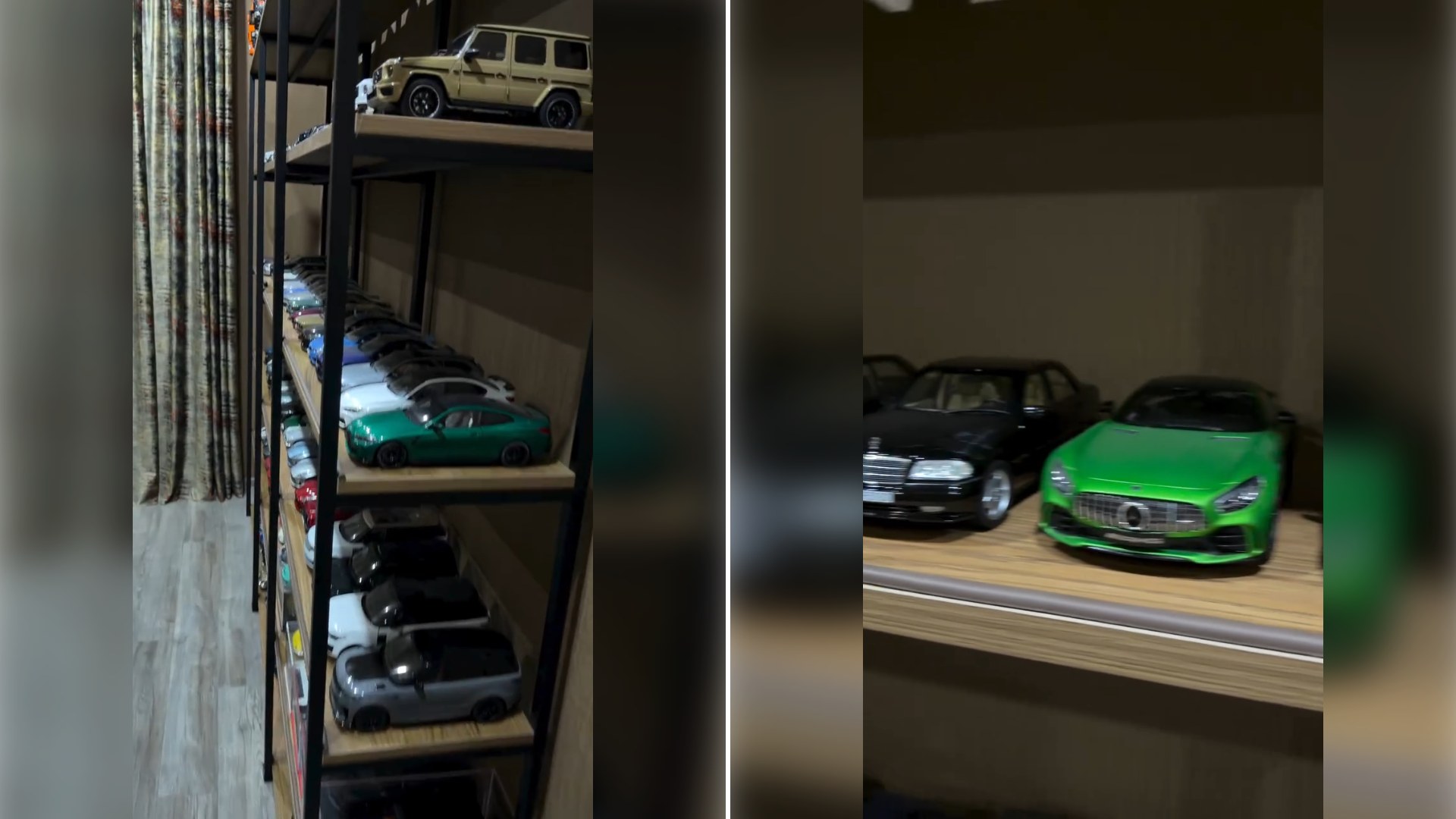
There’s a particular kind of magic to the “reveal” video, and creator @gk_garage__ understands it better than most. In a recent Instagram reel, an unassuming set of cabinet doors swings open to expose row after row of meticulously arranged die-cast model cars, each one lit and positioned like a miniature showroom. It’s the kind of clip that makes collectors everywhere pause mid-scroll and lean in closer.
Die-cast model car collecting occupies a strange and wonderful niche within the broader collectibles world, sitting somewhere between automotive fandom, miniature craftsmanship, and pure nostalgia. For many collectors, it starts in childhood with a single Hot Wheels or Matchbox car pulled from a blister pack, and it either stays there as a fond memory or metastasizes, decades later, into exactly the kind of wall-to-wall display @gk_garage__ shows off. The reveal format — doors swinging open, a curtain pulling back, a light flicking on — taps into something almost theatrical, turning a private hobby into a moment of genuine spectacle.
What makes these collections so compelling to watch is the sheer density of detail packed into a small physical footprint. Unlike full-size car collecting, which requires garages, storage fees, and serious capital, die-cast collecting lets enthusiasts assemble an automotive history spanning decades — muscle cars, JDM icons, European exotics, obscure prototypes — on a few shelves. That accessibility is part of why the hobby has exploded in popularity over the last decade, fueled by brands like Hot Wheels’ premium “RLC” and “Car Culture” lines, as well as higher-end 1:18 and 1:64 scale manufacturers that cater specifically to adult collectors rather than children.
The display itself is almost as important as the cars within it, and serious collectors treat shelving and lighting with the same seriousness a gallery curator might apply to fine art. LED strip lighting, acrylic display cases, and custom-built shadow boxes have become their own subculture within the hobby, with builders sharing tutorials on everything from diorama backdrops to rotating turntables. A reveal video like this one works precisely because it suggests enormous unseen effort — sourcing the cars, organizing them by era or manufacturer, building or buying the display case, wiring the lighting — all compressed into a few seconds of satisfying payoff.
There’s also a strong nostalgic undercurrent running through die-cast collecting that goes beyond simple car enthusiasm. For many adults, these tiny vehicles are stand-ins for memories of childhood bedroom floors, of lining up cars for imaginary races, of begging a parent for just one more at the checkout aisle. Returning to the hobby as an adult, often with disposable income a child never had, lets collectors simultaneously indulge a genuine appreciation for automotive design and reconnect with a simpler, more innocent form of play — a combination that explains why die-cast collecting skews so heavily toward adults reliving a specific decade of their own youth.
It’s worth noting, too, how closely this hobby mirrors vinyl record collecting and other physical media revivals that have defined so much of nostalgia culture in recent years. In each case, a mass-produced, relatively inexpensive object becomes elevated through curation, display, and community — the object itself matters less than the care taken in assembling and presenting a complete collection. Just as a vinyl collector might organize a shelf chronologically or by label, die-cast collectors obsess over organizing by brand, scale, or even the specific casting number stamped on a car’s underside, turning what could be clutter into something closer to an archive.
The online die-cast community has also become a genuine economy unto itself, with rare castings, limited convention exclusives, and discontinued “Treasure Hunt” cars trading hands for hundreds of dollars on resale platforms. This has transformed a hobby once dismissed as a kids’ toy aisle afterthought into something with real secondary-market stakes, complete with price guides, grading discussions, and heated debates over which castings will appreciate. A collection the size of the one @gk_garage__ reveals likely represents not just years of accumulation but a genuine financial and emotional investment.
Social media has only accelerated this growth, giving collectors who might once have kept their hobby fairly private a stage to showcase builds, trade tips, and find community. Reveal videos in particular perform exceptionally well because they’re universally legible — you don’t need to recognize a single casting to feel the satisfaction of a well-organized, beautifully lit shelf swinging into view. That crossover appeal, reaching both hardcore collectors and casual viewers who simply enjoy a satisfying reveal, is a big part of why this corner of collector content keeps finding new audiences.
Videos like this one ultimately function as a kind of gentle advertisement for the hobby itself, inviting viewers who might have a dusty box of childhood Hot Wheels somewhere to consider what a little curation and lighting could do. Whether or not any given viewer ever builds their own shelf of die-cast cars, there’s something universally satisfying about watching someone else’s carefully tended passion project get its moment in the spotlight — doors swinging open on a small, glowing monument to patience, taste, and a lifetime of saying yes to just one more car.

Leave a Reply