

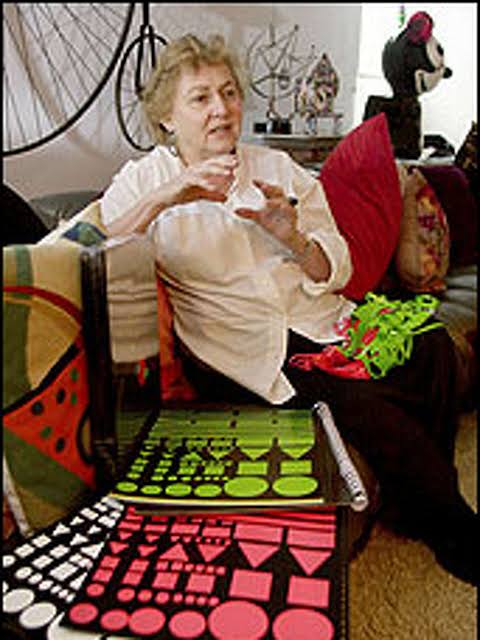
Harry and Patricia Kislevitz weren’t trying to invent a toy in 1950. They were newlyweds sharing a cramped railroad apartment on Manhattan’s Upper West Side, both fresh out of the Art Students League, spending their days thinking about Kandinsky’s shapes and colors rather than anything you’d find on a store shelf. What changed their lives was a roll of thin, flexible colored vinyl that had landed in their apartment, the kind of material more commonly destined for pocketbooks, according to a history of the company on Wikipedia.
Somewhere in that apartment, one of them noticed something odd. The vinyl clung to the semigloss paint of their bathroom wall on its own, no tape or glue involved, and it peeled off clean enough to be pressed somewhere else. It should have been a throwaway observation. Instead, the Kislevitzes left a pair of scissors and the sheeting sitting in the bathroom, half as a joke, and waited to see what would happen.
What happened was that their guests stopped mingling. According to a detailed account from Click Americana, visitors at the couple’s parties would disappear into the bathroom for long stretches, cutting shapes out of the colored vinyl and sticking them to the enameled walls, rearranging them, starting over. A party trick was quietly turning into market research nobody had asked for.
From bathroom wall to FAO Schwarz
By 1951, the Kislevitzes had turned the idea into something they could actually sell: laminated paperboard backgrounds paired with die-cut, stick-on vinyl shapes kids could press on, peel off, and rearrange endlessly without ever tearing the paper underneath. They scraped together roughly $5,000, enlisted friends to help, and produced their first run of sets out of their own home in River Edge, New Jersey. They carried the finished product to FAO Schwarz in New York, one of the country’s most storied toy retailers, and it sold out almost immediately, Click Americana reports.
Harry ran the young company out of the house in River Edge while a small manufacturing operation a few miles away in Ramsey, New Jersey, handled the cutting and packaging. Nobody in that apartment two years earlier had been thinking about supply chains. Now they had one.
Those very first Colorforms weren’t even boxes. Per Wikipedia’s account, the earliest sets were spiral-bound booklets that Patricia and Harry assembled by hand in their own apartment before FAO Schwarz ever saw one, closer to a handmade art project than a mass-market toy. Only after that initial run proved there was real demand did the format shift into the shallow, illustrated boxes generations of kids would come to recognize, with screen-printed vinyl pieces and painted backgrounds standing in for the bathroom wall that started it all. Patricia’s eye for color and composition and Harry’s willingness to turn a bathroom game into a business plan were, by most accounts, equally responsible for getting it there.
A logo, a duck, and a very long licensing list
The company’s visual identity got a serious upgrade in 1959, when legendary graphic designer Paul Rand, the man behind the IBM and ABC logos, created the Colorforms wordmark still recognizable today, per Wikipedia. Early sets leaned on original characters like the weather-appropriate paper doll Miss Weather, but the real growth engine turned out to be licensing. Colorforms struck its first character deal with Popeye in 1957, and once that door opened, it never really closed. Batman, Star Trek, The Beatles, and Peanuts all eventually got the stick-on-vinyl treatment, turning a novelty invented in a rented bathroom into a fixture of toy aisles for generations of American kids who never touched a real bottle of glue to make one.
The numbers eventually caught up to the nostalgia. Wikipedia’s history of the brand puts total production at over one billion individual Colorforms playsets since the company’s founding. The toy was named among the Top 10 Toys of the Century in 2000, and Time magazine included it on its list of the 100 greatest toys of all time in 2011. The brand has changed hands since the Kislevitz family sold it, and it’s been owned by children’s entertainment company 9 Story Media Group since 2018, long after Harry and Patricia’s original River Edge operation gave way to something much bigger.
None of it would exist if two art students had simply thrown away a scrap roll of vinyl instead of letting it sit on a wall a little too long. The biggest toy ideas rarely announce themselves. Most of the time, somebody just has to be paying attention when the wall does something it isn’t supposed to do.

Leave a Reply