

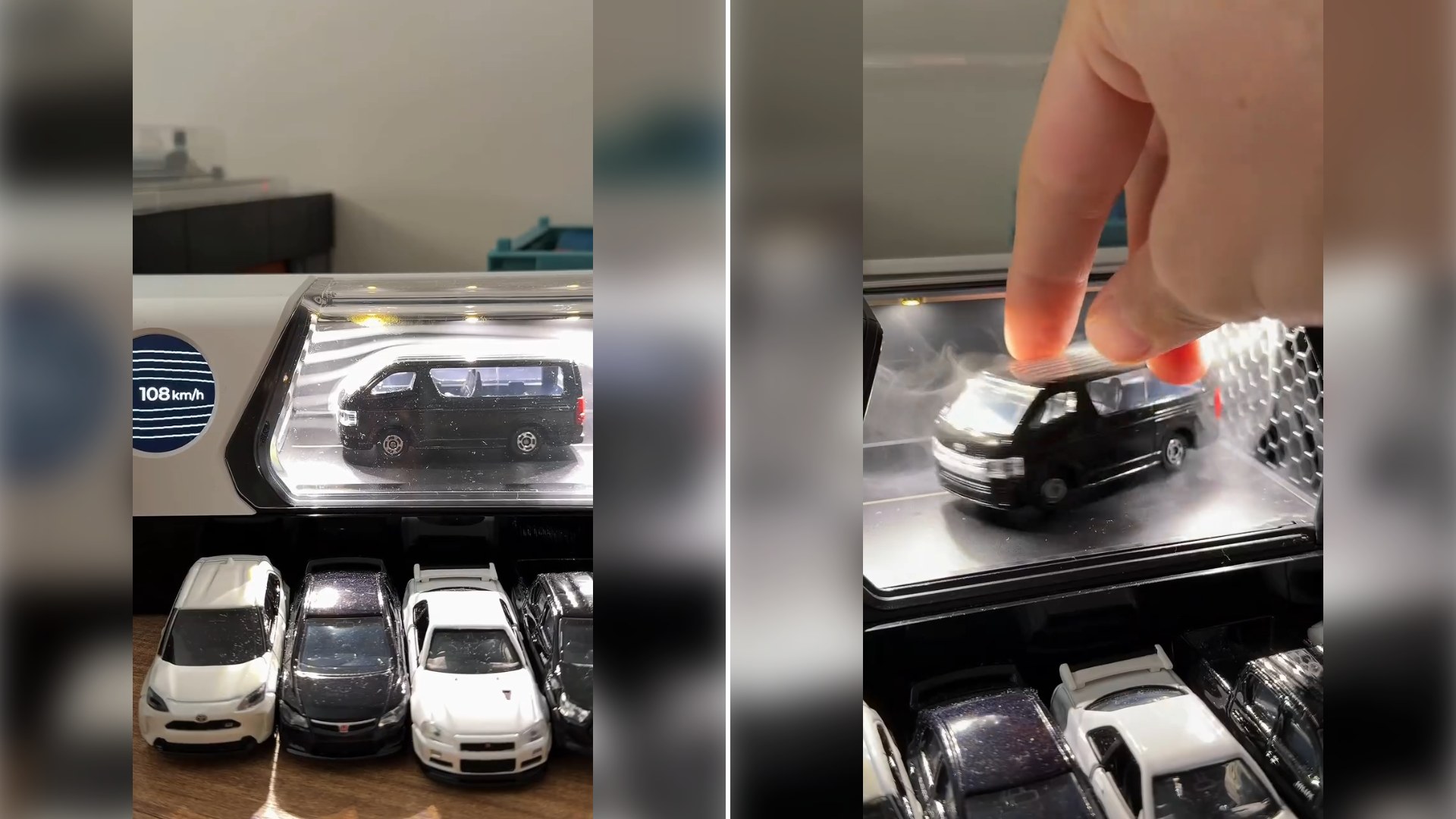
Die-cast collecting rarely crosses into actual scientific testing territory, but creator @64thmotors does exactly that in a recent Instagram reel, strapping a die-cast toy van to a treadmill in an improvised attempt to measure just how aerodynamic the little model’s design actually is. The resulting test is equal parts absurd and genuinely clever, a perfect blend of hobbyist humor and real curiosity.
Aerodynamic testing has long been a core part of real automotive engineering, with full-scale wind tunnels representing a massive, expensive, and highly specialized tool that manufacturers use to refine vehicle shapes for reduced drag and improved fuel efficiency or performance. Applying a playful, improvised version of this exact scientific process to a tiny die-cast toy represents a genuinely creative bit of hobbyist experimentation, translating serious automotive engineering concepts into an accessible, backyard-science format that requires nothing more than a treadmill and genuine curiosity.
What makes this kind of content so appealing is the way it treats a toy with genuine engineering seriousness, even while clearly embracing the inherent silliness of the setup. Die-cast model cars are typically designed primarily for visual accuracy and collectability rather than genuine functional aerodynamics, so testing one’s real-world airflow characteristics, even informally, offers a genuinely novel way of engaging with a collection beyond simply displaying it — treating these small objects as legitimate subjects of curious investigation rather than purely static collectibles.
This kind of experimental, hands-on approach to collecting reflects a broader trend within hobbyist communities toward finding creative, often humorous new ways to engage with collections beyond traditional display and acquisition. Rather than simply adding another model to a shelf, a project like this one transforms a single die-cast van into the subject of a genuinely entertaining mini-experiment, extending the collecting hobby into territory that borders on amateur science and engineering curiosity.
There’s also a strong comedic sensibility at play that distinguishes this kind of content from more straightforwardly serious collector showcases. The visual absurdity of a tiny toy van strapped to a treadmill, subjected to a mock-serious aerodynamic evaluation, creates genuine comedic tension between the elaborate setup and the ultimately low-stakes, playful nature of the actual subject matter, a combination that tends to perform particularly well across social media audiences who appreciate both genuine hobbyist knowledge and self-aware humor about that same hobby.
Die-cast collecting content has increasingly diversified beyond simple showcase and unboxing formats in recent years, with creators finding inventive new ways to generate engaging content around what could otherwise become a visually repetitive genre. Creative format experiments like this treadmill test help keep the broader die-cast content ecosystem feeling fresh and varied, offering audiences something genuinely different from standard collection reveals or purchase hauls.
It’s also worth noting how this kind of lighthearted, science-adjacent content can serve a genuine educational function, introducing viewers to basic aerodynamic concepts and testing methodology in an accessible, entertaining format that a more formal explanation might struggle to deliver with the same immediate appeal. Even viewers with no particular interest in die-cast collecting might come away with a slightly better intuitive understanding of how vehicle shape affects airflow resistance.
Ultimately, @64thmotors’s treadmill test succeeds because it finds genuine creative novelty within an established hobby, proving that even a well-worn collecting format can yield fresh, entertaining content when approached with enough curiosity and a willingness to embrace a bit of absurdity. Sometimes the most memorable collector content comes not from showing off the biggest or rarest piece, but from asking a genuinely strange question about an ordinary one.

Leave a Reply