

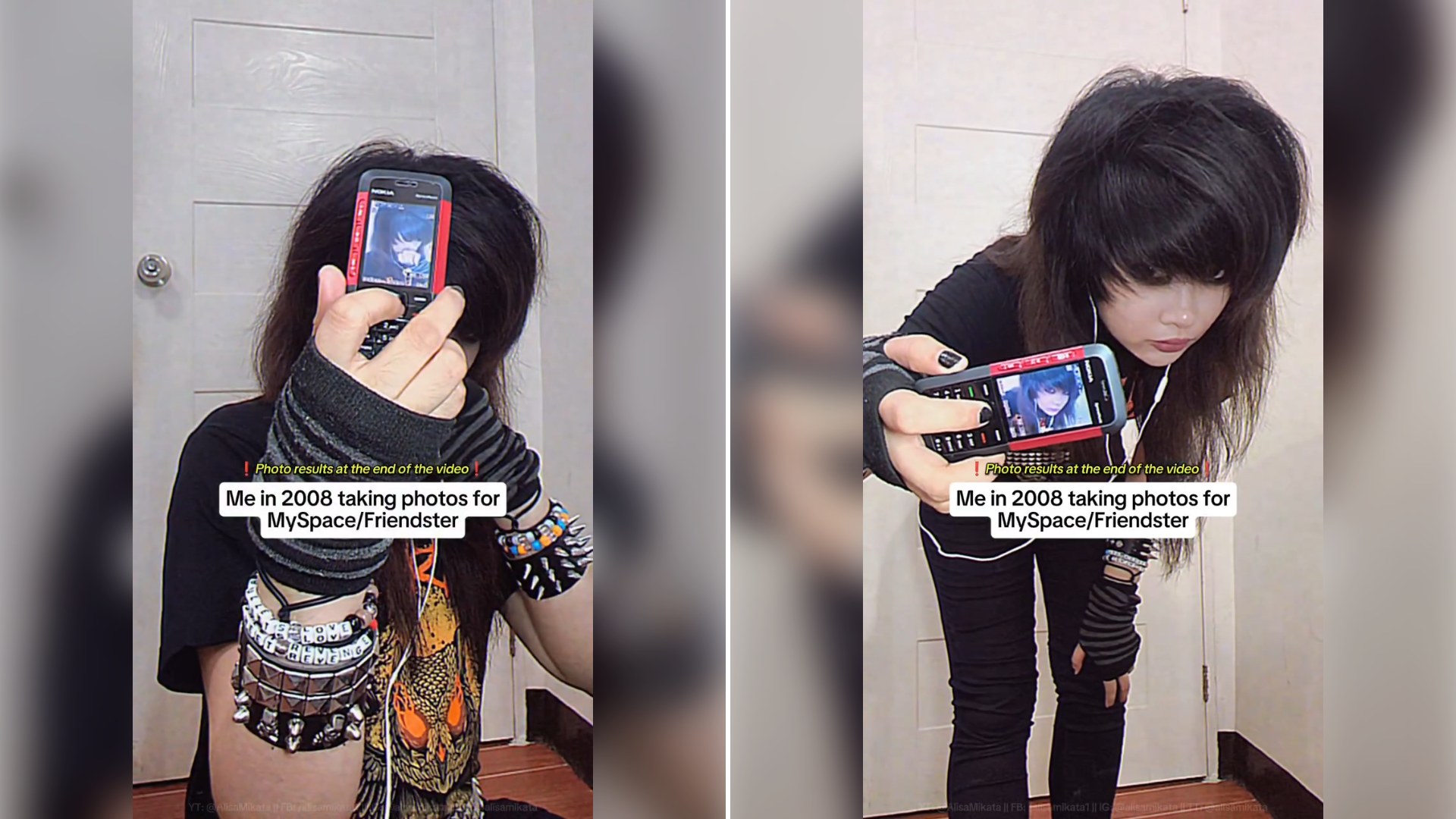
Few fashion subcultures burned as brightly or as briefly as 2000s scene style, and creator @alisamikata gives it a full, loving revival in a recent Instagram reel, styling the look’s signature elements and then photographing the result on a genuinely period-accurate Nokia XpressMusic phone. The combination of fashion and technology nostalgia, captured together rather than separately, makes for a remarkably complete trip back to one very specific cultural moment.
Scene subculture, which flourished primarily in the mid-to-late 2000s, developed its own distinctive and instantly recognizable visual language, defined by heavily teased and colorfully dyed hair, thick eyeliner, skinny jeans, band t-shirts, and an overall aesthetic heavily influenced by emo, pop-punk, and early internet visual culture. It represented a genuinely specific moment when MySpace-era digital self-presentation and in-person fashion choices became deeply intertwined, with the subculture’s look often designed explicitly with digital photo-sharing and profile customization in mind.
The choice to photograph this recreated look specifically on a Nokia XpressMusic phone adds a layer of technological authenticity that elevates this content well beyond simple fashion recreation. The XpressMusic line represented Nokia’s attempt to position its phones as dedicated music and multimedia devices during a transitional period in mobile technology, just before smartphones would fundamentally reshape the entire category, and its particular camera quality, with its characteristic low resolution, color rendering, and flash behavior, produces images with an unmistakable period-specific visual signature that modern smartphone cameras simply cannot replicate.
This pairing of fashion and technology nostalgia reflects a broader and increasingly sophisticated trend within nostalgia content, where creators recognize that fully convincing period recreation requires attention to multiple simultaneous layers of authenticity rather than focusing on just one element in isolation. A perfectly styled scene look photographed on a modern iPhone would feel noticeably incomplete to anyone who actually lived through the era, since the specific photographic quality of early-to-mid 2000s camera phones was itself a defining visual characteristic of how that subculture’s fashion was actually documented and shared at the time.
Scene fashion specifically has experienced a genuine and substantial revival in recent years, part of a broader Y2K and 2000s nostalgia wave that has swept through fashion, music, and broader pop culture. Younger audiences who didn’t experience the subculture firsthand have discovered and embraced its aesthetic largely through social media archaeology, while millennials who lived through the original scene era approach its revival with a more complicated mix of genuine nostalgic affection and amused self-awareness about a look that, at the time, often invited considerable mockery from outside the subculture.
There’s also something worth noting about how thoroughly documented this particular subculture was by its own participants, given its close relationship with early social media and digital photo sharing. Scene kids were, in many ways, early adopters of the kind of self-documentation and online identity curation that would later become standard practice across all of social media, which means recreating the look today involves engaging with an aesthetic that was always deeply self-aware about its own visual presentation and digital documentation.
The broader 2000s revival has also brought renewed appreciation for specific technology from the era, with vintage flip phones, early smartphones, and devices like the Nokia XpressMusic becoming genuinely sought-after collector items among people drawn to their specific aesthetic and functional qualities, distinct from the sleek, uniform design language that has come to dominate modern smartphone manufacturing.
It’s also worth considering how this kind of layered nostalgia recreation requires genuine research and dedication to execute convincingly, since both the specific fashion details and the technological authenticity need to align precisely to feel genuinely period-accurate rather than a vague, generalized gesture toward “2000s vibes” without real specificity.
Ultimately, @alisamikata’s project succeeds because it treats scene subculture not as an embarrassing relic to be mocked from a safe modern distance, but as a genuinely rich aesthetic moment worth recreating with real care and technical authenticity. In pairing the fashion with its period-accurate photographic medium, the recreation becomes something closer to genuine historical documentation than simple costume play.

Leave a Reply