

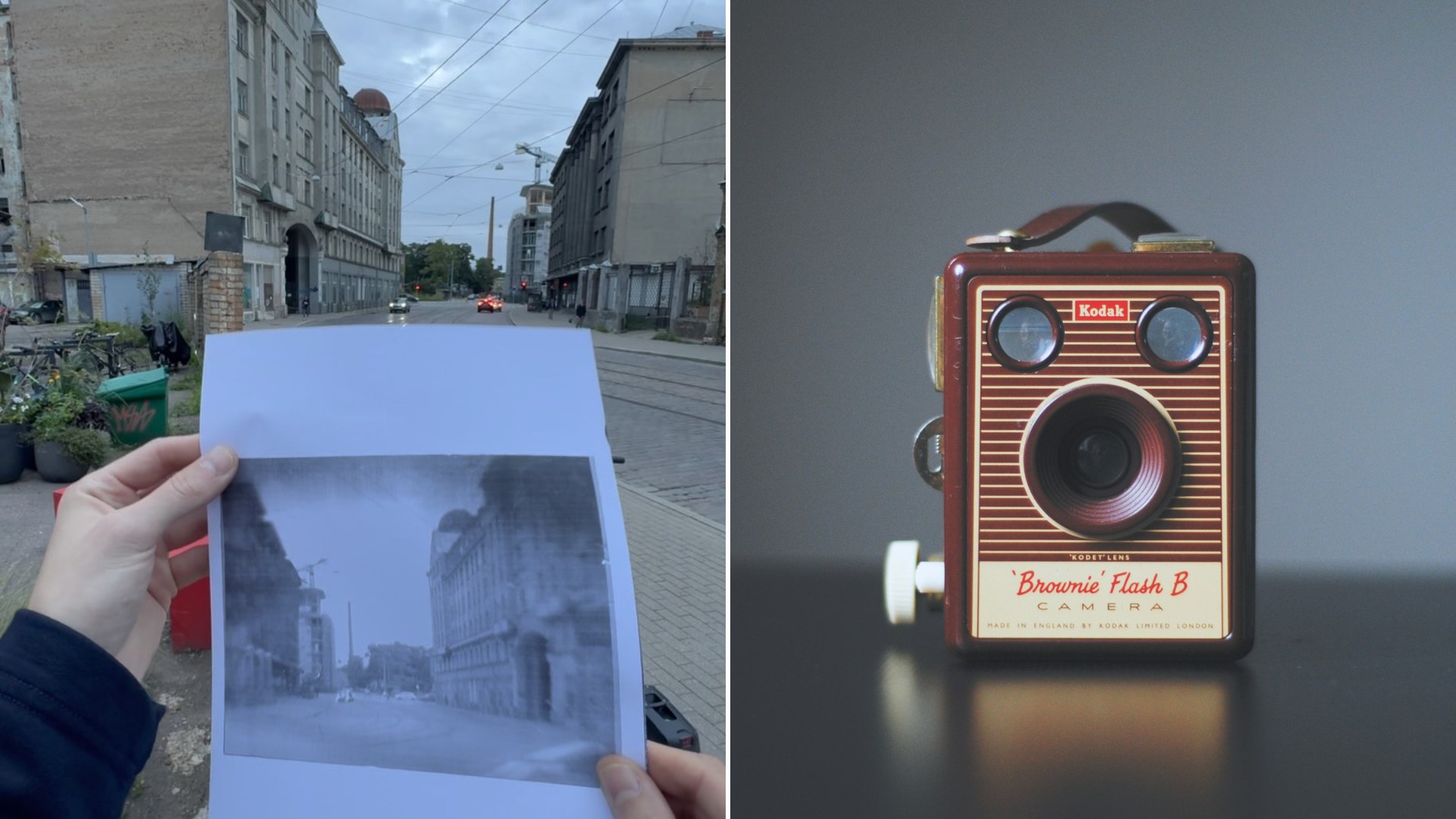
There’s a specific strain of internet content built entirely around the question “but could you actually build that,” and creator @noizebro answers it beautifully in a recent Instagram reel. Starting with nothing more than a discarded desktop scanner, a magnifying glass, and a pile of cardboard, the video documents the construction of an oversized, fully functional “instant camera” — a DIY science project that somehow lands squarely in the sweet spot between garage tinkering and genuine vintage-tech homage.
Builds like this one sit at a fascinating intersection of nostalgia and ingenuity, repurposing the guts of a piece of obsolete office technology — the flatbed scanner, a device most people haven’t thought about since the early 2000s — into something that evokes an even older technology, the instant camera. It’s a layered kind of nostalgia: honoring both the analog photographic tradition of instant film cameras like the Polaroid, and the increasingly vintage status of early digital-era peripherals like the scanner itself, which has quietly gone the way of the fax machine in most households.
The appeal of maker content like this has exploded over the last several years, fueled in part by a broader cultural hunger for tangible, hands-on creation in a world that increasingly feels abstracted and screen-bound. Watching someone take a magnifying glass, scavenged electronics, and cardboard and turn them into a working optical device scratches an itch that algorithmic feeds and polished product reviews simply can’t — it’s proof that real ingenuity, not just purchasing power, can still produce something remarkable.
There’s also something quietly subversive about using a scanner, of all things, as raw material. Flatbed scanners were workhorse devices throughout the 1990s and 2000s, present in nearly every home office and school computer lab, yet they’ve become almost entirely obsolete as smartphone cameras and all-in-one printers absorbed their function. Repurposing one into an entirely different kind of image-capturing device is a clever bit of technological recycling, giving old hardware a genuinely new life rather than letting it gather dust in a closet or end up in an e-waste bin.
This kind of project also taps directly into the enduring fascination with instant and analog photography that has defined so much of the recent vintage tech revival. Instant cameras, after a long dormant period following the digital camera boom, have seen a dramatic resurgence in popularity, driven by younger generations drawn to the tactile unpredictability of physical prints in an era of infinite, disposable digital images. A DIY, oversized homage to that format — built from scratch rather than purchased — pushes that appreciation even further, turning admiration into active recreation.
The cardboard-and-tape aesthetic of builds like this one also deserves credit for its own visual charm. There’s an honesty to visible seams, exposed mechanisms, and obviously improvised materials that polished consumer electronics can never replicate. It recalls the golden era of science fair projects and garage inventors, when functionality mattered more than finish, and when the thrill of a project was watching something built from scraps actually work as intended on the first — or fifteenth — try.
Optics-based builds in particular have a strong tradition in amateur science and photography communities, where pinhole cameras, camera obscuras, and magnifying-lens projects have long served as entry points for people curious about how light and image capture actually work. A build like @noizebro’s makes those sometimes-abstract optical principles suddenly visible and tangible, demystifying technology that most people use daily without ever considering how it functions.
It’s also worth appreciating how well this kind of content performs specifically because it rewards patience and process over instant gratification. Unlike a simple unboxing or product demo, a build video invites viewers to follow along through trial, adjustment, and incremental progress, mirroring the actual experience of hands-on creation. That slower, more deliberate pacing stands in stark contrast to much of the internet’s usual content cadence, and audiences clearly respond to it.
In the end, what makes this project so satisfying to watch isn’t just the novelty of a giant cardboard camera, but the reminder that curiosity and resourcefulness remain available to anyone with spare parts and patience. It’s a small act of defiance against planned obsolescence and disposable culture, transforming yesterday’s office equipment into today’s homemade homage to photography’s analog past — proof that sometimes the most compelling vintage-tech content isn’t found in an antique shop at all, but built from scratch on a kitchen table.

Leave a Reply