

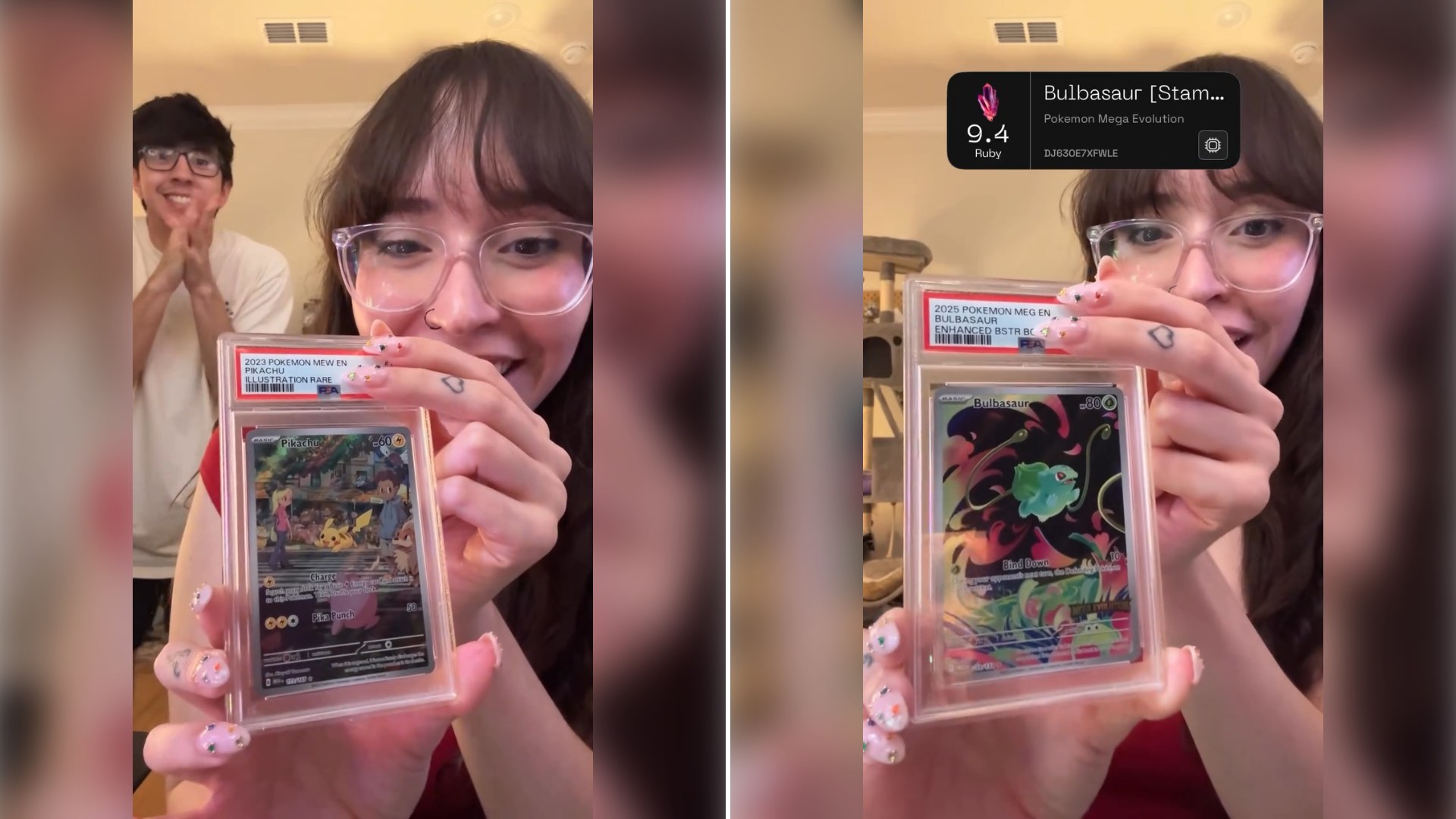
Few moments in collecting carry the same nail-biting anticipation as opening a return package from a grading service, and creator @pokecate captures exactly that feeling in a recent Instagram reel documenting her very first PSA submission. With sixteen cards sent off and now returned, the reveal delivers shockingly good results, turning a first-timer’s leap of faith into a genuinely triumphant unboxing.
For anyone outside the trading card world, it’s worth explaining just how significant third-party grading has become to the modern collecting economy. PSA, short for Professional Sports Authenticator, evaluates cards for centering, surface quality, corners, and edges, then assigns a numerical grade from 1 to 10 that can dramatically affect a card’s resale value — sometimes multiplying it several times over for a pristine, high-grade result. A raw, ungraded card and that same card slabbed with a PSA 10 label can exist in entirely different price tiers, which is exactly why submitting cards for grading has become such a pivotal, nerve-wracking ritual for collectors.
The grading process itself can take weeks or even months depending on submission volume and service tier, which only amplifies the anticipation documented in videos like this one. Collectors spend that entire waiting period essentially gambling on cards they’ve already paid to submit, hoping that years of careful handling and storage — penny sleeves, top loaders, careful temperature control — paid off in the final assessment. That drawn-out suspense is a huge part of why grading reveal videos perform so well; the payoff has been built up over weeks of uncertainty rather than delivered instantly.
Pokemon card collecting specifically has experienced an extraordinary resurgence over the past several years, fueled by a combination of pandemic-era nostalgia, genuine investment interest, and a new generation of young collectors discovering the hobby alongside their parents, many of whom collected the original cards themselves in the late 1990s. This cross-generational appeal has created a uniquely robust secondary market, with vintage holographic cards from the franchise’s original release commanding prices that would have seemed absurd to the kids originally trading them in elementary school lunchrooms.
A first-time submission carries particular emotional weight within this ecosystem, since new collectors often enter the grading process with limited knowledge of what separates a gem-mint card from one with subtle, easily overlooked flaws. Sixteen cards represents a meaningful initial investment of both money and hope, and a strong overall result validates not just the specific cards submitted but the collector’s own developing eye for quality — a genuine milestone in anyone’s collecting journey, regardless of the raw dollar value involved.
The grading reveal genre has also become a significant driver of the broader trading card content ecosystem on social media, generating enormous engagement precisely because outcomes are genuinely unpredictable. Unlike a scripted unboxing of a guaranteed product, a grading reveal carries real stakes — cards can come back with unexpectedly low grades due to centering issues invisible to the naked eye, making every video a small drama with a real chance of disappointment alongside the possibility of triumph.
This kind of content also serves an important educational function for newer collectors navigating an often opaque and intimidating process. Watching someone else’s first submission, complete with their reactions to each individual grade, offers a kind of informal tutorial in what to expect, how to interpret results, and what realistic outcomes look like — valuable information that can be harder to find in straightforward written guides than in the lived, emotional experience of someone going through it for the first time themselves.
There’s also something worth noting about how grading has fundamentally changed collecting culture more broadly, shifting trading cards from a purely nostalgic, play-oriented hobby into something closer to a formalized collectibles market with standardized quality metrics, much like coins or comic books before them. That transformation has brought real financial stakes into what was once a purely sentimental pursuit, for better or worse reshaping how an entire generation relates to cards they might once have simply kept in a shoebox.
Ultimately, @pokecate’s reveal resonates because it captures a universally recognizable feeling: the mix of hope, anxiety, and eventual relief or elation that comes with putting something you care about up for external judgment. Whether it’s a first grading submission, a first thrift store find, or any other collecting milestone, that emotional arc — uncertainty followed by validation — is exactly what keeps collectors chasing the next envelope, the next shelf, the next unexpected payoff.

Leave a Reply