

That pretty yellow-green candy dish on a flea market table might be hiding a party trick. Shine a cheap blacklight on the right piece of old glass and it lights up like a glow stick.
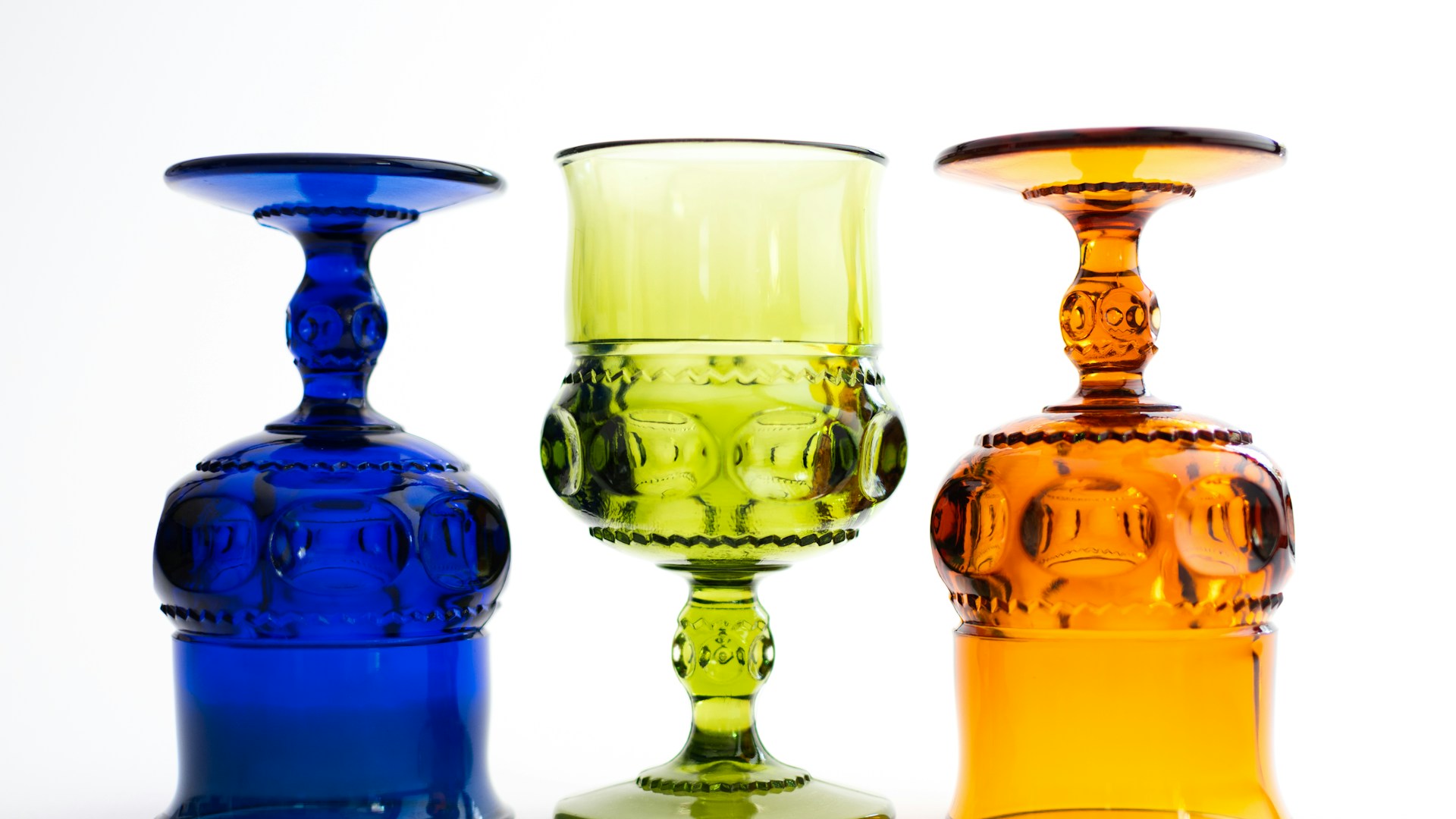
It is called uranium glass, and collectors have chased it for years. Here is how to test a piece, plus ten makers worth knowing before you hand over a dollar.
According to House Digest, green, yellow, deep red, pale blue and brown glass, especially older pieces, may contain uranium. The same article says a small blacklight costs under $10 online.
Wikipedia notes that uranium glass fluoresces bright green under ultraviolet light. Antique Trader explains that black lights give off UV-A, roughly 320 to 400 nanometers, and the additives in the glass soak up that energy and give it back as visible light.
Names like “vaseline” and “custard” are often handed out by eye alone, Wikipedia points out, so the light test is the way to confirm what you are holding.
Franz Xaver Riedel Of Bohemia Is Often Credited As The First Big Name
Wikipedia describes Riedel, working in Unter-Polaun, Bohemia, as often credited as the first major producer of uranium glass, from 1830 to 1848. He named his yellow and yellow-green glasses “annagelb” and “annagrun” after his daughter.
You are unlikely to trip over a Riedel piece at a flea market. Still, it is a fun bit of history to carry in your pocket.
James Powell And Sons Of London Were Among The First To Sell The Glow
Wikipedia lists James Powell and Sons, also known as Whitefriars Glass, as one of the first firms to sell the glowing glass. They were based in London, England.
If you spot a marked English piece, a blacklight check costs you nothing.
Baccarat Of France Made An Opaque Green Called Chrysoprase
Here is a twist. Not all uranium glass is see-through. Wikipedia says Baccarat of France began making an opaque green uranium glass called chrysoprase in the 1840s.
That means a solid, milky green piece is worth a second look under the light.
Fenton Lit Up Collections Starting In The 1930s
Antique Trader says Fenton’s uranium glass lit up collections from the 1930s. The magazine reports a Fenton Hobnail Opalescent uranium pitcher sold for $74.99 on eBay in 2022.
A Fenton Hobnail Topaz Diamond Lace epergne did far better, selling for $2,499 on eBay in 2019, according to the same article. Condition and originality matter a great deal with any of these prices.
Northwood Carnival Glass Can Be Very Valuable
Antique Trader says carnival glass with uranium content, especially Northwood, can be very valuable. That is a good reason to carry the blacklight even when a piece looks more orange or purple than yellow.
Check for cracks and chips before you get excited. A damaged piece rarely holds its price.
Lalique Used Less Uranium, So The Glow Is Subtler
Antique Trader reports that Lalique used a lower uranium concentration, blended with other colorants and opacifiers. The article also says Art Deco uranium glass from the 1920s to the 1940s is highly sought after.
An R. Lalique “Deux Sirenes” box top sold for $1,300 at MBA Seattle Auction in 2018, per Antique Trader. Expect a gentler glow, not a neon one.
Vallerysthal Of France Made Dolphin Candlesticks That Sold For $1,500
Antique Trader lists Portieux Vallerysthal, a French maker, and describes yellow Vaseline dolphin candlesticks dated 1900 to the 1940s. That pair sold for $1,500 on eBay in 2019.
Notice the pattern. Pieces with shape and detail, like a dolphin base, tend to bring more than plain bowls.
Mosser Carried The Vaseline Tradition Forward
Wikipedia says Fenton and Mosser continued the “vaseline glass” tradition as of 2014. Fenton and Mosser resumed uranium glass production in the United States after wartime restrictions eased.
So a newer Mosser piece may glow too. Look for the maker’s mark and ask the seller how old it is.
Riihimaki Glass Made Designer Pieces After World War II
Wikipedia credits Riihimaki Glass with uranium glass designer pieces after World War II. These mid-century shapes look quite different from fussy Victorian dishes.
If a sleek, modern-looking vase glows green, this is a maker to remember.
Cambridge And Tiffin Made Rare Glowing Depression Glass
Antique Trader names Cambridge and Tiffin as early Depression glass makers that produced rare glowing pieces. The tenth stop on our list is really a pair.
Because many Depression glass pieces are green, the blacklight is the only fair way to tell the glowing ones from the plain.
House Digest says uranium glass is safe to display in your home but should not be used for eating or drinking. The article advises passing on damaged pieces and wearing gloves when handling broken or cracked ones.
Wikipedia adds that most pieces are considered harmless and only negligibly radioactive, and that a study of a private collection found its radiation posed no danger to the public or to conservators. Antique Trader likewise calls the risk extremely low and says cadmium glass, a different type, is also fine to display.
House Digest suggests looking at eBay sold listings to gauge value. Bowls and plates can sell for as little as 99 cents, while intricate, hard-to-find items can top $1,000.
Bring the light, bring your reading glasses and inspect every rim. A little patience can turn a $5 table find into the best story at the next family dinner.
More Stories You May Like
- Showing Up At Dawn To A Flea Market Is Not Always A Win Because Dealers Pick Over The Good Stuff And Last Hour Deals Can Beat Them
- Brand New Metal Signs And Tins Made To Look Aged Are Flooding Flea Markets So Learn To Spot A Fake Before Paying Vintage Prices
- Asking For The Dealer Price And Other Flea Market Haggling Mistakes Could Cost You The Best Finds Of The Day

Leave a Reply