

A tired 1980s maple dresser, a $30 price tag on Facebook Marketplace and a weekend of elbow grease. That is the recipe one furniture flipper used to turn an outdated tallboy into a navy and walnut showpiece, and the numbers she shared at the end make the project worth studying for anyone who dreams of a side hustle in secondhand furniture.
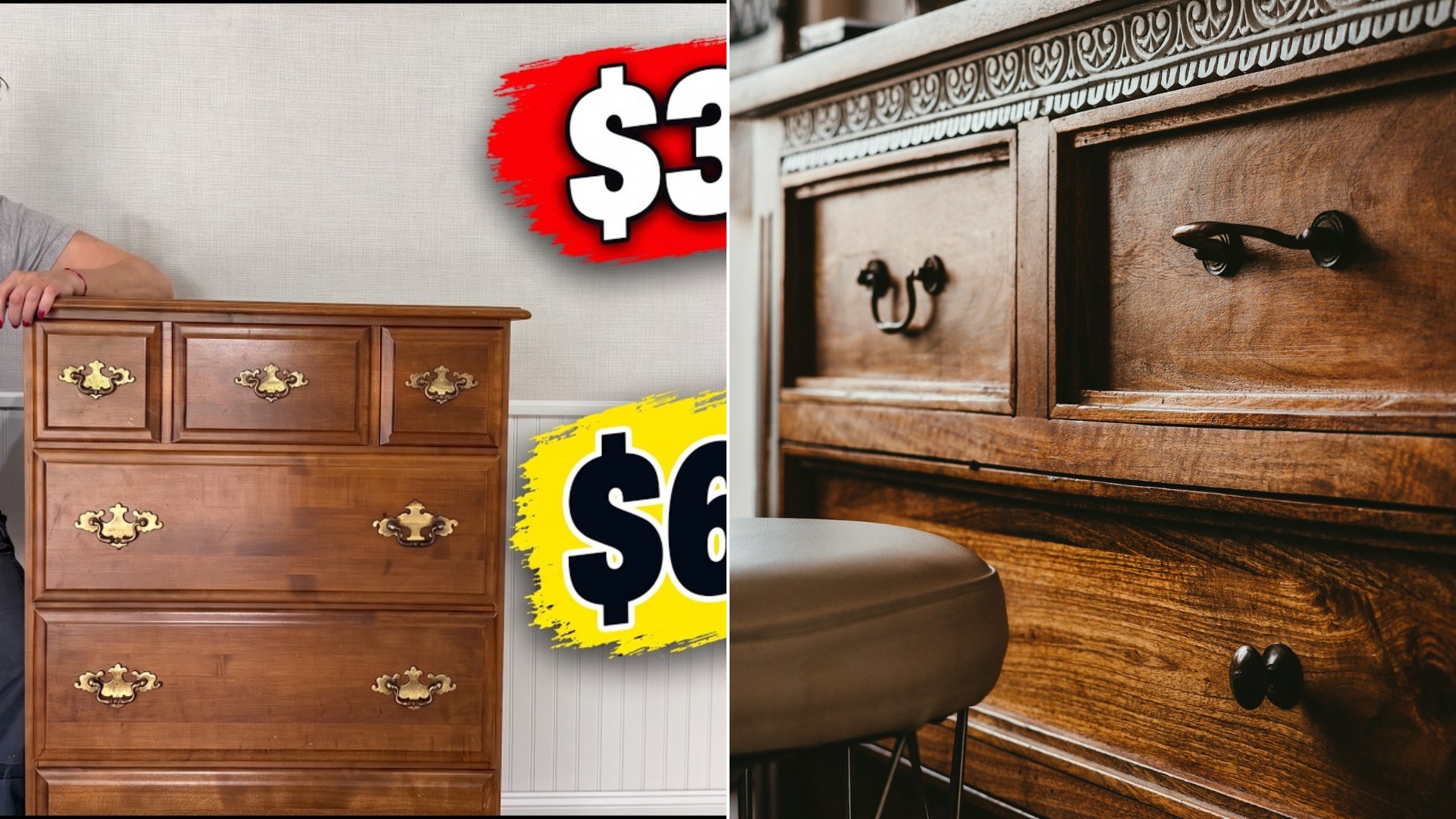
The woman behind the project runs the YouTube channel Wanderer’s Workshop, where she says every project is an adventure. She picked this dresser up off Facebook Marketplace for just $30, and her plan was to bring it into the 21st century.
Why She Chose This Dresser
It is a Moosehead dresser. She explains that Moosehead was a company based in Maine, in business from roughly the 1940s until it closed in the early 2000s, and that every piece she has seen from the maker is built from solid maple. She hunts for them for that reason. The styling may be very 1980s, but solid construction means a few updates can carry the piece into the next century. A stamp on the bottom suggests it was made in September of either 1985 or 1995.
After removing the hardware and cleaning it out, she checked for damage. The two bottom drawers needed work. On one, the dovetail joints had come unglued, an easy fix with glue and clamps. On another, a section of the side rail had split and about a half inch of the bottom of that side was gone, so she had to rebuild it so the drawer would slide evenly.
Dating Details Out, Modern Touches In
She says two things gave away the dresser’s age: the drop pulls and the curlicues on the base. She filled the old holes with Bondo, smoothed the dings with glazing putty, and removed the original base. Then she built a new, more modern one from maple lumber, with angled front legs and pocket-hole joinery, so the stain would match across the top and base.
The drawer repair was the most inventive part. One side was missing the portion that holds the drawer bottom, so she glued on half-inch maple plywood and cut a new groove with a router and an eighth-inch straight bit. The plywood is a slightly different color, and she admits a professional would do it differently, but it is sturdy and strong.
For the finish, she conditioned the maple before staining, since maple can be difficult to stain, then applied a walnut water-based stain. It took up unevenly even after a second coat, so she mixed some stain into General Finishes High Performance top coat and brushed on two tinted coats to even out the top. The body got primer, then Fusion Mineral Paint in Midnight Blue sprayed on, wet sanded and sealed with a flat top coat.
Copper pulls five and a half inches long went on the bottom three drawers, and copper knobs went on the top drawer. She says the copper pops against the navy. As a last flourish she lined all four drawers with wallpaper, the paper that inspired the whole color scheme. She also waxed the drawer boxes with Howard’s Feed-N-Wax and bottled leftover paint into a touch-up kit, something she includes whenever she sells a piece.
The Numbers
This is the part that gets flippers talking. She paid $30 for the dresser. Her materials totaled $130, made up of the following:
- $50 for paint, primer, stain and top coat
- $37 for the maple lumber used to build the base
- $18 for the new hardware
- $10 for the drawer liners
- $15 in general supplies
Add the purchase price and her total investment comes to $160. After researching comparable tallboy dressers on Facebook Marketplace in her area, she listed hers for $625. If she gets that asking price, her profit will be around $465.
Notice where the money went. Paint, primer, stain and top coat made up the biggest share at $50, while the hardware cost only $18 and the drawer liners just $10. Those small touches, the copper pulls and the wallpaper, are what give the finished dresser its boutique look without adding much to the bill. She also lined up the work in a sensible order: repairs first, then the base, the stain, the primer and the paint, with the hardware holes drilled before the final coats.
Tips For Your Own Furniture Flip
Even if you never touch a router, her approach holds lessons for anyone who wants to make money from secondhand furniture.
- Look for solid wood. Older solid maple pieces can be repaired and updated, while cheap veneer pieces often cannot.
- Check the drawers first. Loose joints are easy to fix, but missing pieces need planning.
- Find the features that date a piece. Outdated pulls and decorative bases can often be swapped for a fresh look.
- Price by research. She checked what similar dressers were listed for before choosing her number.
- Track every dollar. Counting small supplies is what makes her profit figure believable.
Her results show why flipping is so appealing. A $30 dresser became a navy, walnut and copper piece with wallpaper-lined drawers, and she says she is really excited with how it came out. Whether it sells for the full $625 is up to the buyers in her area, but the planning and the math behind it are a useful model for any weekend project.
More Stories You May Like
- Thrifter Hunting For Fall Fashion Found A Moto Jacket They Had Wanted For Ages At Forty Dollars And Spotted A Wooden Dresser For $24.99 That Could Easily Be Painted
- Sanding Down An Antique Dresser Can Wipe Out Much Of Its Value Because The Original Finish Is What Collectors Want
- Photo Collector Bought a Box of Old Auction Photos and Traced the Family to Minto New Brunswick Where Six Relatives Came Forward and Hundreds of Trophies Told the Rest of the Story

Leave a Reply