

Some dresses steal your heart and then politely refuse to fit. That is how it went for Chicago sewing creator Sewstine, who fell hard for a 1970s Gunne Sax dress with a red print, a little peplum and a sweet neckline. The vintage original was a size five, and since 1970 sizing equates to a 23 inch waist, she says it has not been her size since she was 15 years old. So she did what any determined sewer would do and rebuilt the whole thing from scratch.
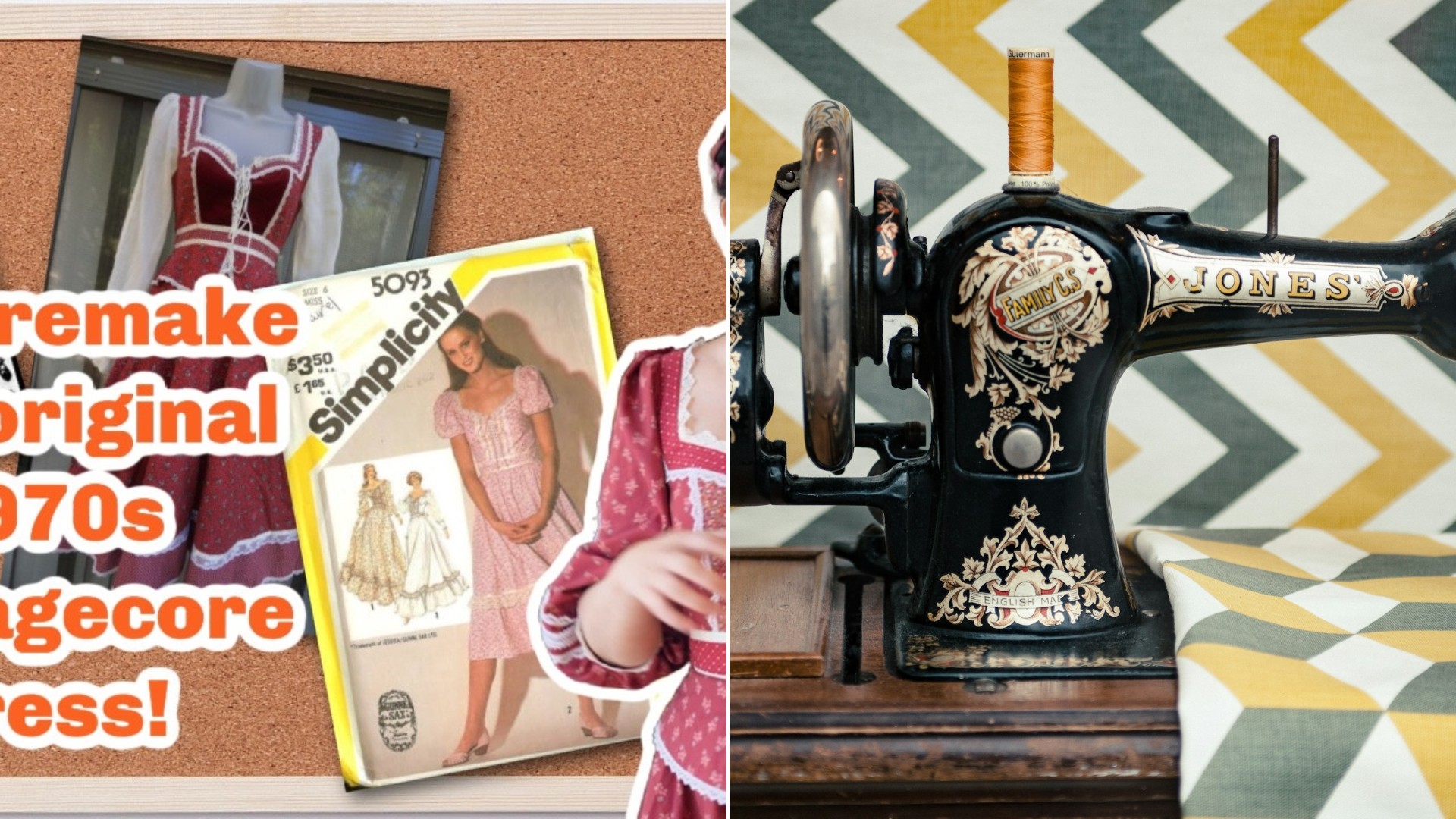
She calls her version the “Gunne Sewstine,” and the project turned into a lesson in vintage fashion, fabric hunting and honest math. By her own count she spent about 40 hours sewing it, wore it to a friend’s birthday party at a vintage-style spot in downtown Chicago, and ended up loving it more than any original she has seen online.
The Original Cottagecore Craze
Sewstine describes her own style as cottagecore, with flowy dresses, puff sleeves, circle skirts and Peter Pan collars, all while living in the trendy part of northern Chicago. She points out that the 1970s had a cottagecore movement of its own, and Gunne Sax was one of its leaders. The brand was started in 1969 by Elaine Bailey and Carol Miller and was later bought by Jessica McClintock.
Gunne Sax dresses were known for bishop sleeves, calico fabrics, heavy trims, full skirts, cute peplums and lace-up bodices. She says the dress she loved came from vintage shopping, but the ones she adored never came in her size or her price range. The original she based her version on cost $850, and she says it never would have fit her anyway.
Hunting Down The Pieces
Here is a fun fact she shares: Gunne Sax once made a line of sewing patterns with Simplicity. She tracked one down from a shop on Etsy for $65, which gave her a head start on construction even though it was not an exact match for the dress she wanted to copy.
Next came the fabric. Many of the calicos used in the 1970s were reproductions of historical prints and quilting cottons, so she shopped quilting fabric. She chose an 1860s reproduction red print, bought six yards of it, and added two more prints to mix and match, the way the original brand did. Where the original used velvet down the center front, she picked a printed cotton instead, because she says velvet works like Velcro for dog fur and she has two fluffy dogs.
She also found vintage lace that she says looks exactly like the lace on the original, plus vintage ribbon in two widths. She admits she bought extra contrasting fabric for the skirt edge and could have saved around $60 if she had skipped it.
Making It Her Own
As usual, she started with a mockup of the pattern, unchanged. It fit well, but the neckline felt too high, so she lowered it about 1 inch and brought the back down an inch or two as well. The waist sat just right once the bust was adjusted. She swapped the pattern’s skirt for a full circle skirt, because nothing beats the feeling of twirling in one, and since her fabric was not wide enough she cut the circle in four pieces.
That choice meant she had to add the pockets along the middle of the skirt pieces, and she says she puts them three inches below the top edge because that spot is the most useful. Virtually all Gunne Saxes have no pockets, so this was a big upgrade in her eyes. She also lined the bodice in sturdy cotton twill instead of thin cotton, drafted the peplum herself on her dress form, and trimmed the skirt hem with nine different trims.
The sleeves were the last decision. The pattern came with a long bishop sleeve, but she does not wear long sleeves, so she cut hers about 4 inches shorter and made them three-quarter length. For the closure she used an antique metal zipper, which she says is stronger, and she hid a mismatched pink zipper under a roomy overlap so nobody would ever see it.
What The Dress Really Cost
This is where the story gets interesting. She lists her spending as $65 on the pattern, $18 for red fabric and trim, $31 for polka dot fabric, about $80 for lace, and $50 for ribbons, for a grand total of $334. She decided not to count her 40 hours of labor, even though at $15 an hour that would be $600, because she had fun making it.
Then she compared that to the past. A Gunne Sax in the 1970s cost somewhere between $25 and $45, and she says people saved up for them. Using $45 as the price and adjusting for inflation, she figures that comes to $341 in 2026 money. By her math she saved a grand total of $7, but she says that is not the point.
Why Sewing Your Own Vintage Look Works
Her story is a handy reminder for anyone who loves vintage clothing but cannot find it in the right size or at the right price. Here are a few ideas drawn from her project.
- Look for vintage patterns. Old commercial patterns often turn up on Etsy and give you the shape of a dress that no longer exists in your size.
- Make a mockup first. Trying on a test version let her fix the neckline and back before cutting into her good fabric.
- Shop quilting cotton. Many vintage calico looks come from historical reproduction prints sold as quilting fabric.
- Put your own spin on it. Pockets, a fuller skirt and a sturdier lining made her dress something she will actually wear.
She is quick to say that the construction was far harder than it needed to be and that other sewers should do whatever works for them. In the end she says her dress has pockets, more trim, a fuller skirt and a stronger twill bodice, and it fits her perfectly. She has more vintage dresses planned from her pattern collection, just to scratch that vintage itch.
More Stories You May Like
- Restored Vintage Radios Often Mean A Hobbyist Swapped Parts And Collectors Care A Lot About What Is Original
- Reseller Looked Up Vintage Avon Items Beyond Jewelry And Found Individual Pieces Listing From $149 To $899 Plus A Bottle Near $200 And A Purse Over $200
- Two Mystery Boxes From Johnny D’s Record Collection Get Opened In Phoenix And One Record Is Still Sealed With A $50 Price Tag

Leave a Reply