

It might be sitting on a thrift store shelf right now between a chipped coffee mug and a stack of dinner plates: a glossy, brightly colored dish covered in raised leaves, fruit or even fish. Most shoppers would walk right by. TikTok antiques and thrifting creator @virginiachamlee says you should stop and pick it up, because it could be majolica, and one piece of it once sold at auction for about $6,200.
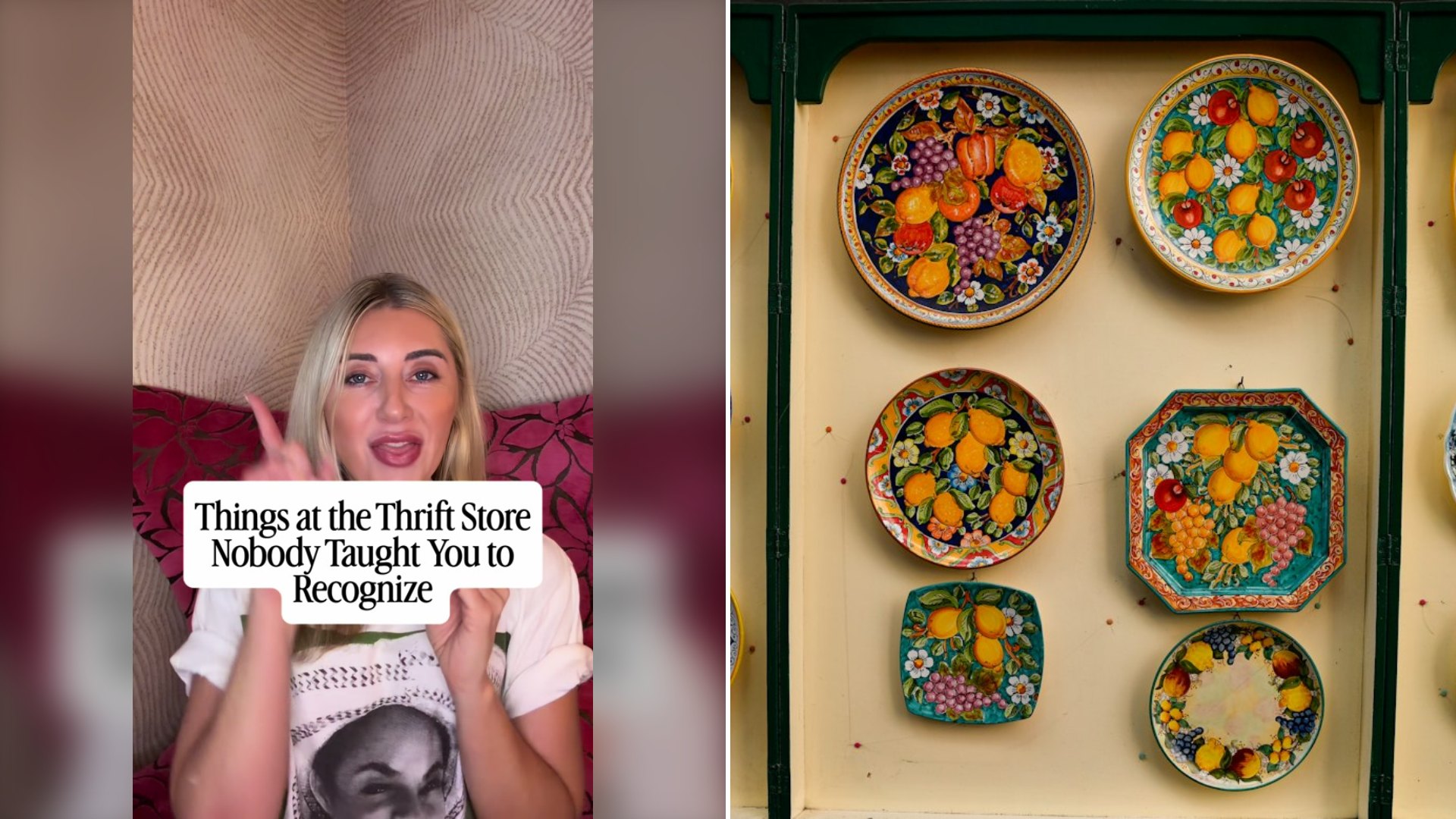
“There are things sitting in thrift stores right now that can be extremely collectible or valuable, but most of us were never taught how to recognize them,” she says at the start of her video. “So I’m going to teach you.”
Her first lesson clears up a common mix-up. “Majolica isn’t a brand, and the word majolica probably won’t be printed anywhere on the piece,” she explains. Instead, the name refers to a style of pottery “known for these brightly colored glazes and the raised three-dimensional designs.”
So what should you look for? “If you see pottery covered in brightly colored, glossy glaze with things like fruit, flowers, leaves, animals, even fish or vegetables, pick it up,” she says. “That could be majolica.”
@virginiachamlee
Flip It Over and Check the Bottom
Once a piece catches your eye, her next step is simple. “Flip it over and look for a maker’s name, a symbol or model number,” she says.
She gives three names worth memorizing: Minton, George Jones and Wedgwood. “These are all three great names to remember,” she says, “but a lot of genuine pieces of majolica probably won’t even be marked.”
That last point matters. An unmarked piece is not automatically a reproduction, so it is worth judging the style, weight and quality of the glaze, not just the stamp.
Condition is the other half of the story. “Value will depend largely on the condition,” she says. “If you do find one of these in the wilds, you will want to pick it up, make sure there are no cracks or repair.”
Then she shares the example that makes the hunt worthwhile. “In 2021, a four-tier Minton majolica oyster stand sold at auction for about $6,200.”
She closes with her usual send-off, inviting people to follow along for more of what to look for when thrifting, and wishing them “happy hunting.” Her caption adds that she wants to teach “things nobody taught you to look for secondhand.”
A Little Majolica History
Knowing where majolica came from makes it easier to spot. The English firm Minton introduced its majolica wares to the public at the Great Exhibition in London in 1851, and the colorful, sculptural style became a Victorian sensation. Other English potteries, including Wedgwood and George Jones, soon followed, and American makers joined in during the later 1800s.
Majolica was meant to be fun and showy. Potters shaped plates like cabbage leaves, made pitchers in the form of fish or birds, and decorated serving pieces with shells, ferns, flowers and fruit. Oyster plates, cheese domes, sardine boxes, garden seats and jardinieres were all popular forms. Many pieces have a soft, earthenware body under the thick glaze, and the underside is often glazed in a mottled color rather than plain white.
The name is a nod to Italian maiolica, the tin-glazed earthenware of the Renaissance, though the two are different wares. You may see both spellings at auctions and antique shops.
How to Shop for Majolica Without Getting Burned
Check for damage carefully. Run your fingers along rims, handles and raised details, which are easy to chip. Hold the piece up to good light and look for hairline cracks. Older majolica often has fine crazing, a network of tiny lines in the glaze, which is common with age and different from a crack that goes through the body.
Look for signs of repair. Areas where the glaze looks slightly duller, a different shade or a little too perfect may have been restored. A small flashlight can help reveal patched spots. Repairs usually lower value, so it is worth knowing before you pay.
Be wary of reproductions. Majolica-style pottery has been made throughout the twentieth century and is still made today. Newer pieces are often lighter, with thinner, flatter colors and crisp white or bare bottoms. Marks can be faked, too, which is another reason to judge the whole piece and not only the stamp.
Compare sold prices, not asking prices. If you find a promising piece, look up recent auction results for similar items. Prices vary widely depending on the maker, the form, the size and the condition, so an everyday leaf plate will not bring what a rare Minton centerpiece does.
Ask an expert for big finds. If you think you have something special, a regional auction house or a certified appraiser can confirm the maker and give you a realistic value before you sell or insure it.
Even if a thrift store find turns out to be a later piece, colorful majolica-style pottery makes a cheerful addition to a kitchen shelf or a holiday table. And if it turns out to be the real thing, @virginiachamlee’s advice to flip it over might be the best few seconds you ever spend in a thrift store.
More From Vinyl and Velvet
- Woman Finds an 1800s Hand Painted German Marriage Cabinet on Facebook Marketplace Ten Minutes From Her House and Says It Might Be Her Favorite Marketplace Find to Date
- Big Mistake to Skip These Vintage Finds While Thrifting According to Dr Lori Who Names China Glass Jewelry and Paintings
- Couple Buys the Contents of an Antique Store That Has Been Abandoned for Twenty Five Years

Leave a Reply