

Every collector dreams of the moment a piece they love turns up on a shelf at a fraction of its value. For the mom behind @vintagedaughtersco, that moment arrived in the shape of a glowing orange hen. She spotted an Indiana Glass marigold hen on nest that her daughter says is worth about $600, priced at just $150. And then, as her daughter proudly points out, she still managed to get a discount at checkout.
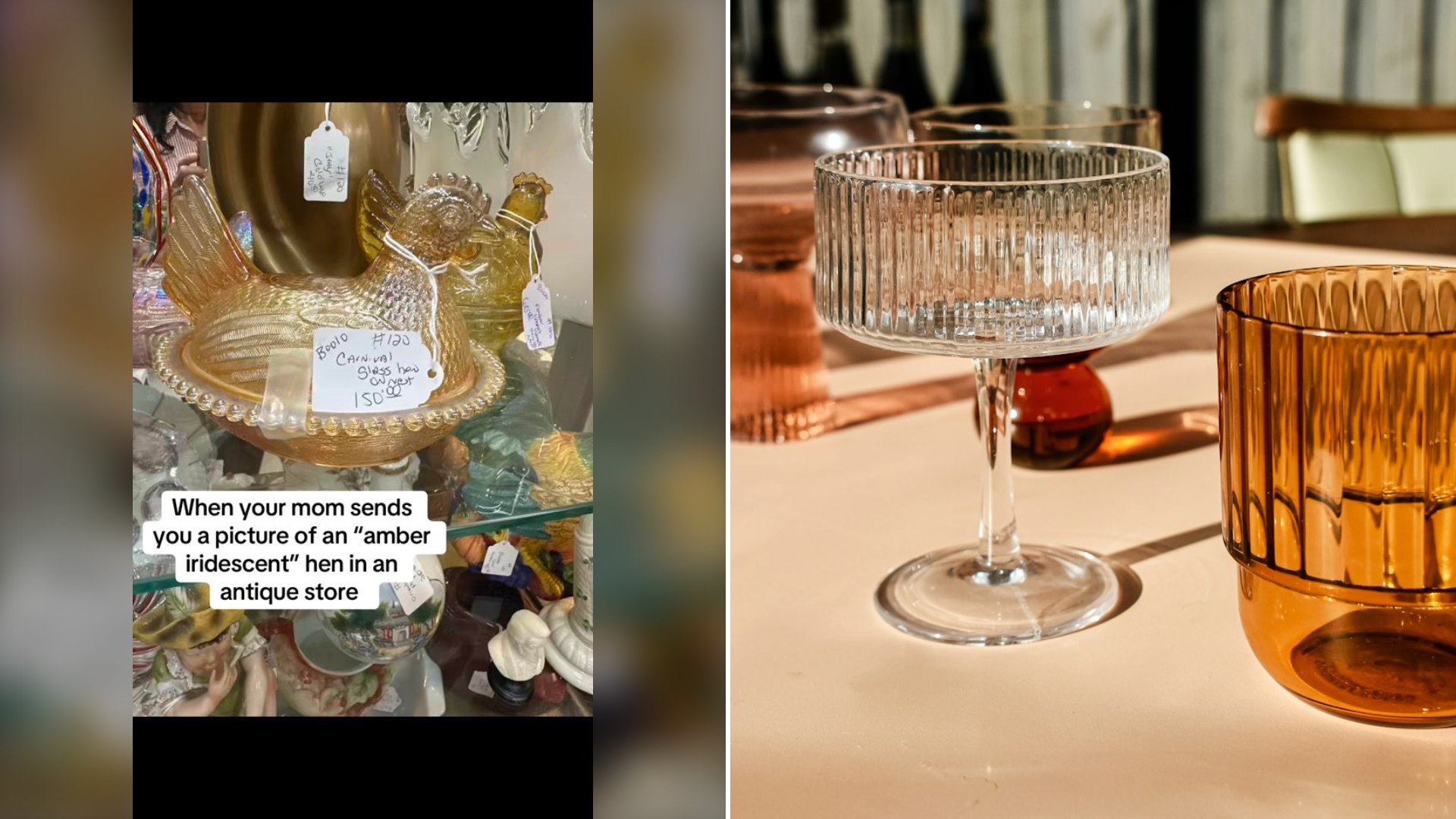
The daughter shares the find in a short clip set to music, letting the glassware do the talking. Her caption sums up the mix of pride and amusement every grown child of a dedicated bargain hunter will recognize: “Not my mom finding a $600 Indiana Glass Marigold Hen on Nest for $150,” followed by the kicker, “and STILL getting that discount.”
She tags it as rare and calls it an insane find. Paying a quarter of what she believes the piece is worth would have been a good day for most shoppers. Asking for a little more off on top of that is the move of someone who has been doing this for a long time.
What Makes a Hen on Nest Dish So Collectible
Hen on nest dishes are covered dishes made in two parts: a basket-weave or nest-shaped base and a lid sculpted into a sitting hen. They have been made in glass since the 1800s and were originally handy for holding eggs on a kitchen counter or serving at the table. Today they are among the most recognizable pieces of vintage glass, and plenty of collectors display entire flocks of them in different colors.
Indiana Glass Company, based in Dunkirk, Indiana, produced pressed glass for most of the 20th century before the plant closed in 2002. Many of its pieces turn up in antique shops and estate sales across the country, and its iridescent lines are especially eye-catching.
That iridescence is what “marigold” refers to. It is the warm orange and gold finish associated with carnival glass, the shimmering pressed glass that became popular in the early 1900s. The name is often traced to the days when the inexpensive glass was handed out as prizes at fairs and carnivals. Marigold is the most familiar carnival color, and under light it flashes with rainbow tones, which is exactly why a hen like this one stands out from across a room.
@vintagedaughtersco
How to Check a Hen on Nest Before You Buy
Hen dishes have been made by many companies over many decades, and reproductions are common, so a little inspection goes a long way.
Make sure the top and bottom belong together. The lid and base should match in color, finish and size, and the hen should sit snugly without rocking. A mismatched marriage of two different pieces is worth less than a set that was made together.
Run your fingers over the edges. Chips and nicks tend to hide on the comb, beak, tail feathers and the rim where the lid meets the base. Even a small chip can lower the value.
Look at the finish in good light. On iridescent glass, check whether the shimmer is even or worn away in spots from years of handling and washing. Hand washing is the safest way to clean these pieces, since a dishwasher can damage the finish.
Look for marks, but do not rely on them. Some makers marked their glass and many did not. A missing mark does not mean a piece is a fake, and a mark alone does not prove age.
Check sold prices, not asking prices. Values vary widely depending on the maker, color, size and condition. Search completed or sold listings on auction and resale sites to see what similar pieces actually brought, and consult a current price guide or a knowledgeable dealer if you are spending real money.
Once a hen comes home, treat it gently. When moving or storing it, wrap the lid and base separately in soft cloth or bubble wrap rather than setting one inside the other. On display, keep it away from shelf edges and busy spots where it can be bumped, and snap a few clear photos for your records in case you ever need them for insurance.
How to Ask for a Discount Without Being Rude
This mom proves there is no shame in asking, even when the price is already good. A few habits make it easier.
In antique malls, many booth dealers allow staff to offer a set percentage off, often around 10 percent, and some will call the dealer for a deeper cut on bigger items. Simply asking, “Is this the best you can do?” at the register is usually enough.
At estate sales, prices often drop on the last day, but the best pieces rarely last that long. If you love something early on, ask politely whether there is any flexibility, and be ready to pay on the spot.
Bundling helps, too. Offering a single price for several items at once gives the seller a reason to say yes. Cash can sometimes sweeten the deal as well.
Most of all, stay friendly. Dealers remember kind, regular customers, and those are the shoppers who tend to get the call when something special comes in, maybe even the next glowing marigold hen.
More From Vinyl and Velvet
- Woman Finds an 1800s Hand Painted German Marriage Cabinet on Facebook Marketplace Ten Minutes From Her House and Says It Might Be Her Favorite Marketplace Find to Date
- Big Mistake to Skip These Vintage Finds While Thrifting According to Dr Lori Who Names China Glass Jewelry and Paintings
- Couple Buys the Contents of an Antique Store That Has Been Abandoned for Twenty Five Years

Leave a Reply