

She loves a good trunk, and this one was beautiful. Then she flipped over the price tag. @madewithnikki was browsing the aisles at Goodwill when she came across a carved wooden storage trunk with lovely little details, the kind of piece she would normally be thrilled to find secondhand. The tag read $250. “Goodwill has officially lost their mind,” her caption says, “and I have the price tag to prove it.”
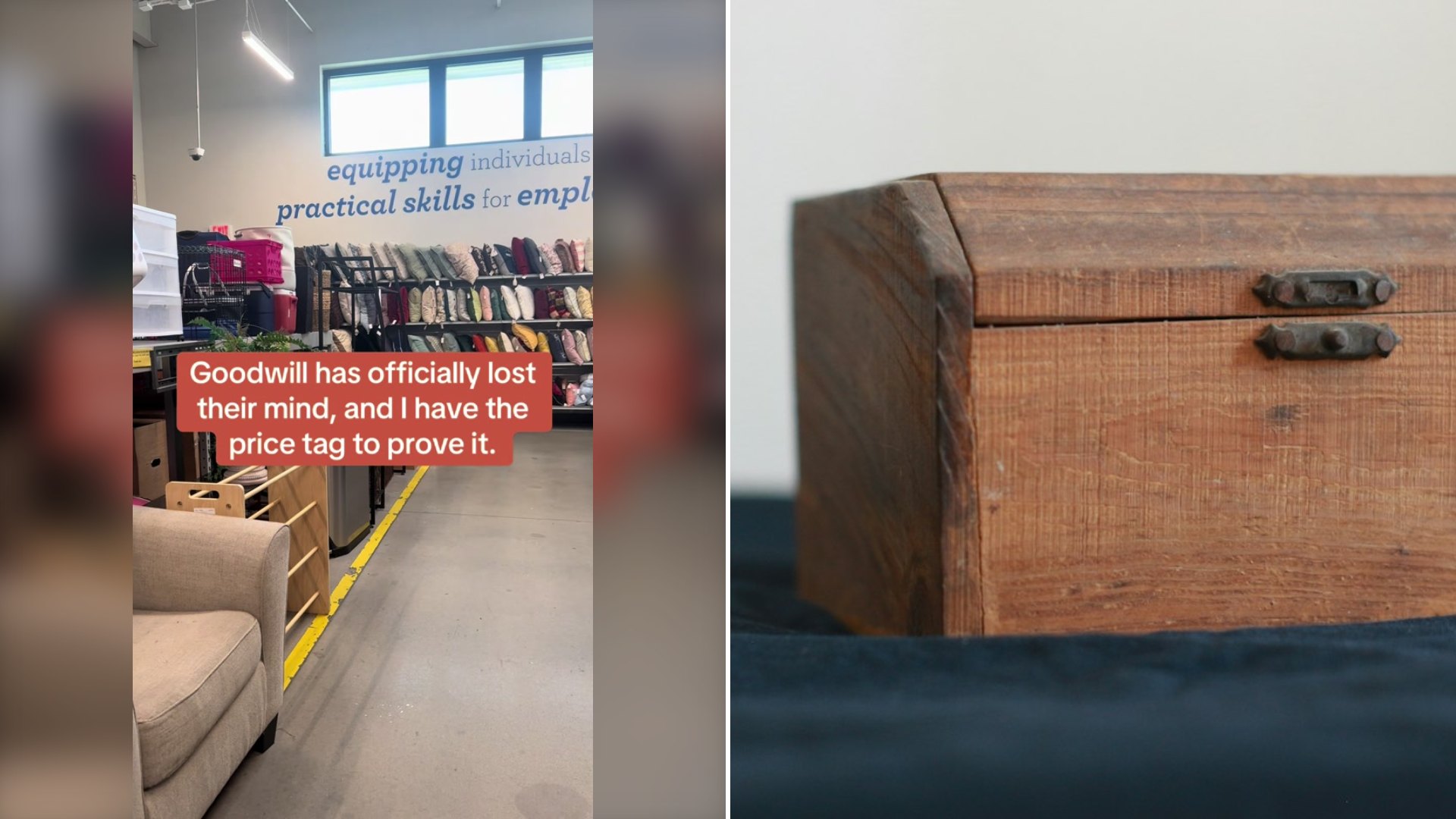
She starts the video already exasperated. “Okay, so this is where Goodwill, you start to lose me,” she says. “Are we still Goodwill? Because I don’t understand the prices of what Goodwill is doing lately.” She even allows that maybe this has been going on for a while. “Or maybe they’ve been doing this for a long time and I’m just tuning in.”
The Trunk That Stopped Her in Her Tracks
She makes it clear she is not knocking the trunk itself. “I love me a good trunk or storage space,” she says. “Look at this piece here. It’s beautiful. I like little details. It’s cute, right?”
But as she looks it over, she is not seeing anything that explains the price. It offers a bit of storage and is made out of wood. Then she reaches for the tag. “Are we serious? $250.”
The label offers one clue. It describes the piece as Indian wood storage. “So unless they know that this is worth, I don’t know, $1,500,” she says, “I do not get it.”
She closes by asking for help. “Does anyone know information on this? Is it worth that? Because to me, right now, $250 is quite steep, Goodwill. I don’t understand.”
It is a question plenty of thrifters have asked lately. Rising prices at thrift stores have become a common complaint, and many longtime bargain hunters say they are seeing price tags that feel closer to a furniture store than a donation center.
@madewithnikki
Why Thrift Store Prices Vary So Much
Part of the answer lies in how Goodwill is organized. Goodwill Industries International is a network of about 150 independent, community-based Goodwill organizations across the United States and Canada. Each local organization runs its own stores and sets its own pricing practices, which is why prices can feel reasonable in one town and steep in the next.
Proceeds support job training and employment programs, and stores across the secondhand world have become more aware of resale values as online marketplaces have grown. Some staff look up comparable items before tagging larger or more unusual donations, and those comparisons are not always perfect.
Wooden trunks and chests labeled as Indian are common in the import market. Many are made from woods such as sheesham or mango and are sold new at home stores. Some are well made and carved by hand, while others are mass produced. That range makes it hard to judge from a label alone, and it is exactly why a shopper might stand in the aisle wondering what she is missing.
How to Tell If a Thrift Store Price Is Fair
Before you pay a premium for a secondhand trunk, chest or other large piece, do a little homework right there in the store.
Search sold listings. On your phone, look up similar items on online auction sites and filter for sold or completed listings. Compare those with local listings on Facebook Marketplace. Asking prices can be wildly optimistic, while sold prices show what buyers are actually paying.
Look for maker’s marks. Check inside the lid, on the back and underneath for stamps, labels or tags. A known maker or a documented antique can justify a higher price. A sticker from a home store suggests the piece was sold new not long ago.
Check the construction. Solid wood, dovetail or hand-cut joints, quality hinges and hardware, and carving with real depth are good signs. Thin panels, staples and veneer peeling at the edges point to a lower-end piece.
Smell and inspect inside. Trunks are notorious for holding musty or smoky odors. Look for water stains, mold and any signs of insects in the wood.
Think about grandkids. If little ones visit, check whether the lid stays open on its own. Heavy lids can slam on small fingers, and an old chest that latches can be dangerous if a child climbs inside. A lid-support hinge from the hardware store is an inexpensive fix.
Ask about sales. Many thrift stores rotate colored tags that go on discount on certain days, and some lower prices on items that have not sold after a few weeks. If a piece is overpriced, it may not stay that way for long.
When to Walk Away
If the price is close to what the same item would cost new, it is fine to pass. Thrift shopping should feel like a deal, and there will always be another trunk. Church-run thrift shops, the last day of an estate sale and local online marketplaces are all good places to look for the same kind of piece at a friendlier price. You can also politely share feedback with a store manager. Local Goodwill organizations are independent, and some do listen when regular shoppers say their prices have gone too far.
More From Vinyl and Velvet
- Woman Goes to Her First Ever Estate Sale Where Everything Was Two Dollars a Piece and Leaves With a Haul of Bling Bags and Shoes for Around Six Hundred Dollars Total
- Seller Brings a Thousand Raw Baseball Cards to a Buyer With the Best Ones Already Pulled Out and Learns the Going Rate Is About Ten Dollars for the Whole Box
- Woman Finds an 1800s Hand Painted German Marriage Cabinet on Facebook Marketplace Ten Minutes From Her House and Says It Might Be Her Favorite Marketplace Find to Date

Leave a Reply