

While other thrift store shoppers strolled right past a framed piece of art, one woman was trying her hardest to get to it first. Instagram thrifter Sara, who posts as @thriftswithsara, says what she grabbed was a numbered John Powell serigraph, and she still cannot believe somebody gave it away.
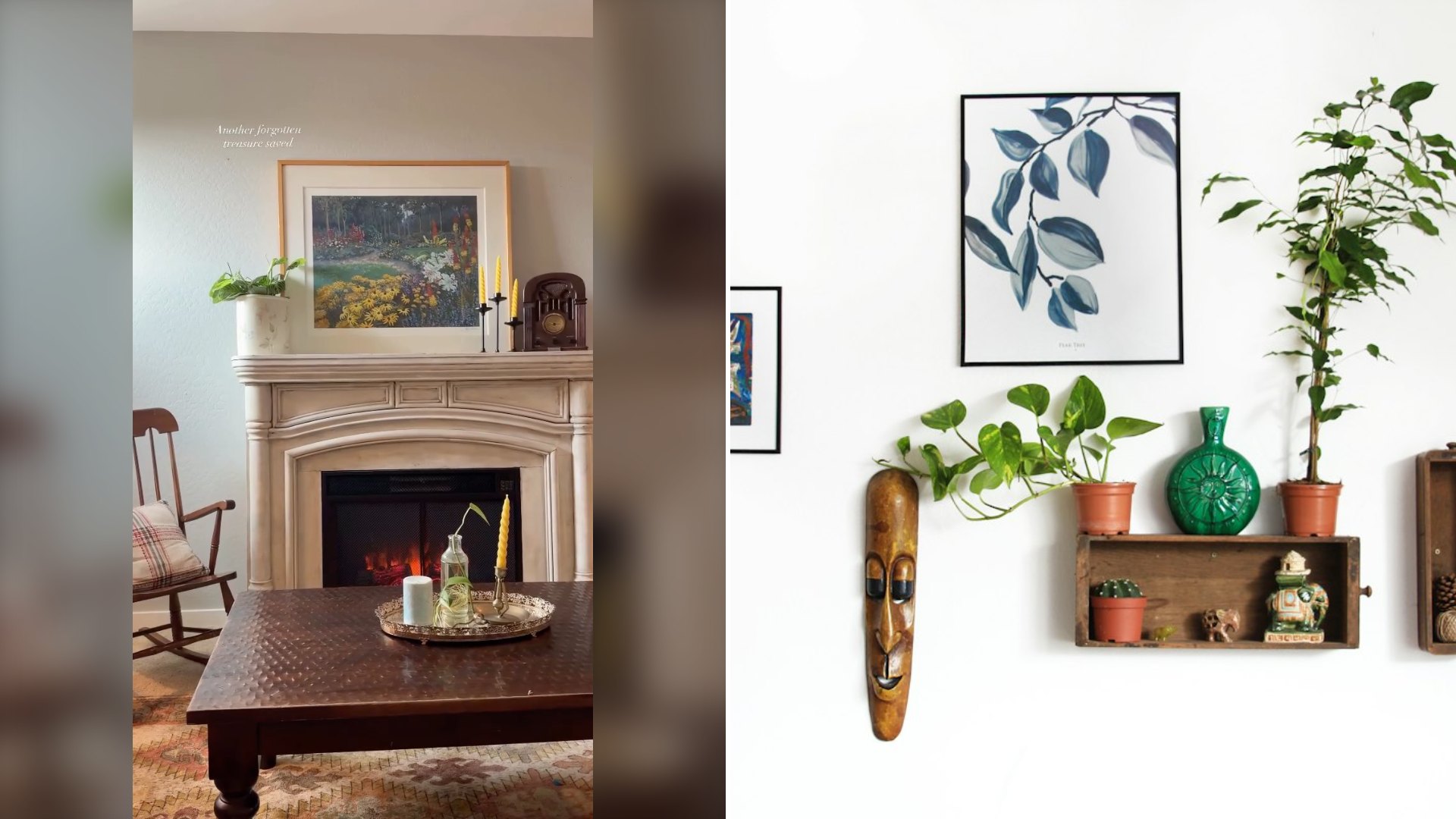
“I watched a handful of people walk right past this art while I was trying with all my might to get to it,” she says in her video.
Once she had it in her hands, she knew what she was looking at. “This is an original serigraph painting done by John Powell,” she explains. “It is number 167 out of 395 in the world.”
The piece now hangs in a room in her home, and her caption makes it clear she has not grown tired of it. “I’ll occasionally read in this room in the evenings and every time I look up at this picture and am stunned at how beautiful and detailed the art is, how talented the artist is,” she wrote, before landing the punchline: “and how stupid the person is who donated it,” followed by a laughing emoji.
She did not share what she paid or what the piece might be worth. For her, the payoff is getting to enjoy it every evening.
What Exactly Is a Serigraph?
Sara explains that a serigraph is made by stretching silk or nylon over a frame and applying each color one at a time. “So each of these colors was done one at a time layer upon layer,” she says, which is what she believes makes it so special.
Serigraphy is the fine-art term for screen printing. The name comes from “seri,” the Latin root for silk, and “graph,” meaning to write or draw, because the screens were traditionally made of silk. Today they are usually made of polyester or nylon mesh.
Here is how it generally works. A separate stencil is prepared on the screen for every color in the image. Ink is pushed through the open parts of the mesh with a rubber blade called a squeegee, and only the areas not blocked by the stencil pick up the color. Once one color dries, the next screen goes down, lined up precisely, and so on. A detailed serigraph can require dozens of separate screens, which is why the colors often look rich, flat and vivid, with ink sitting slightly on top of the paper or canvas.
Because each layer is applied by hand, a serigraph has a richness that a standard photographic reproduction does not. That is one reason collectors value hand-pulled serigraphs over inexpensive poster prints.
What the Numbers on a Print Mean
That “167 out of 395” Sara mentions is one of the most important details on any print. It is called an edition number, and it is usually written in pencil near the bottom of the image, often written as a fraction, such as 167/395.
- The bottom number is the edition size, the total number of prints made in that run. Smaller editions are generally more desirable.
- The top number is that particular print’s place in the run. Contrary to a popular belief, a low number is not always worth more, since with many printing methods every impression is essentially the same.
- A pencil signature from the artist adds value, because it shows the artist approved that individual print.
- Other markings such as “AP” (artist’s proof) or “PP” (printer’s proof) mean the print was made outside the main numbered edition, often in small quantities.
How to Spot Valuable Art at the Thrift Store
Sara’s find is a reminder that framed art is one of the most overlooked sections of any thrift store. Shoppers often see a busy wall of frames and keep moving. Here is how to give it a closer look.
Look for pencil writing. A pencil signature and edition number in the margin are good signs. Printed signatures that are part of the image itself usually mean a mass-produced reproduction.
Get up close. Under a magnifying glass, many cheap reproductions show a pattern of tiny dots. Screen prints, lithographs and other hand-pulled prints usually show solid areas of color without that dot pattern.
Flip it over. Gallery stickers, framing shop labels, certificates of authenticity and handwritten notes on the back can tell you where a piece came from. Photograph everything before you remove anything.
Pay attention to the frame. Quality framing, matting and glass do not guarantee a valuable piece, but someone usually does not spend a lot to frame something they did not care about.
Research before you sell. Search the artist’s name along with the word serigraph and look at recent sold prices, not just asking prices. Many artists share a common name, so match the style and signature carefully. For anything promising, a local gallery or appraiser can help confirm what you have.
Before You Donate Your Own Art
Sara’s joke has a real lesson for anyone cleaning out a house. Before you drop off framed pictures, check the margins for signatures and numbers, look at the back for labels, and take a few minutes to look up the artist. A signed, numbered print hanging in a hallway for 30 years can be easy to stop noticing, but someone else might be thrilled to discover it.
As for Sara, she has no plans to let hers go. She has a favorite reading spot, a beautiful piece of art to look up at, and a story about the day everyone else walked right by it.
More From Vinyl and Velvet
- Woman Goes to Her First Ever Estate Sale Where Everything Was Two Dollars a Piece and Leaves With a Haul of Bling Bags and Shoes for Around Six Hundred Dollars Total
- Seller Brings a Thousand Raw Baseball Cards to a Buyer With the Best Ones Already Pulled Out and Learns the Going Rate Is About Ten Dollars for the Whole Box
- Woman Finds an 1800s Hand Painted German Marriage Cabinet on Facebook Marketplace Ten Minutes From Her House and Says It Might Be Her Favorite Marketplace Find to Date

Leave a Reply