

The dining set you polished every Thanksgiving, the good china in the hutch and the oil painting over the sofa may be headed somewhere you never pictured. Thrifting author and TikTok creator @virginiachamlee says a flood of quality household goods is about to hit thrift stores and estate sales, because a lot of grown children simply do not want their parents’ things.
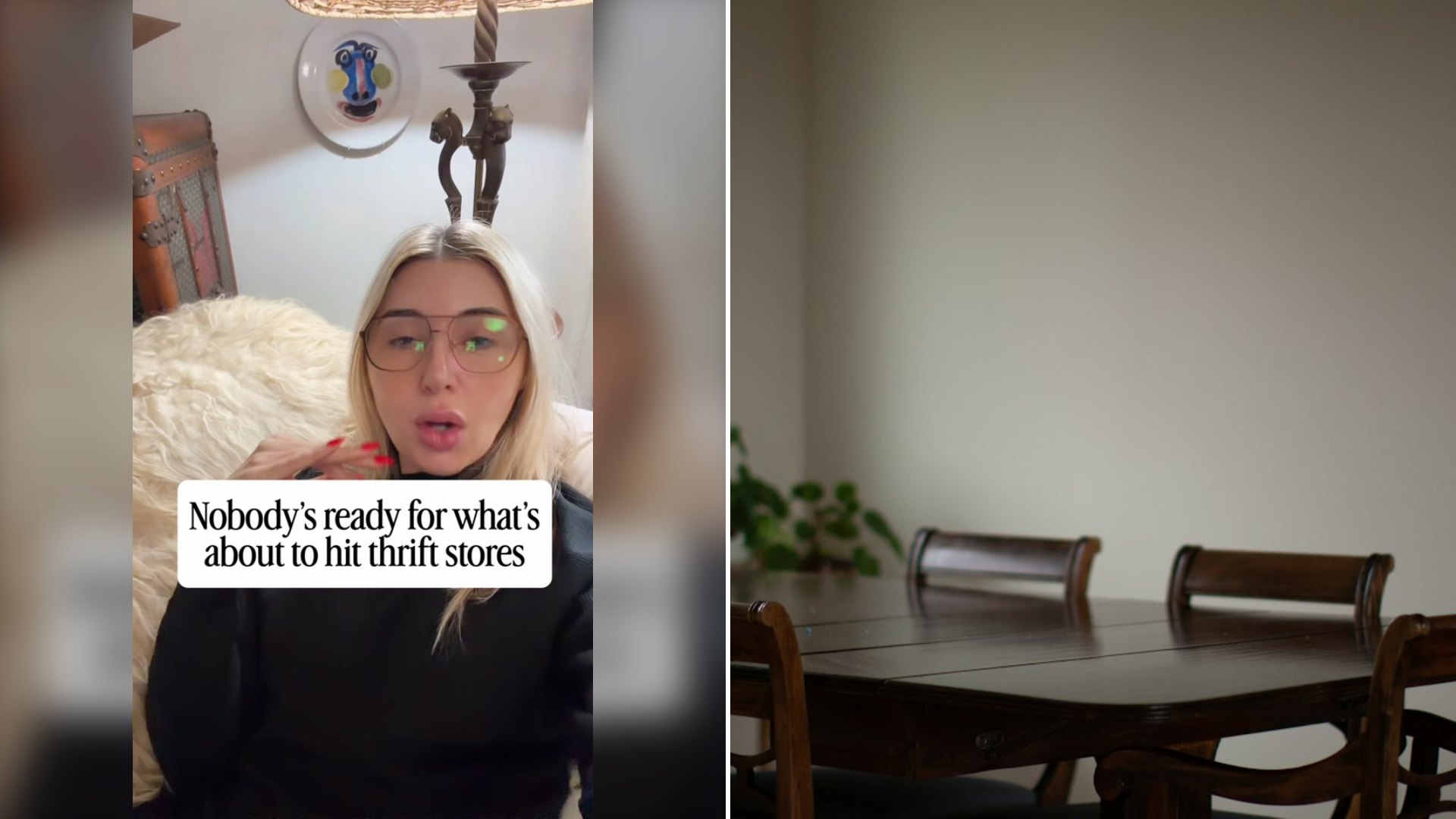
“Over the next 20 years, the biggest handoff of stuff in American history is going to hit the thrift stores and most people have no idea what to look for,” she says in her video.
She explains that boomers and older generations are expected to pass down “nearly $100 trillion in wealth,” and that “a huge chunk of that is sitting in their houses, the dining sets, the art, the china, the clothes.”
Then comes the part that stings for many parents and grandparents. “A lot of their kids don’t want it, so it’s going to Goodwill and it’s going to estate sales and it’s going for cheap.”
In her caption, she calls it “the Boomer stuff avalanche” and says it is “already here,” adding that estate sales, thrift stores and Facebook Marketplace “are about to be flooded with quality pieces that nobody in the family wants.” Her prediction: “The people who know what to look for are going to furnish their homes for pennies.”
@virginiachamlee
The Three Things She Would Grab
She does not leave shoppers guessing. “Here’s what I’d grab,” she says, and lists three categories.
The first is solid wood furniture, “because they don’t make it like that anymore.” Much of today’s affordable furniture is built from particleboard or MDF covered with a thin veneer or printed laminate. Older dressers, tables and chairs made from oak, maple, cherry, walnut or mahogany can last generations and be refinished again and again.
The second is original art, “even if you don’t know the artist.” An original painting or drawing brings a room something a mass-produced print cannot, and occasionally a forgotten local artist turns out to have a following.
The third is designer clothing with labels from the 70s, 80s, and 90s, “because that is what collectors are looking for right now.”
She backs up her advice with her own track record. “I’ve been doing this for years. I wrote a best selling book about thrifting and I have sold my thrift finds to designers and celebrities,” she says, before inviting people to follow along so she can teach them “what’s worth grabbing before everybody else figures it out.”
How to Spot the Good Stuff Yourself
You do not need to be an expert to put her advice to work. A few quick checks go a long way.
For furniture: Pull out a drawer and look at the corners. Interlocking dovetail joints are a sign of careful construction. Look at the back and underside, where unfinished solid wood often shows its real grain. Feel the weight, since solid wood pieces are usually much heavier than particleboard. If an edge is chipped and you see compressed wood chips or crumbly fiber underneath, it is not solid wood.
For art: Look closely at the surface. Brushstrokes you can see and feel, raised paint, and slight irregularities point to an original. A pattern of tiny dots under a magnifying glass usually means a printed reproduction. Check the back for gallery labels, signatures, dates or notes, and photograph them before you remove anything from the frame.
For clothing: Read the labels. Older garments often have union labels, “Made in USA” tags and sturdier fabrics. Check seams, linings and zippers. Metal zippers and fully lined jackets are common in better-quality older clothing. Inspect for stains, moth holes and underarm wear before buying.
What This Means If You Are the One Downsizing
Her video is aimed at shoppers, but it carries a message for anyone getting ready to downsize or pass things along. If the kids do not want the china, that does not have to mean it ends up on a thrift store shelf for a few dollars without a second look.
Ask first, then ask again. Talk with your children and grandchildren about what, if anything, they would like to keep. Some may change their minds about a particular piece once they hear the story behind it. Write those stories down and tape them inside drawers or to the backs of frames.
Sort before you donate. Pull out anything that might have real value, such as signed art, sterling silver, quality furniture and designer clothing, and research it before letting it go. A local appraiser, an auction house or a reputable estate sale company can give you a realistic idea of what the market will pay.
Be realistic about prices. Formal china, crystal and big brown furniture do not command what they once did, which is exactly why she expects bargains. Selling may bring less than you hoped. Donating to a charity you care about, or giving pieces to young families just starting out, can be its own reward.
Know that someone will love it. If her prediction is right, the shoppers who know what to look for will be thrilled to bring those well-made pieces home, and the dining set that hosted decades of family dinners may soon be hosting someone else’s.
More From Vinyl and Velvet
- Woman Goes to Her First Ever Estate Sale Where Everything Was Two Dollars a Piece and Leaves With a Haul of Bling Bags and Shoes for Around Six Hundred Dollars Total
- Seller Brings a Thousand Raw Baseball Cards to a Buyer With the Best Ones Already Pulled Out and Learns the Going Rate Is About Ten Dollars for the Whole Box
- Woman Finds an 1800s Hand Painted German Marriage Cabinet on Facebook Marketplace Ten Minutes From Her House and Says It Might Be Her Favorite Marketplace Find to Date

Leave a Reply