

It feels like the smartest move in the world. You bring home a tarnished, grimy brooch from a flea market, you have heard that ultrasonic cleaners make jewelry sparkle in minutes, and you drop it in. A few minutes later you lift it out and one of the stones is missing, or the pearl has gone dull, or an opal looks cloudy. That little machine did exactly what it is built to do, which is shake dirt loose. The trouble is that it can shake other things loose too.
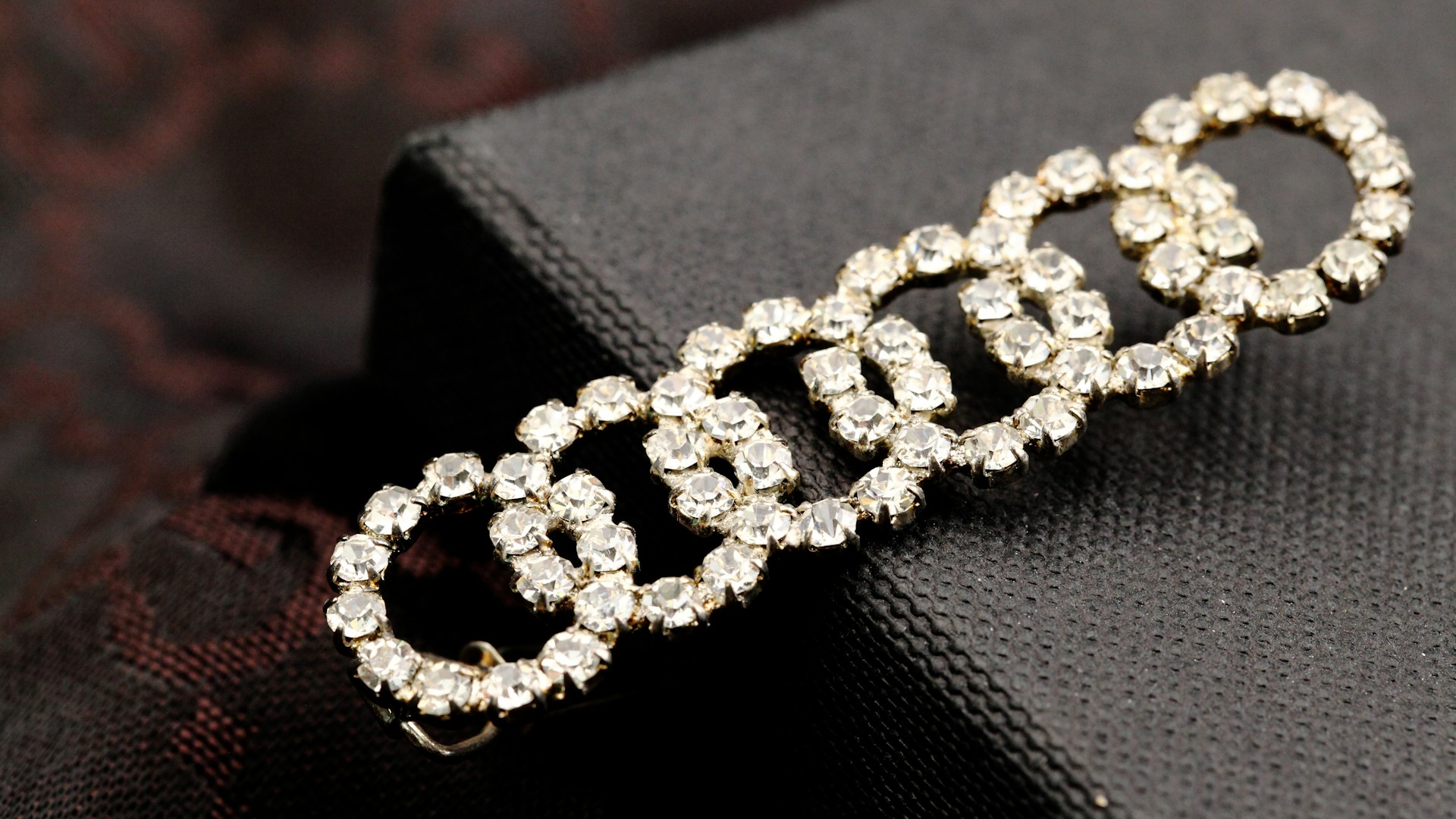
Ultrasonic cleaners use high-frequency vibrations in a liquid to knock grime out of crevices. On sturdy, solid pieces, they can work well, and jewelers use them regularly. Vintage and costume jewelry is a different story, because so many of these pieces were put together in ways that were never meant to be shaken.
Why Glued Stones Come Loose
Look closely at a lot of vintage costume jewelry and you will notice that the stones are not held by little metal prongs. Many are set into a cup or a flat setting and held in place with glue. Some older pieces use adhesives that soften or break down over time, and the vibration and warm liquid of an ultrasonic bath can help that process along. Stones that were only hanging on by an old, dried glue joint can pop out the moment they get shaken.
Even when the stones stay in place, cleaning solution can seep under them. That matters for another reason. Many older rhinestones have a thin reflective foil backing that gives them their sparkle. Moisture and cleaning solutions can damage that backing, leaving a dark or cloudy spot in a stone that used to be brilliant. Once that happens, it is very hard to undo.
Pearls, Opals and Other Soft Stones
Some materials simply do not belong in an ultrasonic cleaner, glued or not.
- Pearls. Pearls are soft compared with most gemstones and have a delicate surface. Vibration and cleaning chemicals can dull their luster or damage them. Pearl strands also have a thread running through them that can be weakened by soaking.
- Opals. Opals can be sensitive to sudden changes and to heat, and some are prone to cracking or crazing. They are generally not a good match for vibration.
- Other soft or porous stones. Materials such as turquoise, coral and amber are softer or more porous than hard gemstones and can be harmed by soaking and chemicals. Stones that have been treated or that have internal fractures can also be at risk, since vibration can make weaknesses worse.
A good rule is that if you are not certain what a stone is made of, do not put it in the machine. Guessing is how heirlooms get ruined.
Safer Ways to Clean Vintage Jewelry
The gentlest approach is almost always the best one. For most pieces, you only need a few simple tools: a soft cloth, a very soft brush such as a baby toothbrush, a bowl of lukewarm water and a drop of mild dish soap.
- Lay a towel in the bottom of the bowl so a dropped piece will not hit a hard surface.
- Dip the brush in the soapy water, shake off the excess, and gently brush around the stones and in the crevices. You want a damp brush, not a soaked piece.
- Wipe the area with a barely damp cloth to remove soap, and then pat the piece dry right away.
- Let it air dry fully before you put it away, with the stones facing down on a towel if they are glued in, so moisture does not sit under them.
For glued pieces, pearls and anything with foil-backed stones, try to keep the water to a minimum. A slightly damp cloth, wrung out well, is often enough. For pearls, many people wipe them with a soft, slightly damp cloth after wearing and let them dry flat rather than hanging.
Metal polishing cloths can help with tarnished silver, but be careful with plated pieces. Heavy rubbing can wear through the thin plating, especially on edges and raised areas. When in doubt, start with the lightest cleaning you can and stop if you see color coming off on the cloth in a way that looks like metal wearing away.
When to Skip the DIY and Call a Pro
Some pieces are worth a visit to a jeweler or a restoration specialist. If the item is valuable, a family heirloom, or just something you would hate to lose, a professional can tell you whether a stone is loose before cleaning begins and can reset it if needed. Ask the jeweler to look at the piece before cleaning, and tell them what you know about its age and materials.
If you do want to use an ultrasonic cleaner, keep it for solid metal pieces with sturdy, securely set hard stones, and only when you are sure about what the stones are. Before you do, tug gently on each stone to check that it is not already loose. A stone that wiggles is a stone that is about to fall out.
Vintage jewelry has survived decades because someone took care of it. A little patience with a soft brush and some soapy water costs almost nothing, and it keeps the glue, the foil and the finish exactly where they belong. Skip the shortcut, and your sparkle will still be there next year.
More Stories You May Like
- She Plugged In A Vintage Elvis Animatronic Expecting It To Be Dead And It Greeted Her With Hello Ladies And Gentlemen Before Scaring Her Senseless
- Woman Explores Her 101 Year Old Grandmother’s House and Finds Spices From 1974, Tooth Powder, Band Aids From the 80s and a Vintage Fisher Price Toy
- Thrifter Who Almost Skipped A Small Town Thrift Store While Driving Through Finds The Vintage Coach Purse She Had Been Waiting For

Leave a Reply