

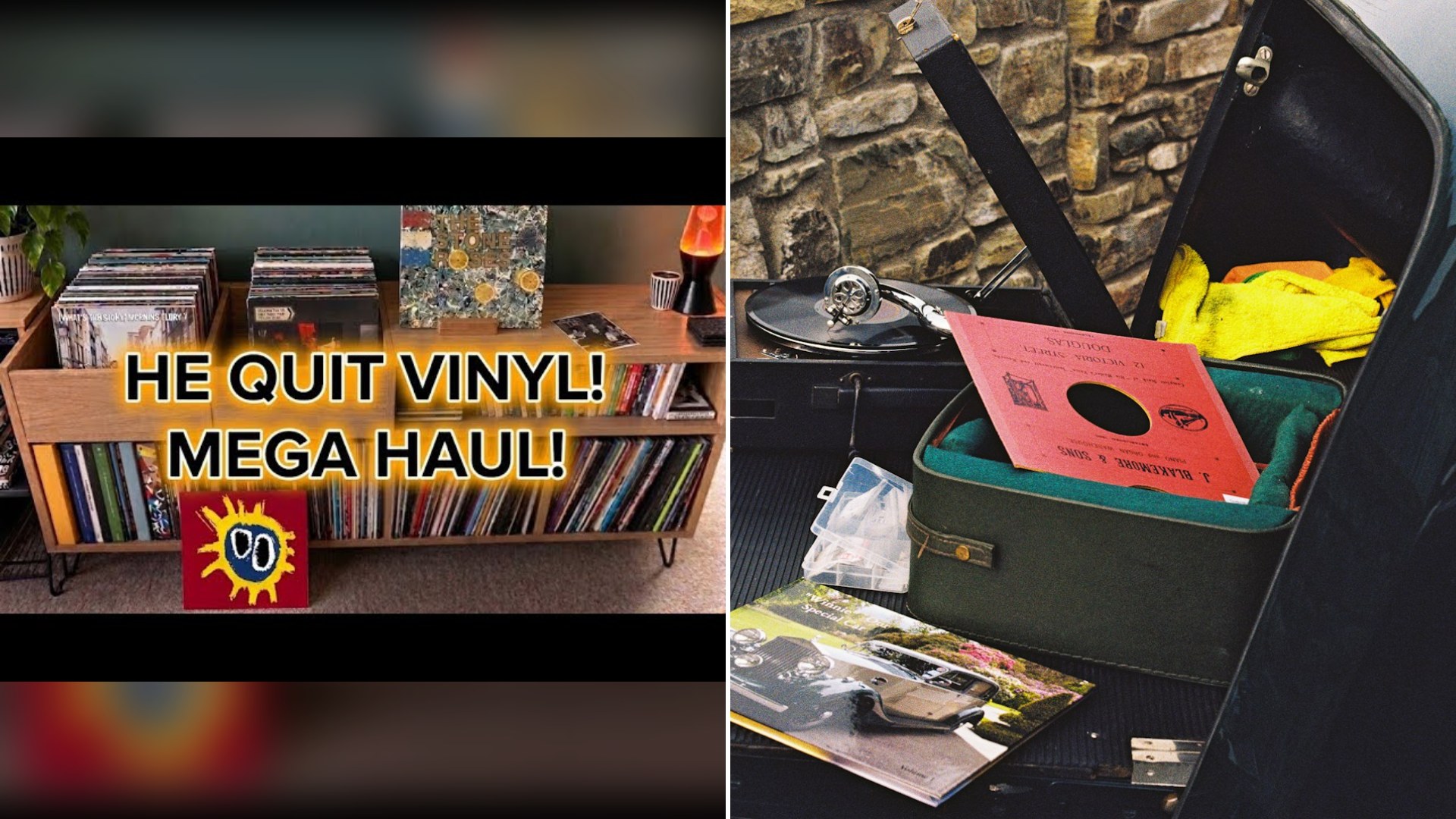
Every record hunter dreams of the call that says someone is selling a whole collection. Few expect it to begin with a stranger demanding money before the records can even be seen. The UK collector behind @TheVinylVoyage-ud3uf, who introduces himself as Jack, tells that story in a long post about a haul so big it maxed out his boot and back seat. He says he could not cram in another record.
Red Flags Before The Meeting
The story starts small. Jack says he found a few listings on Marketplace from a seller who then said he had other records for sale. The trouble began when the seller refused to let Jack come to his house and pushed him to wire money in advance, because, he said, many people wanted the records.
Jack saw red flags and says so. He refused to send any money before seeing what he was buying, and he offered to meet somewhere instead. The seller proposed a car park in a nearby town, where he would be waiting in a white van. Jack jokes about the childhood warnings never to get into a car with strangers, and says he was wary. He went anyway, and he found the seller to be an “absolutely lovely bloke.”
Partway through the meeting the seller’s phone rang. It was his girlfriend, checking that he was all right, because she was worried about him meeting a stranger. Both men, it turned out, had been nervous.
From A Few Records To Everything
That first meeting changed things. The seller mentioned he had more records he might sell and promised Jack first dibs. Jack realized they had a similar taste in music from their teenage years. A couple of days later the seller sent a message. He had decided to sell the rest of his collection, along with his hi fi equipment and furniture, and to move to streaming. He said he was realistic on price and wanted a price that worked for everyone.
The price was fantastic, Jack says, but too big for him alone, so a friend joined in, and the friend let Jack pick first because Jack had found the deal. A few days later they met at the seller’s house and the deal was done. The saved transcript does not say how much they paid in total.
What Was In The Boot
The records themselves fill most of the post. Jack praises the debut by The La’s, and a sealed copy of their BBC sessions. The seller said a set of Beatles records came from his dad, and Jack found what he hopes is a black and gold Parlophone first pressing of Please Please Me. He says the sleeve is probably a later one, a so called “Frankenstein” copy, but the record sounds amazing and beats the pressing he already owned.
There was more. He lists R.E.M. albums, the Lost Boys soundtrack, the Stone Roses second album, an early Virgin pressing of a Sex Pistols album with a misprinted label, The Coral’s debut, Primal Scream, Steely Dan, Beck, and a Trainspotting anniversary soundtrack. The seller, he says, owned every album by James, and the box sets were ten pounds each. Others include Oasis and Noel Gallagher box sets, several Springsteen live sets, Iron Maiden, Metallica, Dio, Weller and a signed limited Wolf Alice. By his account everything was in mint condition and some records were still sealed.
The Part That Matters Most
It would be easy to read this and decide that taking risks pays off. That is the wrong lesson. Jack did not follow the instructions of a stranger who wanted a wire transfer. He did the opposite. He refused to pay before seeing the goods, he agreed to meet in a public car park, and by his account the seller turned out to be a decent guy. He also jokes about his own wariness, and the story worked out because both sides were careful.
The outcome here was good, but it does not prove that every seller who asks for money first is safe. If anything, the story shows why caution is worth keeping.
Safer Ways To Buy A Collection
Never wire money to someone you have not met. Wire transfers are hard or impossible to reverse. A seller who insists that you pay first because many people are interested is applying pressure, and pressure is a classic warning sign.
Pay in person, after you have seen the records. Cash on collection is the simplest way to protect yourself, and a seller with a genuine collection will usually be glad to show it.
Meet in a public place for a first meeting, such as a car park, a cafe or a shop. Tell someone where you are going and when you expect to return. Bringing a friend is even better.
Check the listing. Look at how long the account has existed, whether the photos look original, and whether the seller answers questions directly.
Look carefully at what you are buying. Check records for warps and scratches, look at the sleeves, and ask whether they are first pressings or reissues. If you buy a large lot, ask for a quick sample check before you commit.
Be honest about price. A fair deal that suits both sides, the way this seller described it, is more likely to lead to a good relationship, and to further purchases.
Keep your ear to the ground. Jack’s own conclusion is that if you buy a few records you never know what else the seller has, and that “if you don’t ask, you don’t get.” He adds that the seller also has his dad’s record collection to sell, with many Liverpool bands from the 1960s, and that he is hoping for some rare finds from it. He thanks the friend who split the deal.
A Happy Ending With A Lesson
The best part of this story is how it turned around. A cautious buyer, a nervous seller and a girlfriend who made a worried phone call ended up with a deal that filled a car. Careful habits and a bit of courage turned a bad first impression into a collection many hunters can only imagine.

Leave a Reply