

Most of us have a grandparent whose house feels like a museum of the last century. For creator @amandajeanne96, that grandparent is her 101-year-old grandmother, and a short walk through the house turned up a list of everyday items that most people threw out decades ago.
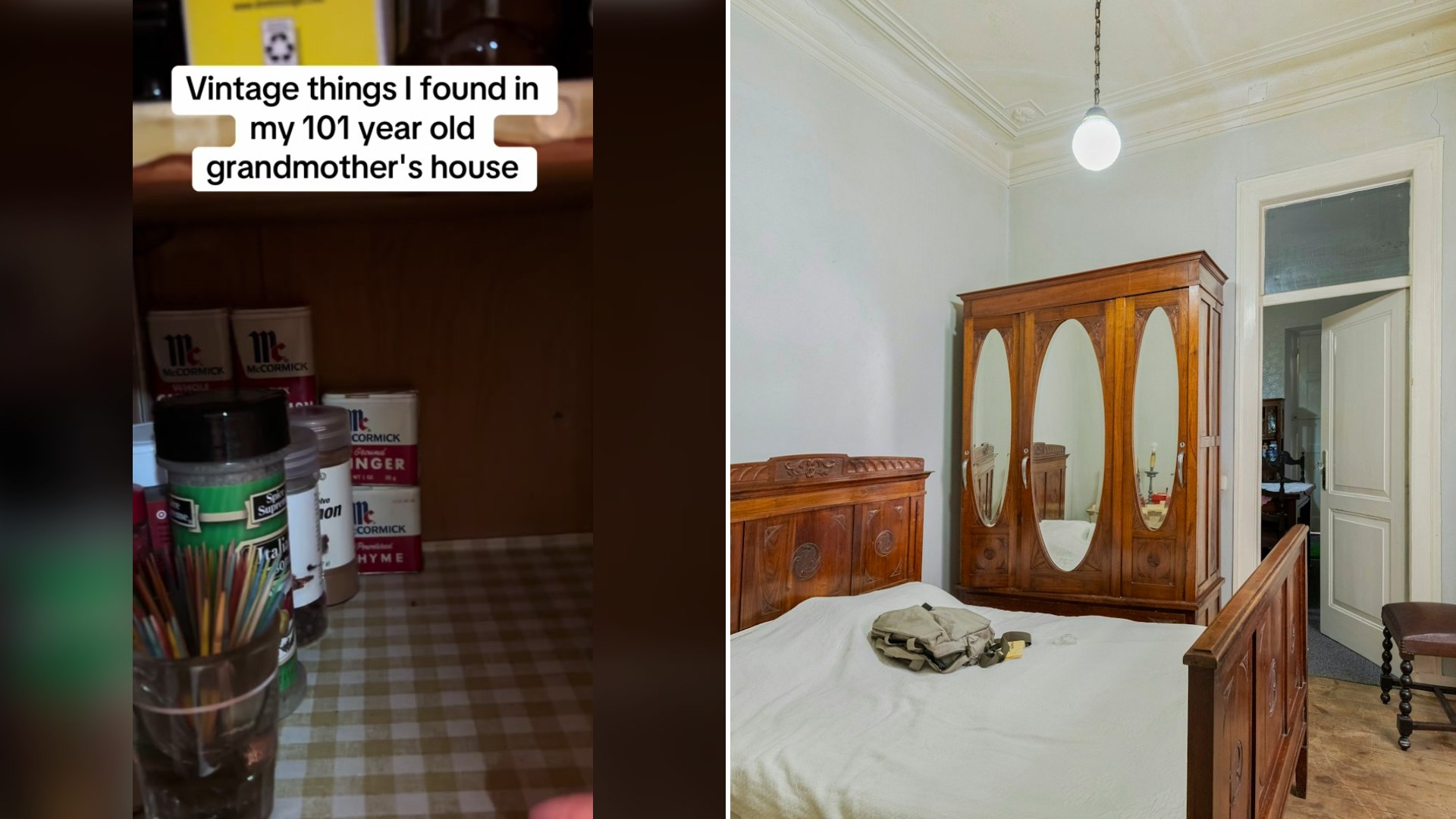
In the clip, she rattles off what she found: spices from 1974, tooth powder, manual hair clippers, Band-Aids from the eighties, cocoa powder and a Fisher-Price toy. She ends by asking viewers to let her know if they want to see more. The caption sums up the feeling: “This house is a literal time capsule. It’s so incredible to know someone who’s lived through so much history!”
It is a quick look, only about half a minute, and she does not say more about each item. But even a short list like this is enough to start a lot of memories. Let us take a closer look at what she found, and what it tells us about how earlier generations ran their homes.
Here is the original post.
@amandajeanne96
Spices from 1974
The oldest-sounding item on the list is the jar of spices dated 1974. Anyone who has found a forgotten jar at the back of the pantry will know the feeling of wondering whether it is still good. According to McCormick’s guidance on spice shelf life, spices do not spoil the way fresh food does, but they lose their potency. The company lists whole spices as lasting about three to four years, ground spices about two to four years, and leafy herbs and seasoning blends about one to three years for peak flavor.
That means a jar from 1974 is long past its prime. It may be perfectly safe, but it will not add much flavor. The company suggests keeping spices in a dark cabinet away from sunlight and the stove, and writing the date you opened each jar on the label. That last tip is a good one for anyone, because it keeps you from wondering about the jar years from now.
Tooth powder and manual hair clippers
Tooth powder was once a common way to keep teeth clean, and it stayed in some bathroom cabinets long after toothpaste tubes took over. Manual hair clippers are another piece of old household life. Before electric trimmers were common, families often cut hair at home with hand-squeezed clippers, and many households had a pair stashed away for trimming the kids.
Today, these things might seem quaint. But they remind us how many everyday chores were done by hand and how much people reused and repaired what they owned. A tool that worked well was a tool that stayed in the drawer for decades.
Band-Aids from the eighties
The Band-Aid has been around for a long time. As described by IPWatchdog, the bandages first reached the consumer market in 1920. They were the idea of Earle Dickson, a cotton buyer at Johnson & Johnson, whose wife Josephine often cut herself around the house. He made a strip of adhesive tape with gauze sections that she could snip off and apply quickly, then pitched it to his boss. The company sold about $3,000 worth in the first year, and sales passed $30 million by the time Dickson died in 1961.
A box from the 1980s is a neat piece of design history, with its old-fashioned packaging. But it is also one item to leave in the drawer for show rather than for use. Adhesive bandages are meant to be sterile and sticky, and both qualities fade with age. If you find old first aid supplies in your own house, check the date printed on the box and replace anything that has expired or whose wrapper is torn.
The Fisher-Price toy
Few toy brands show up in as many family photo albums as Fisher-Price. According to Antique Trader, Herman Fisher, Irving Price and Helen Schelle founded the company in 1930 in East Aurora, New York, and the company is now owned by Mattel. The earliest toys were wooden pull toys made of pine with colorful lithographed paper. The article notes that the Little People line began with figures that were fixed drivers in toy cars in the 1950s, and that the figures changed from wood to plastic in the 1970s.
The creator does not say which toy she found, so we cannot say what it might be worth. As a rule, collectors look at age, condition and completeness. A toy that is complete, with its original pieces, is worth more than one with missing parts. Antique Trader says early wooden toys commonly sell for $100 to $1,000, while loose Little People figures typically sell for $5 to $50. Most toys from a grandmother’s house are valued more for the memories than the money.
If you have a time-capsule house in your family
Many of us will, sooner or later, find ourselves helping to sort a parent’s or grandparent’s home. A few thoughts can make the job a little easier and a lot more meaningful.
- Take photographs first. Before anything is moved or thrown out, photograph the shelves and drawers as they are. These pictures capture how your relative lived.
- Ask questions while you can. If your grandmother is still around, ask her about the things you find. A simple question like “What was this for?” can unlock a great story.
- Sort food and medicine carefully. Old food items, medicines and first aid supplies are best discarded safely rather than used.
- Save a few small keepsakes. A recipe card, a spice tin or a toy takes up little room and can mean a lot.
The best part of this clip may be the simple pride in the caption. It is a wonderful thing to know someone who has lived through so much history, and even better to get a tour of it, one jar and one tin at a time.

Leave a Reply