

Some of the best heirlooms never make it into a display case. They live in a kitchen drawer, get used every morning and never cross anyone’s mind until a grandchild asks a simple question. That is exactly what happened in a short clip from @jaconjohnsob, whose caption simply reads, “My grandma is hilarious.”
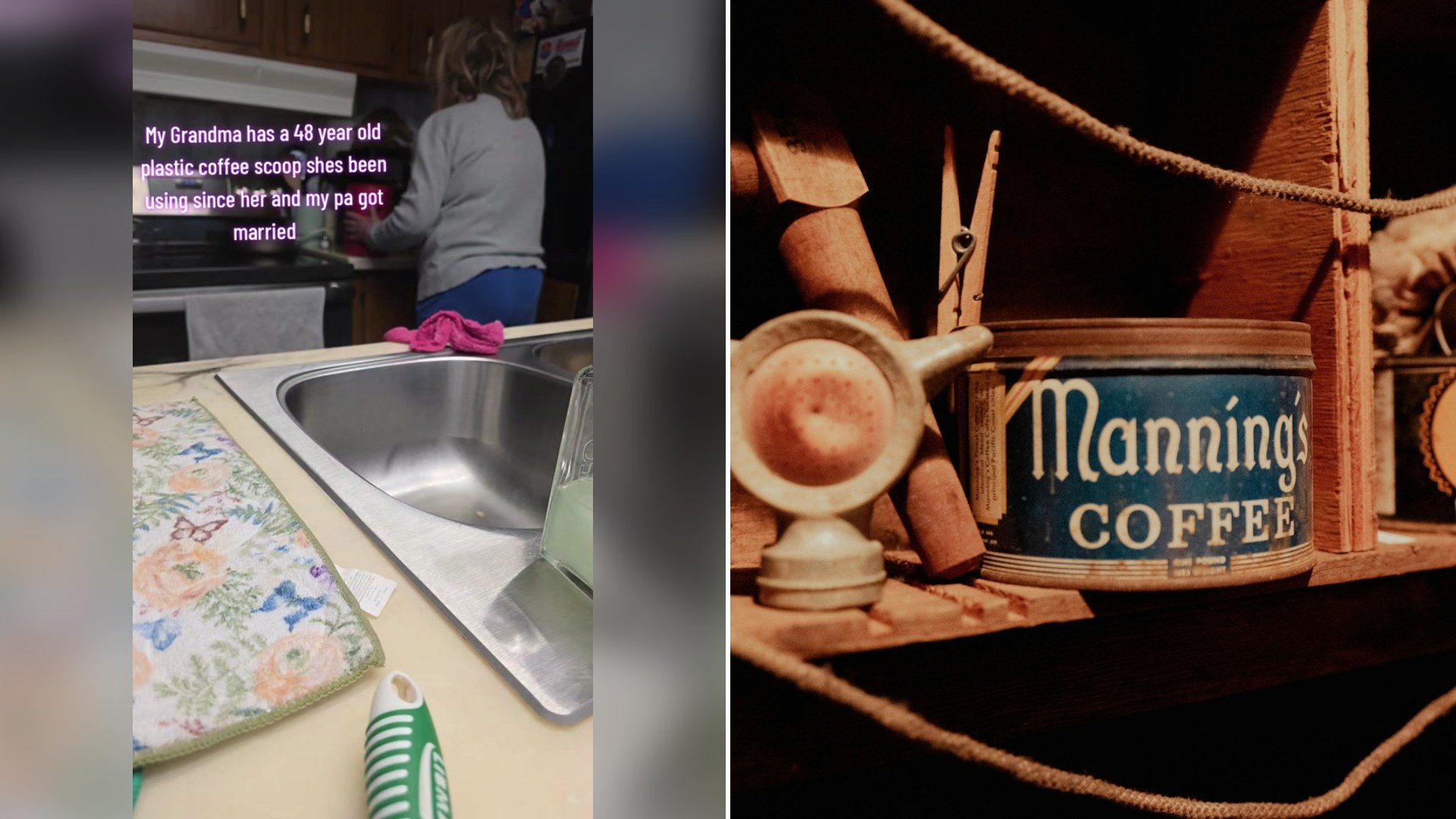
In the clip, someone behind the camera asks how old the coffee scoop is. Grandma brings it out and shows it off. A family member teases that it “might be worth a fortune.” Then comes the answer: it came in a Maxwell House coffee can, and she has had it for 48 years. “As long as we’ve been married,” she explains. It was the first scoop that came out of one of the old metal cans, and she kept it all these years “because that’s what I measured it by.” The person filming sums it up with a simple “48 year old coffee scoop, unreal.”
It is a sweet, funny moment, and it says a lot about how an earlier generation lived. Nothing was wasted, and a good tool was a good tool for as long as it worked.
Here is the original post, so you can hear Grandma tell it in her own words.
@jaconjohnsob
A quick look at the coffee brand behind the scoop
Maxwell House has been part of American kitchens for well over a century. According to Culinary Lore’s history of the brand, a man named Joel Cheek and his partner developed a custom coffee blend in the late 1800s. Cheek persuaded the food buyer at the Maxwell House Hotel in Nashville to try the blend, and after a six-month trial, the hotel let him name the product after it. The company was later bought by the Postum Cereal Company in 1928.
You may have heard the story that President Theodore Roosevelt coined the slogan “good to the last drop” while visiting that hotel. The same article looked into it and found no historical evidence for the claim. The earliest known print tie between Roosevelt and the slogan shows up in 1921, long after the visit supposedly happened. It is a good reminder that a fun story and a documented fact are not always the same thing.
Why the old metal cans are remembered so fondly
Grandma mentions that the cans “used to come in metal,” and anyone who grew up in the middle of the last century will nod along. The Henry Ford museum has a Maxwell House tin made between 1930 and 1945, and according to its collection page, the label promises the coffee is “fresh and stays fresh in this super vacuum can.” The same tin carries the slogan “good to the last drop.”
Those steel cans were sturdy. After the coffee was gone, they became pencil holders, nail jars, bacon grease keepers and homes for odds and ends in the garage. A scoop tucked inside the lid or down in the grounds was just one more handy thing that came with the purchase.
What is interesting is how this one little scoop outlasted the can, the coffee and probably several coffee makers. Counting back 48 years takes us to the late 1970s, a time when percolators were still common and many households measured coffee by the scoop rather than by weight.
Is a 48 year old coffee scoop worth a fortune?
Here is the honest answer: probably not in dollars. Most promotional or packaged-in scoops were mass produced, and there were a great many of them. Collectors of kitchenware tend to look for items that are scarce, unusual or in pristine condition, and a well-used scoop that has measured thousands of pots of coffee does not usually fit that description.
That said, “worth” has more than one meaning. If you are curious about an item at home, here is how to find out what it might fetch.
- Look for markings. Check the handle and the bowl for a brand name, a date or a patent number.
- Compare sold prices. Search a resale site and use the completed or sold filter, which shows what buyers paid rather than what sellers hope for.
- Check the condition. Dents, cracks and heavy staining usually lower the price.
- Consider the set. A scoop still attached to its original can or packaging is far more interesting to collectors than a loose one.
An old tin can with its original lid and graphics in good shape may bring a modest sum, but even then, the market for such items is small and prices vary a lot.
Keep the things that still do their job
The real treasure here is the reason she gave. She did not keep the scoop because she thought it was valuable. She kept it because it worked, and because she had measured with it since the early days of her marriage. Anyone who has a favorite wooden spoon, a chipped mixing bowl or a cast iron skillet that belonged to their mother knows the feeling.
If you have kitchen tools like this, consider writing a little note about them and tucking it in the drawer. Who gave it to you, when did you get it, and what did you cook with it? A short note like that turns a plain old scoop into a family story, and that is what grandchildren will remember.
And if a grandchild asks whether it is worth a fortune, you can always answer the way she did: it measured the coffee for 48 years, and that is plenty.

Leave a Reply