

Every renovation crew hopes for a surprise behind a wall, but a locked vault is the kind of surprise that makes everybody stop working. In one renovated space, the team had two old safes to deal with, and they called in a locksmith known as Jimmy the Lock Doc to try to open the first. What waited behind the heavy pink door was a time capsule from a vanished department store.
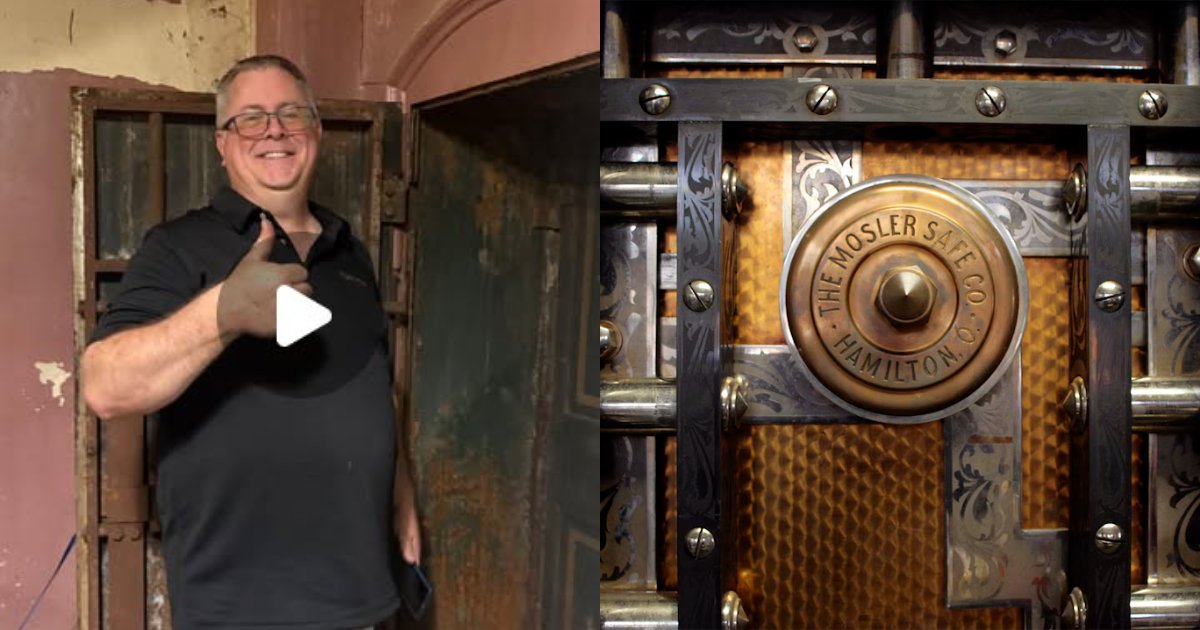
The discovery was shared by @dogearedbooksames, who walks through what the crew found as the doors swung open.
View on Instagram
Opening the Vault
The scene is a dim, unfinished room in the middle of a renovation. The locksmith uses a pry bar on the rusted outer iron door, and once it gives way, a second set of ornate painted inner doors with gold trim is waiting behind it. He explains that this layout is typical of vaults: there is an outer door where the dial sits, an inner door, and usually a shelf inside where money might have been kept. When the inner doors open, the crew can see a packed brick interior, and the reactions are exactly what you would expect.
Inside, flashlight beams sweep across floor to ceiling wooden shelves holding aging boxes, ledgers, and documents. Some of the vintage branded boxes bear names such as Marlboro and Kaynee, and the paperwork carries the name Tilden’s. According to the narration, there are boxes and boxes of receipts and documentation of day to day sales from the Tilden Department Store, with what looks like more further back that the team cannot reach yet.
Because of how long the material has been sitting there, the crew had to order gloves, goggles, and masks so they can go through it as safely as possible. The goal is to see what life might have been like in 1950 or earlier at the Tilden Department Store, and they still hope to get into the second safe soon. Nobody knows yet what mysteries might be inside it.
Why Old Business Paperwork Matters
Receipts and ledgers may sound dull next to a pile of cash, but historians and collectors often value them for exactly that reason. Day to day sales records can show what a store sold, the kinds of brands that were popular, how people paid, and who worked there. Printed packaging and old advertising tell a similar story. Paperwork like this is sometimes called ephemera, meaning everyday printed items that were never meant to last, which is why surviving examples can be so interesting.
Handling Old Paper Safely
The crew was right to gear up. Material that has been sealed in a dark space for decades can be dusty, and it may also carry mold or pests. Basic precautions are sensible whenever you open an old trunk, attic box, or vault.
- Wear gloves, a mask, and eye protection, and work in a well ventilated area.
- Go slowly and keep contents in their original order, because the arrangement can be part of the story.
- Do not force open brittle bundles or fold stiff pages. Support them from underneath instead.
- Photograph everything where you found it before you move anything.
- Keep damp or moldy items separate from dry ones so problems do not spread.
What to Do After a Big Discovery
If you ever find a stash of historical records in a building you own, resist the urge to clean and sort everything in a weekend. Start by taking inventory. Note the dates, names, and kinds of documents you see. Then think about who might want to help. Local historical societies, libraries, and university archives often know how to preserve business records, and some are glad to receive donations or at least offer advice. Calling an expert early is easier than repairing damage later.
Storage matters too. Cool, dry, dark conditions are best for paper, and acid free folders and boxes are a common choice among archivists. Avoid attics, basements, and garages, where temperature and humidity swing. Plastic sleeves can help with loose items, but avoid sticky tape and rubber bands, which damage paper over time.
Common Questions About Vault Finds
Is everything inside a vault valuable? Not necessarily. Many vaults held ordinary records, and the value is often historical rather than financial. Any figure should be treated as uncertain until an expert has looked at the material.
Should an owner open it alone? Old vault doors are heavy and the locks can be complicated, so bringing in a locksmith with the right experience, as this crew did, is a smart move.
Who owns what is found? That depends on local law and the terms of the building purchase, so check before you plan to sell or donate anything.
The Takeaway
The best part of a vault opening is not only the moment the door moves. It is the careful work afterward, turning boxes of faded receipts into a picture of how a community shopped decades ago. With the right protection and patience, a renovation surprise can become a piece of local history that someone gets to read.
Credit for the original post goes to @dogearedbooksames on Instagram.

Leave a Reply