

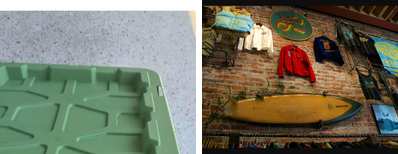
Inherited storage bins have a way of turning into unexpected time capsules, and that is exactly what happened to @westcoastvtg_. The video opens on a plastic storage container packed with his father’s old surf clothing from the 1990s, pulled out piece by piece in front of the camera while he walks viewers through what is inside.
Rather than simply showing off the finds, the creator turns the video into a question for his audience: are these old surf brand pieces actually worth something now, or just sentimental clutter worth keeping in the family? The clip has pulled in more than 67,000 likes, with longtime surfwear collectors showing up in the comments to weigh in on specific logos and tags.
Nineties surf fashion has been building real resale momentum over the last several years, driven largely by the same Y2K nostalgia wave that has pushed up prices on everything from baggy jeans to platform sneakers. Brands like Quiksilver, Billabong, Stussy, No Fear, and Gotcha, all staples of surf shops in that decade, are now actively sought after by collectors who either lived through the original boom or discovered the aesthetic secondhand through social media.
What determines whether a specific piece is valuable comes down to a short list of factors collectors check almost instinctively: the tag, the print, and the condition. Early-run tags with outdated logos or discontinued branding, loud graphic prints tied to a specific surf competition or team rider, and fabric that has held its color without fading or pilling all push value up considerably. A plain surf-brand tee from this era might sell for $15 to $30, while a rare graphic design or a jacket from a short-lived sub-line can bring well over $100 from the right buyer.
Stussy in particular has become one of the most actively traded names from this period, thanks to its crossover into streetwear long after its surf-shop roots. Early Stussy pieces with the handwritten-style logo, especially anything predating the brand’s shift toward limited drops and collaborations, routinely sell for multiples of their original retail price on resale platforms. Billabong and Quiksilver pieces from the same window, by comparison, tend to track closer to steady collector demand rather than speculative spikes, which makes them a safer bet for someone looking to actually wear what they find rather than flip it.
Condition assessment on old surfwear comes with its own quirks. Because these clothes were made to be worn at the beach, sun fading, salt staining, and sand-related wear are extremely common, even on pieces that were otherwise well cared for. Collectors specifically look for intact screen prints without major cracking, elastic waistbands and cuffs that have not gone slack, and zippers that still function smoothly, since board shorts and windbreakers from this era are especially prone to zipper failure after decades in storage.
There is also a sentimental dimension to stories like this one that pure resale value does not capture. A storage bin passed down from a parent carries context a stranger’s eBay listing never will: where the clothes were worn, what era of a family’s life they represent, and whether keeping them matters more than selling them. Many commenters on surfwear finds like this one openly say they would never sell a parent’s old gear regardless of its resale price, treating the question less as a financial one and more as a prompt to think about what family keepsakes are actually worth.
For anyone sitting on a similar bin of old surf gear, the practical first step experienced resellers recommend is simple: photograph every tag clearly, search the brand and decade on resale apps to gauge a baseline price range, and only then decide what, if anything, is worth letting go. As this story shows, sometimes the real payoff is not a price tag at all, but a reminder of exactly how much interest an old family closet can still generate online.
More from Vinyl and Velvet
- Reseller Says Thrift Store Employees Do Not Look Up Prices After Finding a Red Nikon Coolpix for $15, Then Shows Sold Listings From About $135 to $166 to Back It Up
- Father and Son Bought a Storage Unit Based on Photos That Showed Almost Nothing Inside, and the Moment They Rolled Up the Door to Find a Packed Unit Full of Unexpected Items Proved Exactly Why Storage Unit Auctions Stay So Popular
- Woman Who Sold 99 Percent of Her Belongings in 2007 After Hurricane Katrina Says She Has Lived Small Ever Since and Tells Viewers to Ask What They Actually Need

Leave a Reply