

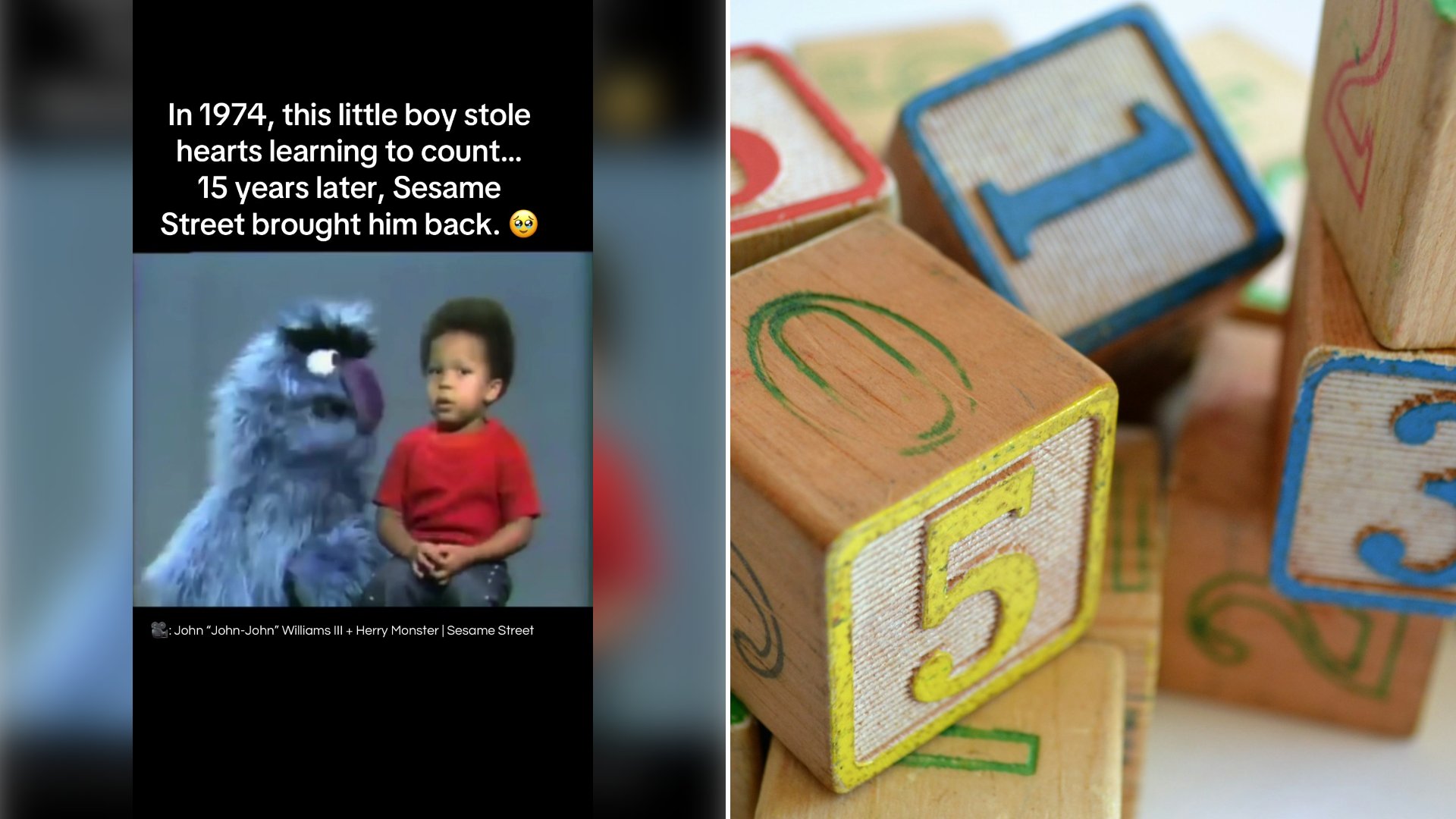
A clip resurfacing from Sesame Street’s archive is reminding viewers why the show became a cornerstone of American childhood for generation after generation. Creator @mar_decarlo paired two pieces of footage side by side: a 1974 segment of a young boy counting numbers alongside the big, shaggy, orange-furred Herry Monster, and a second segment filmed roughly fifteen years later showing what the post describes as a genuine on-camera reunion between the same boy, now grown, and the same character.
The original 1974 footage has the unmistakable look of early Sesame Street production: flat studio lighting, a simple counting lesson built around repetition, and Herry Monster doing what he did best in that era of the show, booming out numbers in his gravelly voice while a small child giggled along beside him. It is the kind of segment that aired to teach basic counting skills to preschoolers, never intended as anything more than an educational building block. The second clip reframes it entirely, turning a routine lesson into the first half of a callback nobody could have planned for at the time.
@mar_decarlo
Sesame Street premiered on PBS in November 1969, built around a then-radical idea: that a children’s program could be rigorously tested with real preschoolers and researchers before it ever aired, rather than simply guessing at what kids would enjoy. By 1974, the show was already a fixture of American television, filmed primarily at studios in New York and populated by a growing cast of Muppets created by Jim Henson’s workshop. Herry Monster, with his shaggy orange fur and oversized, clumsy energy, was part of the wider rotation of monster characters used to teach numbers, letters, and basic social lessons like sharing and patience, voiced for most of his run by Muppet performer Richard Hunt.
Reunion segments between child guests and Muppet characters were not unheard of on the show, which occasionally revisited footage or invited former child cast members and guests back years later as part of anniversary specials or retrospective segments. What made these moments resonate with audiences at the time, and what continues to make them resonate now, is the gap itself: a show built for three and four year olds was, by design, going to be revisited by those same viewers as teenagers and adults, and the production team understood that nostalgia was baked into the format from the very beginning.
The counting segments specifically were a core part of Sesame Street’s curriculum-driven structure. Early research into the show’s educational effectiveness, conducted by the Children’s Television Workshop in partnership with outside researchers, found measurable gains in letter and number recognition among regular young viewers, a result that helped justify the show’s continued funding and expansion throughout the 1970s. That research-first approach is part of why a simple counting bit with Herry Monster carried real educational weight at the time, even though it plays today as pure nostalgia bait.
What gives this particular pairing its emotional pull is how literally it closes the loop. Most nostalgia content relies on viewers filling in the gap themselves, imagining what happened to a person or a place between an old clip and the present day. Here, the footage does that work directly: the same child, now older, standing across from the same towering orange Muppet who once helped him learn to count, in a moment that was filmed and preserved rather than simply remembered. Fifteen years is long enough for a child to become a teenager or young adult, long enough for memories of a counting lesson to fade into something hazy, and the reunion clip effectively hands that memory back, fully intact, decades before social media would have made such a pairing easy to find on command.
For a generation that grew up with Herry Monster, Big Bird, and the rest of the Sesame Street cast as near-constant television companions, clips like this land less as a curiosity and more as proof that the show’s biggest promise, that these characters would stick with you, actually worked exactly as intended.
More from Vinyl and Velvet
- Actress Melissa Joan Hart Recalls Tap Dancing With Dick Van Dyke and Meeting The Monkees on Sabrina the Teenage Witch, Then Says Her Best Friends Came From the Crew
- Gamer Realizes Halo 3 Launched 19 Years Ago Today, Watches His Hair Turn Gray on Camera and Says He Is Booting Up the Master Chief Collection That Night
- Gen X Creator Lists Childhood Things That Felt Normal, From Waiting in a Running Car to Buying Cigarettes for His Parents and Spending Hours Out of Reach of Any Phone

Leave a Reply