

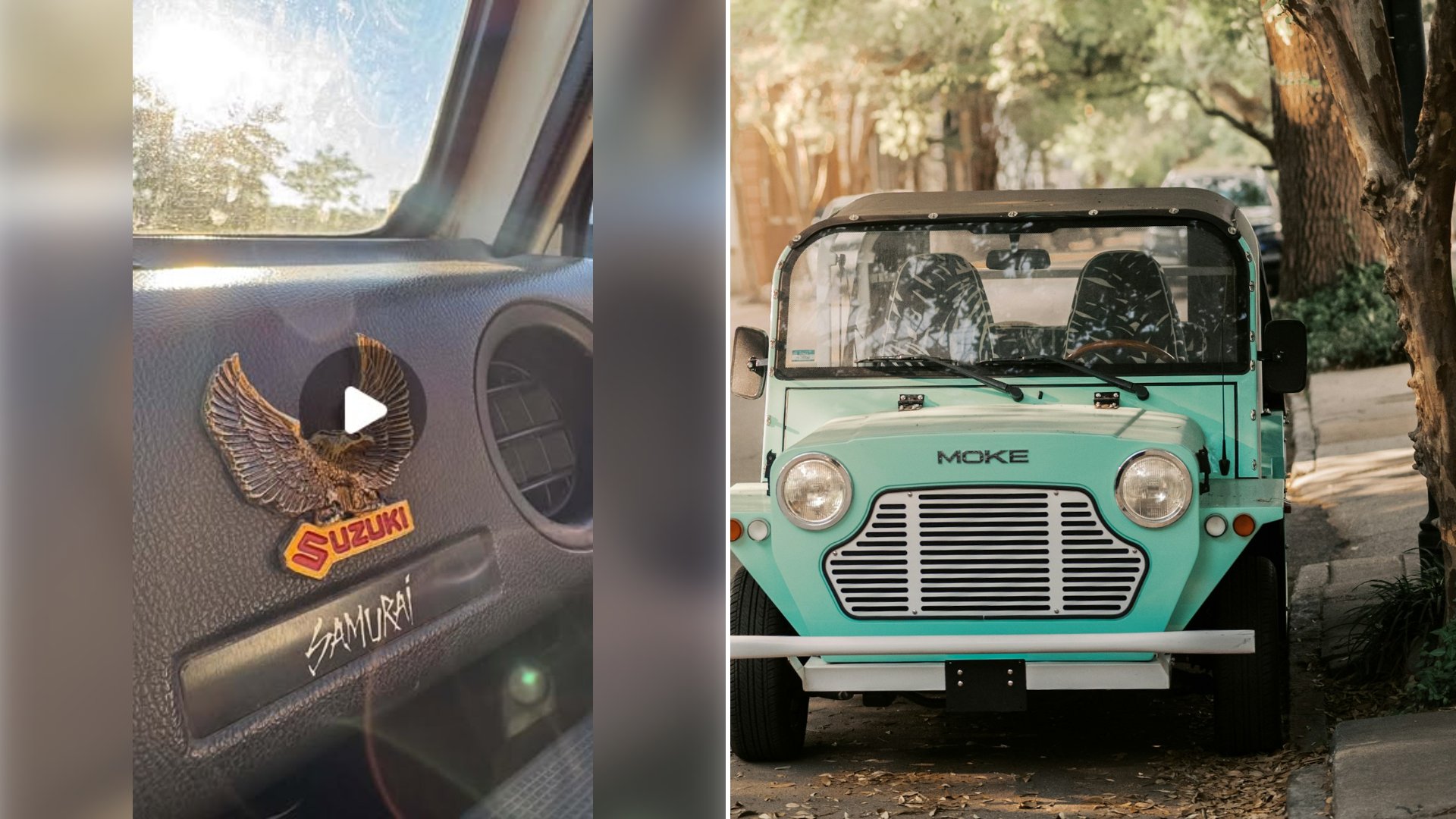
The video follows an older woman sliding behind the wheel of a vintage Suzuki Jimny kept in genuinely impressive condition, the kind of paint and interior upkeep that makes a decades-old SUV look like it rolled straight off a dealer lot. She drives it with visible comfort and familiarity, clearly not treating the vehicle as a garage trophy but as something she actually uses and enjoys behind the wheel. The caption over the clip keeps things simple: “Old is gold!”
The creator, @jnani_1985, doesn’t spell out a longer spoken message in the caption itself, but the pairing of an older driver with a lovingly maintained classic and a two-word phrase like “old is gold” lands as its own kind of statement. It reads less like a lecture and more like a lived philosophy: the car isn’t old because it has to be, it’s old because somebody decided it was worth keeping around and worth taking care of, year after year, long after it stopped being the newest or flashiest thing on the road.
The Suzuki Jimny, and its earlier export version sold in some markets as the Suzuki Samurai, has built one of the most devoted small-SUV followings in the world, largely because the formula barely changed for decades: a compact body, a ladder frame chassis, and genuine four-wheel-drive capability in a package small enough to thread through terrain that fully grown trucks simply couldn’t handle. The Jimny name has been used across multiple generations since the early 1970s, with the version most commonly associated with the classic boxy look, the kind likely shown in this video, built from the mid-1980s through the end of that generation in the mid-1990s before Suzuki updated the design again.
Collector demand for these older Jimny and Samurai generations has grown noticeably in recent years, driven partly by nostalgia and partly by a broader market shift toward small, mechanically simple off-roaders that owners can actually repair themselves without a dealership’s diagnostic computer. Clean, low-mileage examples of the classic boxy generation now regularly draw strong interest on the used and classic market, particularly in right-hand-drive markets like the UK, Australia, and Japan where the Jimny never fully disappeared from daily roads the way it did in the United States, where Suzuki’s Samurai import ended in the early 1990s.
Part of the Jimny’s lasting appeal is how little separates a well-kept original from a modern enthusiast’s daily driver. Where plenty of classic cars require babying, specialty parts, and careful trailer transport just to get to a car show, a properly maintained Jimny was built to be driven on rough terrain from day one and generally still can be, decades later, exactly the way this video shows it being used rather than just displayed. That combination, genuine usability paired with a design that has aged into a kind of effortless cool, is a big part of why these small SUVs keep finding new generations of admirers who weren’t even born when the classic version first rolled off the line.
More from Vinyl and Velvet
- Professional Detailer Surprises a Daughter by Fully Cleaning Her Father’s Dream Firebird After It Sat Untouched for 30 Years, Pulling Decades Old Trash Out With the Vacuum Along the Way
- Detailer Stops an 82 Year Old Widow From Selling Her Late Husband’s Untouched 1968 Pontiac GTO for Just $1,000 and Uncovers a 19,000 Mile Survivor Hiding Under Decades of Garage Dust
- Woman Who Sold 99 Percent of Her Belongings in 2007 After Hurricane Katrina Says She Has Lived Small Ever Since and Tells Viewers to Ask What They Actually Need

Leave a Reply