

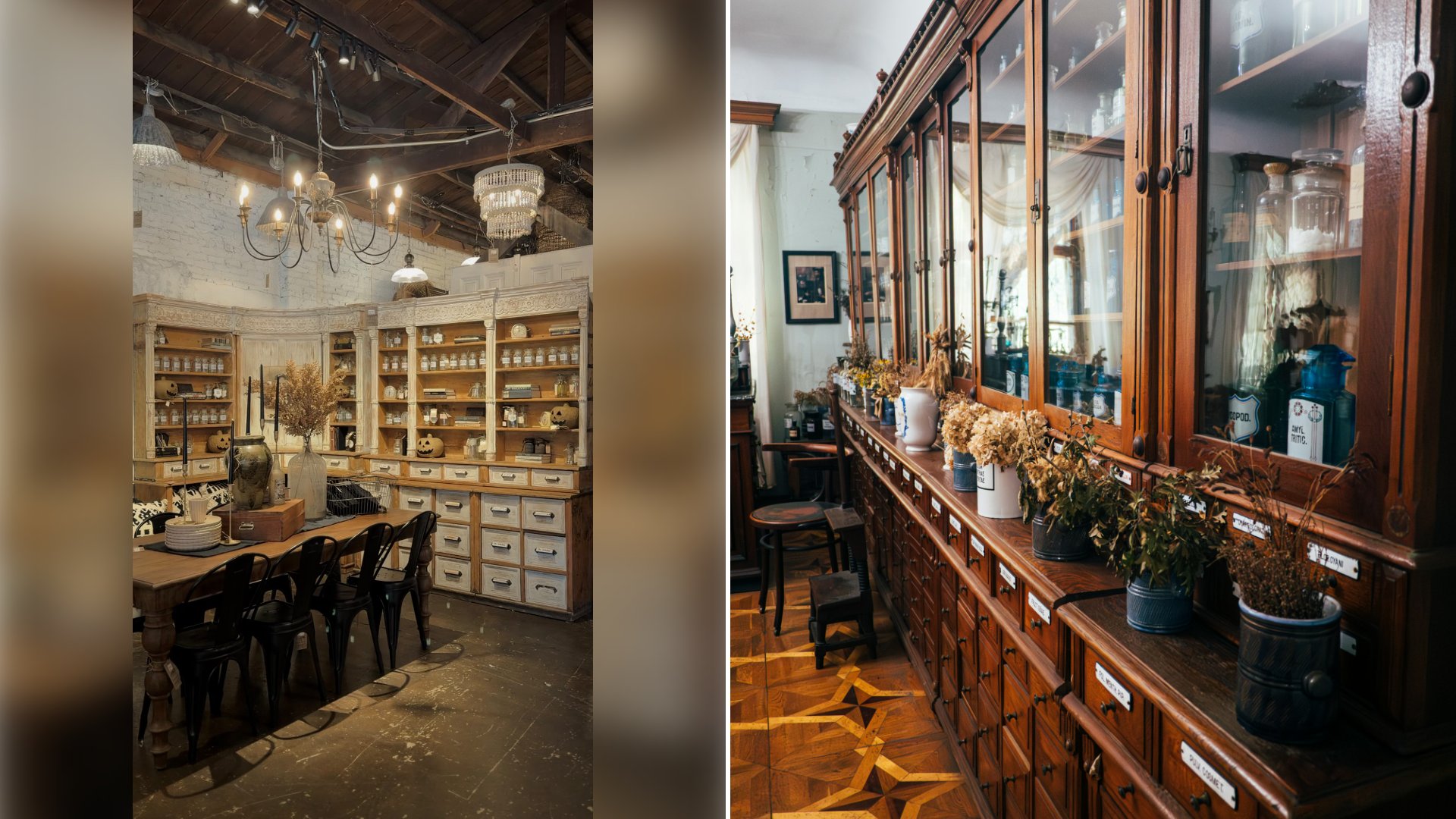
Sourcing genuine antique European apothecary furniture takes considerably more effort than browsing a local estate sale, which is exactly what made a vintage dealer’s latest acquisition such an event. Described as hand-picked in Europe and full of history, a sprawling twelve-foot French and Romanian pharmacy cabinet arrived in two massive sections, and the process of getting it assembled and styled turned into its own small production.
Pharmacy and apothecary cabinets from this era were built as genuine working furniture for pharmacists and chemists, designed with rows of small labeled drawers, glass-fronted upper cabinetry, and curved or paneled doors meant to organize and display countless small bottles, jars, and ingredients. Surviving examples that still function smoothly, with doors and drawers that open the way they were designed to a century or more after being built, are increasingly rare, since most pieces this old have suffered warping, cracked glass, or broken hardware somewhere along the way. Finding one, let alone two matching twelve-foot sections hand-picked together as a complete corner set, is the kind of sourcing trip that justifies traveling to Europe specifically to find it.
The assembly process shown in the video captures just how much physical work goes into reconstructing a piece this large once it arrives at its destination. Workers carefully slide the massive wooden sections into position inside a warehouse space with soaring wood-beamed ceilings, checking the curved cabinet door mechanisms to confirm they still swing properly after transport and installing replacement handles where original hardware had gone missing or worn out over the decades. Cleaning came next, with orange oil spray worked into the wood to recondition the surface and bring out the natural grain, paired with a careful vacuuming of every drawer interior to clear out a century’s worth of accumulated dust before anything new went back inside them.
The final staged reveal is where the piece’s full scale and character really come through. Arranged into an L-shaped corner installation, the cabinet’s glass-fronted upper shelves were filled with classic apothecary glass jars, the kind of simple labeled glass containers pharmacies once used to store everything from herbs to tinctures, alongside stacks of vintage books, carved wooden decorative pieces, and an antique clock. The lower open shelving held folded textiles and pillows, turning what began as purely functional pharmacy storage into a striking decorative display anchored by a dining table and chairs set up in front of it.
Pieces at this scale occupy an interesting place in the antique furniture market, genuinely rare and labor-intensive to source and ship, but also large enough that they suit a fairly specific kind of buyer, someone with the wall space and design sensibility to let a twelve-foot apothecary cabinet function as the anchor point of an entire room rather than a secondary accent piece. Listed as available together as a complete corner set or separately as individual sections, it gives buyers some flexibility, though seeing the two halves assembled together as one continuous visual statement makes a strong case for why most buyers interested in a piece like this would want to keep the full set intact.
It is a reminder that the vintage furniture market extends well beyond the local estate sale circuit, into a world of dealers who travel internationally, hand-select pieces for their history and craftsmanship, and then do the considerable physical work of bringing a piece of European pharmacy history back to life halfway around the world from where it was originally built.

Leave a Reply