

Bulk bins at used record and game stores are usually treated as an afterthought, a cardboard box of loose, unsorted cards priced at pocket-change rates because nobody on staff has the time to individually research every single piece that passes through the door. That exact kind of bin is where one shopper found a card that turned a quarter into a genuine four-figure percentage return, simply because she stopped to actually look through what everyone else had already passed over.
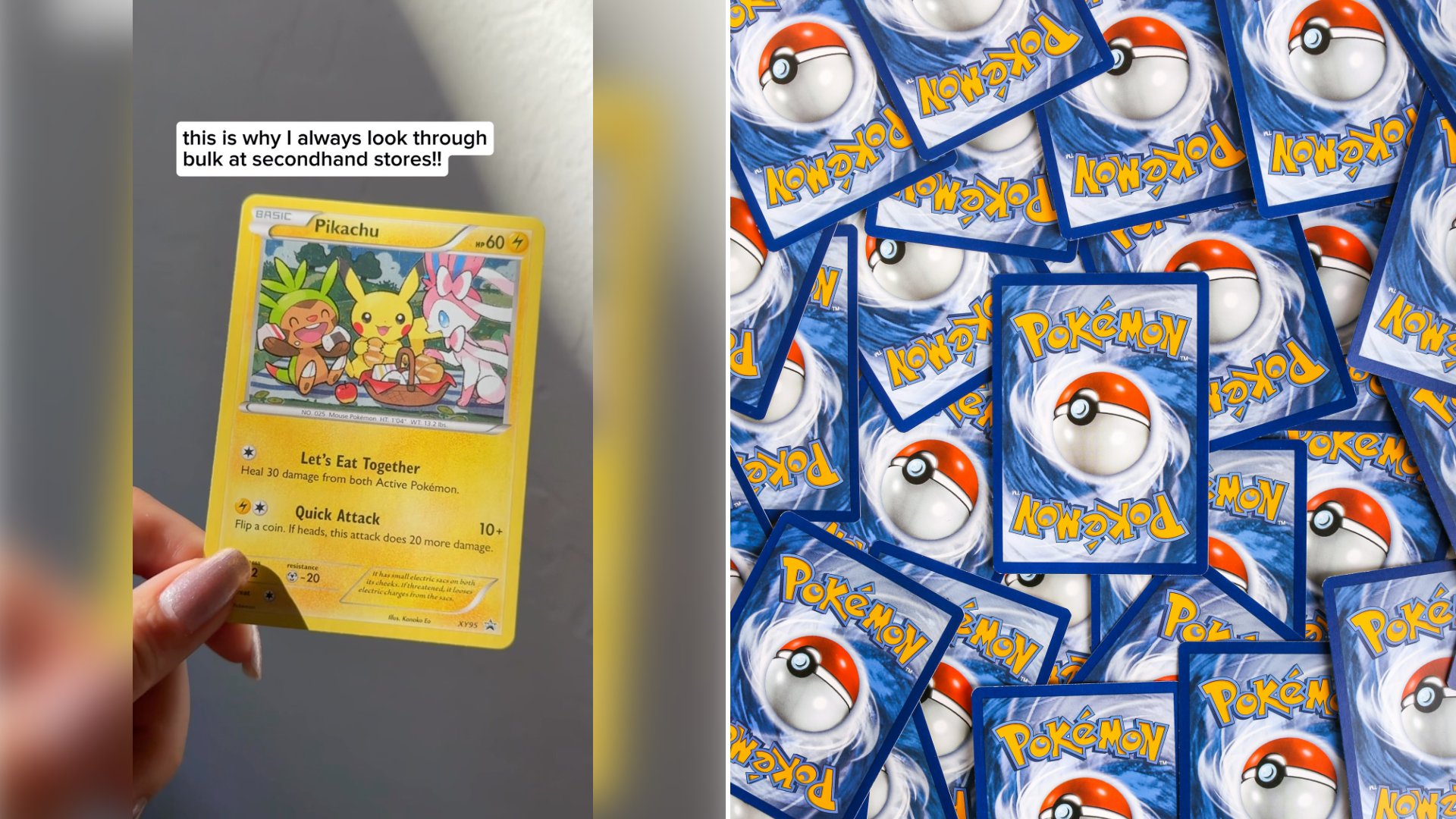
She was browsing the bulk section at Zia Records, a chain better known for vinyl and used media than trading cards, where loose Pokémon cards were priced at twenty five cents each or five for a dollar. Picking through a box like that is usually a matter of taste rather than strategy, and that is exactly how she described her reason for grabbing the card that caught her eye: it featured Pikachu having a picnic with Chespin and Sylveon, and she has said she has a particular soft spot for Pokémon cards that feature food. At a quarter, there was no real calculation involved, just a cute card she liked enough to take home.
The card’s real identity did not reveal itself until she got home and ran it through a card-tracking app to see what, if anything, it might be worth. What came back stopped her: the card was identified as a Pikachu XY95 Promo, a holofoil promotional card from the XY era of the Pokémon trading card game, with the app listing its value at $202.77. Promotional cards in the Pokémon TCG are typically distributed through special events, tournaments, or limited retail promotions rather than sold in standard packs, which keeps their print numbers far lower than ordinary set cards and makes them considerably harder to come across by chance, especially loose and unsorted in a bulk bin at a record store with no particular trading card specialty.
She shared the find with her fiance before she had even confirmed its value, sending a photo with an excited message guessing it might be a promo card, and his reaction captured on screen is the kind of disbelief anyone would have looking at a twenty five cent receipt next to a four-figure percentage markup. The receipt itself became part of the story, a plain confirmation from the store’s register showing the card rang up at a quarter, sitting right alongside the price-tracking app’s listing for the genuine market value of the same card.
What makes this find particularly satisfying within the trading card collecting community is that it validates one of the most repeated pieces of advice serious collectors give beginners: always check the bulk bins, no matter how unlikely a real find seems. Stores without dedicated trading card staff frequently price entire boxes of donated or traded-in cards at a flat bulk rate rather than paying someone to research each card individually, which means genuinely valuable promos, rare holofoils, and limited-run cards regularly end up mixed in with ordinary commons selling for pennies. It is inefficient from a retailer’s perspective and exactly the kind of inefficiency that keeps patient collectors coming back to dig through the same bins over and over.
For her, the ending was never really about the dollar value anyway. In her own words, the Pikachu picnic card became her favorite piece in her entire collection, and she has said flatly that she is keeping it forever rather than reselling it. It is a nice reminder that in collecting, the two kinds of value, the kind measured by a price-tracking app and the kind measured by how much a person simply loves what they found, do not always line up, and sometimes the find that means the most is also, almost by accident, the one actually worth the most.

Leave a Reply