

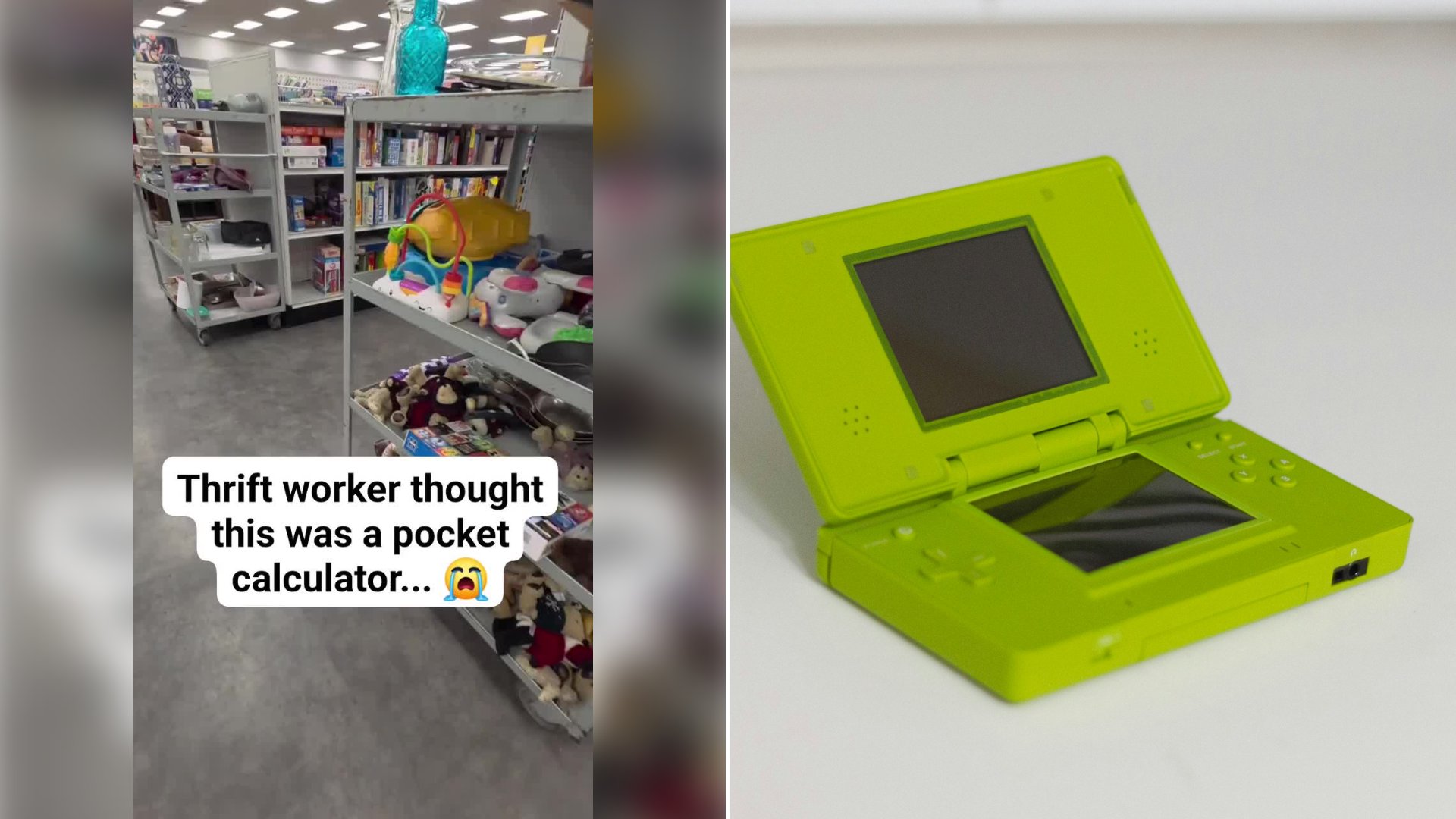
Thrift store mislabeling is one of the oldest setups in reselling content, and @deadbrokereselling found a particularly good version of it: a handheld console priced and shelved like an ordinary office calculator.
“Goodwill employee thought this was just a cheap calculator… little did they know it’s a 2000s holy grail,” the caption reads, tagged #reseller, #Gaming, #gameboy, #retro, and #ebay. The hashtags give away what the staff member missed: this wasn’t office equipment, it was a Game Boy variant collectors specifically hunt for.
@deadbrokereselling
Thrift stores like Goodwill typically price electronics based on quick visual assessment by staff who process enormous volumes of donated goods daily and are rarely trained to identify specific retro gaming hardware. A handheld console in a plain or damaged case, missing its original box and manuals, can easily get mentally filed alongside calculators, remote controls, or other small gray and black plastic electronics, especially if the screen is off and the distinctive branding isn’t immediately visible. That gap between what an item actually is and how a volume pricing system categorizes it is the entire foundation of thrift reselling as a business model.
Game Boy variants carry a surprisingly wide range of resale values depending on specific model, color, region, and condition. Limited edition color releases, launch variants, and region-specific versions that were never widely distributed in certain markets can sell for many multiples of a standard unit’s price, and working condition matters enormously, since the screens in these older handhelds are prone to a specific kind of degradation collectors call screen rot or ghosting, making a fully functional unit considerably more valuable than a visually similar one with display issues.
This kind of video has become a dependable format across reselling content specifically because it sets up a clear, relatable gap in knowledge: the employee pricing the item sees junk, the buyer sees a specific, identifiable grail, and the price tag sits somewhere in between, reflecting what the item looks like rather than what it actually is. Resellers in this space generally recommend learning to identify handheld consoles by shape and button layout alone, since screens are often broken or batteries dead by the time a unit reaches a donation bin, making visual silhouette recognition more useful in the field than relying on a working display.
Whatever this particular unit sells for once it’s cleaned up and listed, the gap between a calculator price tag and a genuine 2000s holy grail is exactly the margin resellers like this one are out there looking for every day.
More from Vinyl and Velvet
- Retro Game Store Clerk Says Cracked Green Nintendo 64s Sell For 75 And Scratched Ones For 100, Then Rings Up A Pristine One, Cables, Donkey Kong And A PS4 For One Customer
- Card Restorer Cracks a PSA 2 Gold Star Rayquaza Out of Its Slab, Finds Severe Delamination Lifting One Corner and Spends More Than Two Days in a Humidor and Presses to Flatten It
- Thrifter Lifts a Blackened Horned Toad Off a Glass Shelf for $3.99, Says It Is a James Avery Bronze Paperweight That Sells for $190 New, Then Polishes It Gold With a Nail Buffer

Leave a Reply