

There was a specific era when buying furniture meant buying an entire matching set at once: the same wood tone, the same fabric, the same design language across every piece in a room, sold together as a coordinated package deal.
Gen Z, raised on mixed, eclectic, thrifted interiors, tends to see the matching-set instinct as one of the more dated hallmarks of Boomer home design. Here are eight coordinated purchases that just are not happening in a Gen Z living room.

The Full Matching Living Room Suite
A sofa, loveseat, and armchair all upholstered in the exact same fabric, sold and delivered together as a single unit, was once considered the height of put-together decorating. Gen Z tends to find the effect a little too uniform, almost like a furniture showroom rather than a lived-in room. The current preference leans toward mixing pieces from different sources, a vintage chair here, a newer sofa there, tied together by color or shape rather than exact matching fabric. It creates a room that looks assembled over time rather than purchased in a single trip, which fits a broader generational preference for spaces that feel personal rather than staged.
Matching Bedroom Furniture Down to the Nightstands
A complete matching bedroom set, headboard, dresser, and two identical nightstands, all in the same wood finish, was a standard big-ticket purchase for a lot of Boomer households. Gen Z bedrooms are far more likely to feature mismatched nightstands or a dresser sourced from a completely different era or store than the bed frame. This is partly a budget reality, since buying pieces individually over time is often more affordable than a full set at once, and partly an aesthetic choice, since an intentionally mismatched bedroom now reads as more curated and interesting than a uniform matching set that looks the same as everyone else’s.
A Dining Set With Matching Chairs, Table, and Hutch
Dining rooms often came with a table, a full set of identical chairs, and a matching hutch or china cabinet, all purchased together as a single formal dining package. Gen Z, who is statistically far less likely to have a separate formal dining room at all, tends to favor a simpler table paired with mismatched chairs collected individually, sometimes even a bench on one side. The hutch, in particular, rarely survives the transition, since displaying formal china is a much smaller part of how most younger households actually entertain, making the whole matching package feel excessive for how the space gets used day to day.
Matching Towel Sets in a Single Color
An entire bathroom outfitted in towels of one single coordinated color, sometimes monogrammed to match, was a common Boomer bathroom choice, reinforcing a sense of order and intentional design. Gen Z bathrooms tend to embrace more texture and color variation, mixing patterns or shades within a loose palette rather than committing to one uniform color across every towel. The shift reflects a broader move away from matchy-matchy decorating toward a look that feels assembled with more personality, even in a room as small and functional as a bathroom, where uniformity once signaled a well-run household.
A Full Set of Matching Kitchen Canisters
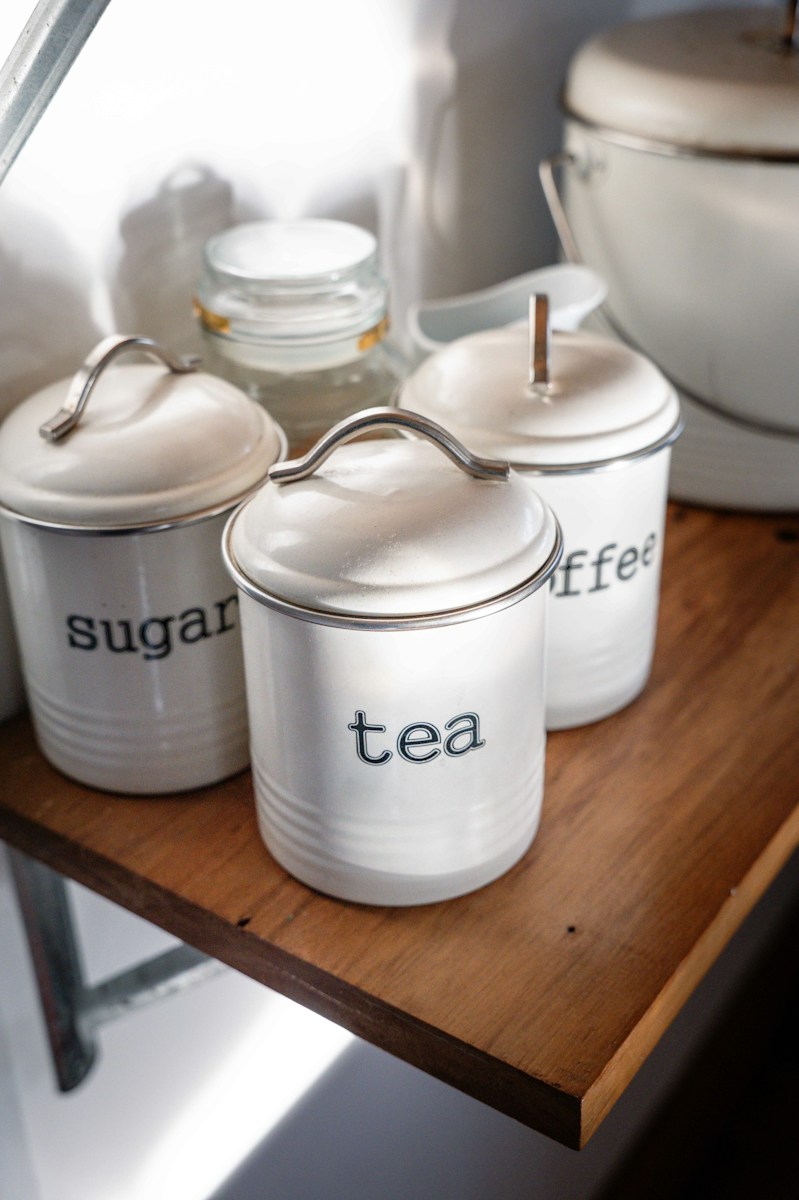
Flour, sugar, coffee, and tea, each labeled and stored in matching canisters that lined up neatly on the counter, was a small but telling detail of a well-organized Boomer kitchen. Gen Z kitchens are more likely to use whatever containers work best for the specific item, prioritizing function and sometimes glass visibility over strict color and shape matching. When a matching set does appear now, it tends to be simpler and more neutral, chosen for practicality rather than as a decorative statement, reflecting a generally lower emphasis on visible, coordinated kitchen displays compared to a few decades ago.
Matching His-and-Hers Recliners
Two identical recliners, positioned side by side facing the television, was a genuine living room centerpiece in a lot of Boomer households, purchased together as a pair specifically for that purpose. Gen Z living rooms are more likely to feature a single accent chair or a sectional designed for lounging together rather than two separate identical seats. The his-and-hers recliner setup, while comfortable and practical, reads to a lot of younger homeowners as visually heavy and overly symmetrical, favoring instead an asymmetrical mix of seating that still accommodates plenty of relaxing without looking quite so uniform.
A Coordinated Living Room Lamp Trio
Table lamps, floor lamps, and sometimes even a ceiling fixture purchased as a matching trio, all sharing the same base material and shade style, was a common lighting approach in Boomer-era living rooms. Gen Z tends to mix lighting sources more freely, favoring a variety of warm-toned fixtures in different styles that still work together through color temperature rather than identical design. This layered lighting approach, popularized heavily by interior design content online, has largely replaced the single coordinated lamp set as the default way younger homeowners think about lighting a room.
A Full Set of Matching Luggage on Display
A matching hard-shell luggage set, often displayed prominently in a closet or even stacked as a decorative element, was a genuine status marker in a lot of Boomer households, signaling that the family traveled and traveled well. Gen Z, who tends to travel with a single versatile carry-on or backpack rather than a full coordinated set, generally does not maintain or display matching luggage at all. Travel gear now gets chosen for durability and portability rather than as a coordinated visual set, and the idea of luggage as something to display rather than simply use has mostly faded entirely.

Leave a Reply