

Moving out and furnishing your own place for the first time is as much about what you leave behind as what you bring with you. For a lot of Gen Z renters and first-time buyers, that means consciously skipping several fixtures of the house they grew up in — not out of rejection, exactly, but because these things simply don’t fit the life they’re building.
Here are eight home trends that seem destined to stay firmly in the parents’ generation.
1. A Full Encyclopedia Set on Display
A matching, leather-bound set of encyclopedias, often taking up an entire shelf or bookcase, was a genuine household investment and a point of pride for families that valued having reference material on hand. With virtually all of that information now instantly searchable, the encyclopedia set has shifted from essential resource to purely decorative object. Gen Z, who’ve never needed to consult one, tends to see the full set as an interesting artifact rather than something worth the shelf space in their own home.

2. A Landline Phone Book Kept Within Reach
A thick phone book, updated annually and kept in a kitchen drawer or by the phone, was once an essential household reference for finding a business number or a neighbor’s contact information. Gen Z has never needed one, having grown up with search engines and saved contacts doing that job entirely. A physical phone book, when they do encounter one, reads less as a useful tool and more as a genuinely surprising relic of how differently information used to move.
3. Popcorn Ceilings Throughout the House
As Mental Floss details, textured ceilings were once valued for hiding imperfections and dampening sound cheaply and effectively. Gen Z, apartment hunting and home shopping almost exclusively in an era of smooth, flat ceilings, has simply never developed any attachment to the texture and treats a popcorn ceiling as an immediate item to scrape or cover rather than a feature worth preserving in a new home of their own.
4. Wall-to-Wall Honey Oak Cabinetry
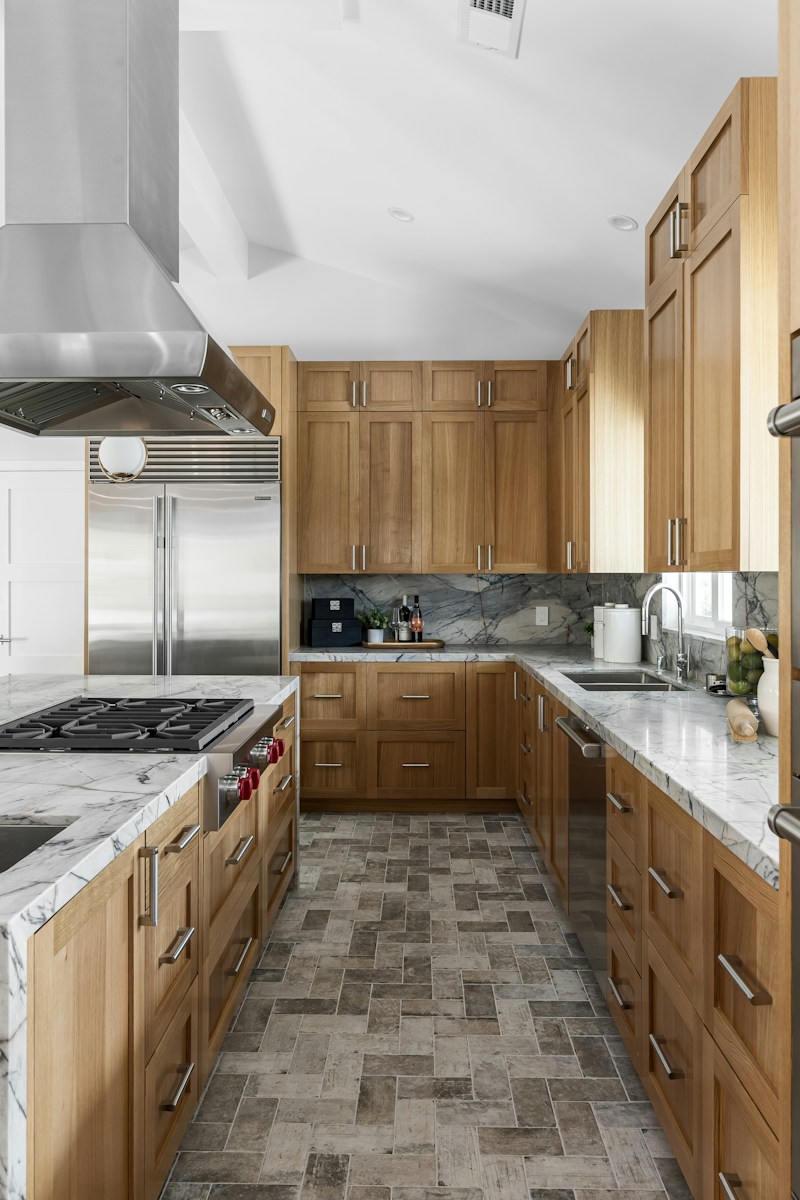
The warm, uniform oak cabinetry that defined kitchens for a generation, as Apartment Therapy has chronicled, made sense as a durable, coordinated choice at the time it was installed. Gen Z, furnishing kitchens with a preference for painted cabinetry or mixed materials, has largely left the all-oak look behind entirely, treating it as something specific to their parents’ generation of home design rather than a style they’d choose to recreate.
5. A CD or Cassette Tower
A tall, narrow rack or tower holding dozens of CDs or cassette tapes, organized alphabetically or by genre, was a genuine centerpiece of how music lived in a home for decades. With music now streamed rather than physically owned, Gen Z has no equivalent object to replace it with, and a CD tower, encountered in a childhood bedroom, tends to read as a specific, slightly poignant marker of an entirely different way of experiencing music.
6. Full Wall-to-Wall Carpeting
As This Old House has covered, buyer preference has shifted firmly toward hard-surface flooring in recent years. Gen Z, renting apartments that overwhelmingly feature hardwood or vinyl plank flooring rather than carpet, has simply grown up without much exposure to full-house carpeting as a default choice, and most have no particular desire to bring it back once they’re furnishing a place of their own.
7. A Fax Machine Still Plugged In
A dedicated fax machine, sometimes combined with a printer and scanner, sat on a desk or counter for decades as a genuine communication necessity for certain kinds of paperwork. For Gen Z, who’ve largely never needed to send or receive a fax, the machine reads as a specific and slightly baffling relic, and it’s one of the more reliably surprising objects still plugged in and functional in a parent’s home office.
8. The Formal Living Room Nobody Sits In
A separate, more formal living space, reserved for guests and holidays while daily life happened elsewhere in the house, was a defining feature of home layouts for decades. Gen Z, generally living in smaller spaces where every room has to serve a purpose, has little interest in recreating a room that sits empty most of the year, preferring instead to make every square foot of their own home count toward daily use.

Leave a Reply