

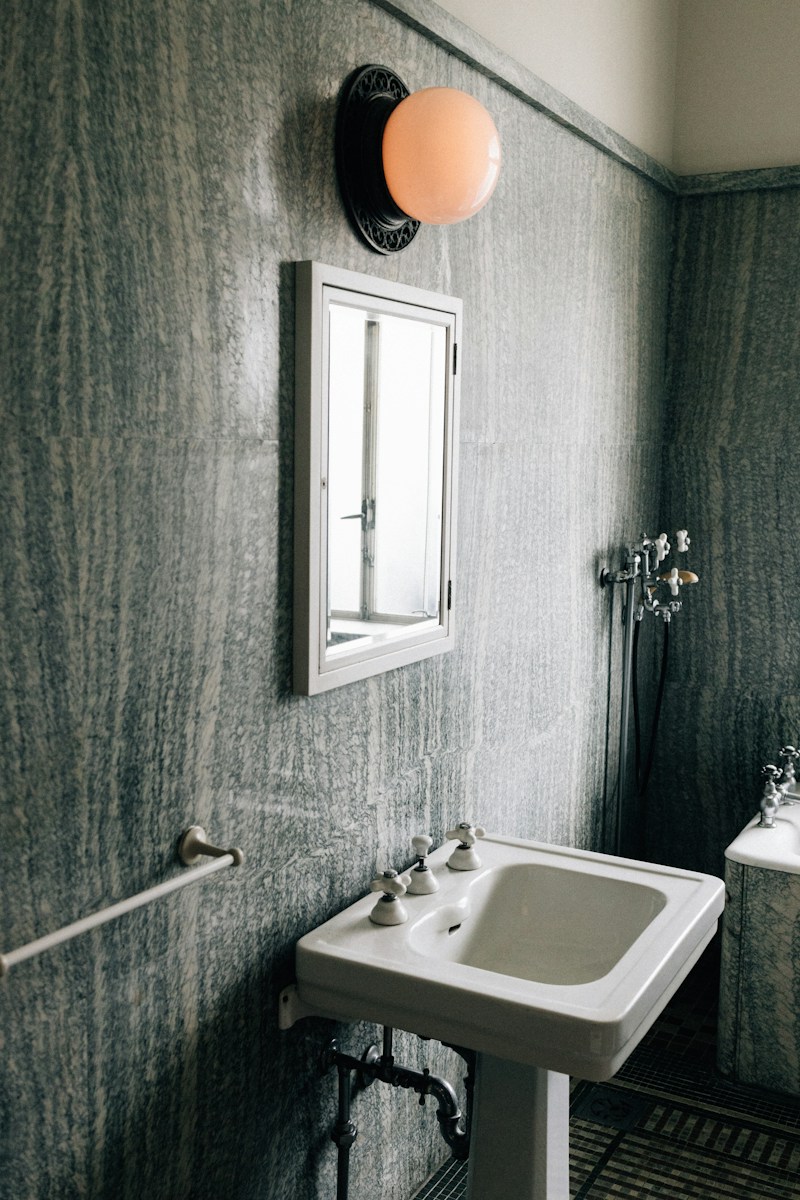
Bathrooms get renovated less often than almost any other room in the house, partly because the work is disruptive and partly because a functioning bathroom rarely feels urgent to replace. The result is that a lot of Boomer-owned bathrooms are still wearing their original 1970s, ’80s, or ’90s finishes, largely untouched.
None of it was a bad decision at the time — it’s just accumulated into a very specific, very recognizable look. Here are seven details that reliably give it away.
1. A Glass Block Window
A small window built from thick, textured glass blocks, letting in light while maintaining privacy without curtains or blinds, was a popular architectural choice for bathrooms for decades, valued for solving the light-versus-privacy problem elegantly. It’s also a genuinely difficult feature to update without significant construction work, since replacing it means dealing with structural glass block rather than a simple window swap. Gen Z tends to see it as one of the more permanent-feeling markers of an untouched bathroom.
2. A Cultured Marble Vanity With an Integrated Sink
A one-piece vanity top, molded from cultured marble with the sink basin built directly into the same surface, was an affordable, low-maintenance alternative to separate tile and a drop-in sink. It solved real problems around grout lines and water damage. The specific swirled pattern and rounded, slightly yellowed finish common to these vanities decades later has become one of the most reliable visual cues of a bathroom that hasn’t been renovated in a long time.
3. A Pedestal Sink Hidden Under a Fabric Skirt
Rather than replacing an older pedestal sink’s exposed pipes, some households opted to disguise the area underneath with a fitted fabric skirt, often coordinated to match the shower curtain or wallpaper. It’s a clever, low-cost workaround for hiding plumbing. Gen Z, generally drawn to open, clean-lined vanity designs, tends to see a fabric skirt as an obviously improvised solution rather than an intentional design choice.
4. A Built-In Ceramic Soap Dish Tiled Into the Wall
Rather than a freestanding soap dish, many older bathrooms have a small ceramic dish or recessed shelf tiled permanently into the shower wall, installed at the same time as the surrounding tile for a seamless look. It’s a genuinely thoughtful built-in detail. Replacing or removing it means disturbing the surrounding tile, which makes it one of those small features that quietly signals an original, unrenovated bathroom even when everything else has been refreshed.
5. Gold-Tone Towel Bars and Toilet Paper Holders
Shiny brass-finish hardware — towel bars, toilet paper holders, robe hooks — matched throughout a bathroom was a coordinated, deliberate design choice for decades, meant to add a touch of warmth and formality to an otherwise utilitarian room. Gen Z’s preference for matte black or brushed nickel hardware makes a full set of shiny gold-tone fixtures one of the more immediately noticeable, and comparatively inexpensive, updates on a typical renovation list.
6. A Single Vanity Light Bar With Round Bulbs
A horizontal bar fitted with several exposed round bulbs, mounted directly above the mirror, was standard bathroom lighting for generations, providing bright, even light for grooming tasks. The stark, unshaded bulbs and dated fixture backing have become one of the clearest visual markers of an original bathroom, and it’s frequently one of the first things replaced, since swapping a light fixture is a relatively simple, high-impact update.
7. Fruit or Floral Wall Art Matching the Hand Towels
Small framed prints of pears, lemons, or delicate florals, deliberately chosen to coordinate with the hand towels and shower curtain, reflected a genuine commitment to a fully themed, put-together bathroom. It’s coordinated decorating taken to its logical conclusion. Gen Z’s preference for either bare walls or a single larger piece of art makes a fully matched set of small themed prints read as visually busy rather than the polished, finished look it was originally meant to achieve.

Leave a Reply