

Picture the kitchen wall in 1968. A phone hangs there with a cord stretched across the room, and nobody under 16 can talk longer than the length of that cord allows.
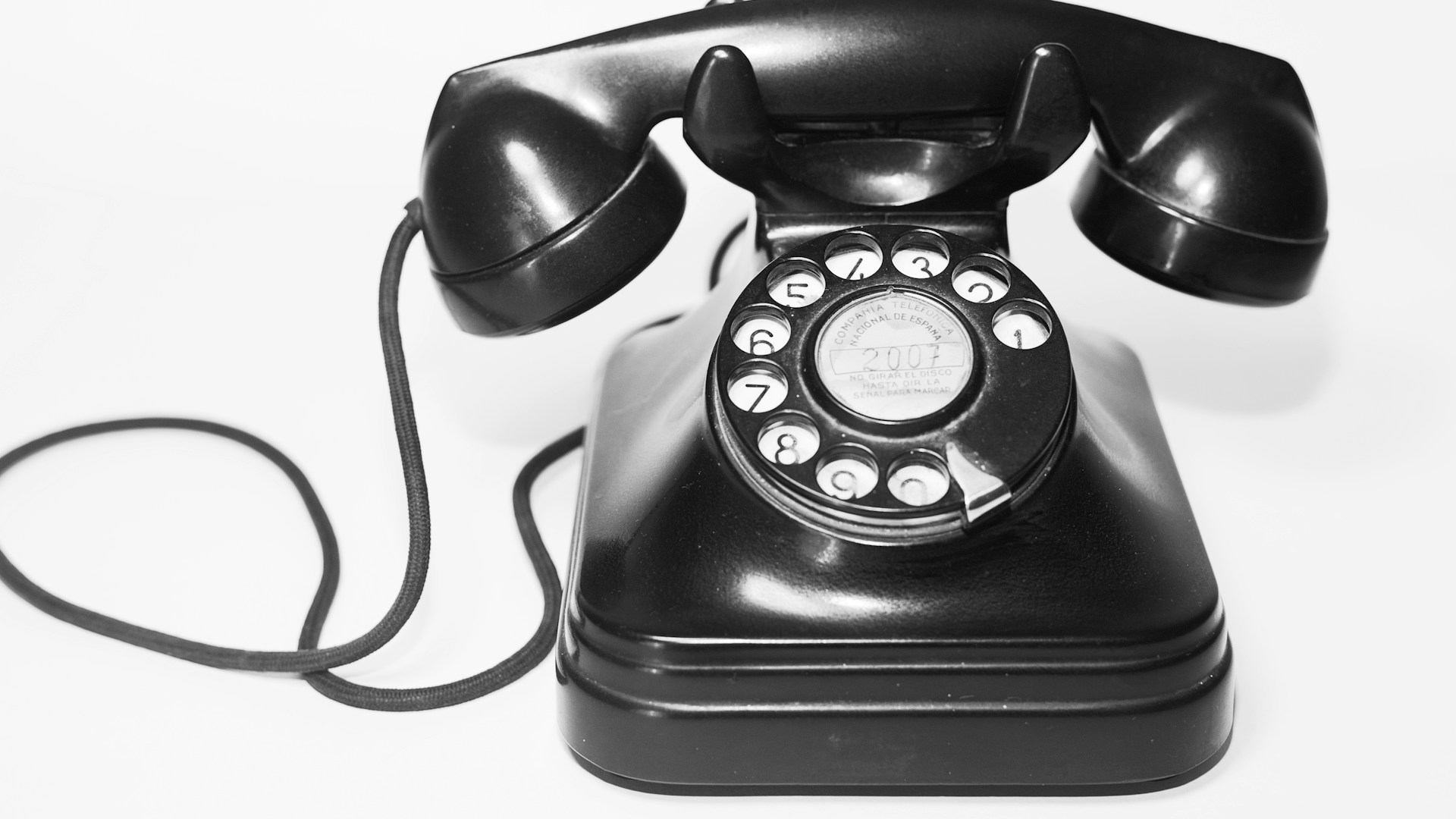
Phones back then were furniture, fashion and family gossip machines all at once. Here are 7 telephones and gadgets that Americans remember from the 1960s and 1970s, drawn from Wikipedia’s history of the rotary dial, the Smithsonian’s National Museum of American History and the Telephone Archive.
The Rotary Dial Made Every Call Take A Little Patience
Wikipedia explains how it worked. You put a finger in a digit’s hole, turned the wheel clockwise to a stop and let go, and a spring returned the wheel while a governor kept the speed steady.
During the return, a switch briefly interrupted the line once for each unit of the digit, and the exchange counted the pulses. Dials typically sent about 10 pulses per second. The Smithsonian’s collection includes a telephone rotary dial, and the verb “to dial” is its lasting legacy.
Anyone who ever dialed a number full of nines remembers the long, patient wait while the wheel spun all the way back. It taught a whole generation to be a little more patient.
Phone Numbers Came With Letters Right On The Dial Ring
Wikipedia says W. G. Blauvelt of AT&T devised the letter-to-digit pattern in 1917 that became the North American standard. By the late 1940s, telephones were redesigned so numbers and letters sat on a ring outside the finger wheel.
Mid-century, the Bell System adopted all-number calling to expand network capacity. Wikipedia notes that many subscribers disliked seven-digit numbers, but Bell considered standardized numbering necessary.
The Princess Phone Lit Up The Bedroom Like A Night-Light
Wikipedia reports the Bell System introduced the Princess in 1959. Henry Dreyfuss designed it, with a compact shape made for the bedroom and a light-up dial that doubled as a night-light.
It came in pink, red, yellow, moss-green, black, white, beige, ivory, light-blue, turquoise and gray. Touch-Tone versions arrived in 1963, modular connectors in the mid-1970s, and AT&T ended production in 1994. The Smithsonian holds a Western Electric Princess phone in its collection.
Push Buttons Arrived And Dialing Became A Quick Tap
According to Wikipedia, the first push-button telephone was made available to the public on November 18, 1963. The Telephone Archive lists a Touch Tone Princess among its 1963 phones.
The standard keypad has four rows and three columns, and each key sends two tones at once. The star and pound keys were added later for menu and service codes. Wikipedia adds that push-button keypads gradually replaced rotary dials from the 1960s onward.
The Trimline Hid The Dial Right In The Handset
The Telephone Archive dates the Trimline to 1965, designed by Henry Dreyfuss Associates under project director Donald Genaro. Wikipedia says the rotary dial moved from the base to the underside of the handset, and the dial lit up when you lifted it.
Touch-Tone models arrived in mid-1966 with ten buttons, and the star and pound keys came in 1968. In the early 1970s the buttons received an aluminum backplate.
Wikipedia also notes that the smooth, shallow handset was hard to hold between cheek and shoulder, and that in Europe it was called the “Manhattan” or “Gondola” model.
The Wall-Mount Phone Kept The Kitchen Counter Clear
Wikipedia says the Trimline came in desk-top and wall-mount bases, and the handsets and bases were interchangeable. The Telephone Archive confirms the design came as a desk set and a wall-mount set.
The ringer and electronics sat in the base, while the handset carried the dial. Wikipedia adds that the sleek, curved plastic housing took up less space than earlier Western Electric phones, and that it was one of the first phones to use the predecessor of the RJ11 modular plug and jack. The Smithsonian also holds a wall telephone in its collection.
For a busy kitchen, a phone on the wall meant one less thing to knock off the counter during dinner.
The Answering Machine Started Taking Messages For Us
Wikipedia says Phonetel began selling the first answering machines in the United States in 1960, and the Ansafone was invented by Dr. Kazuo Hashimoto, who worked for the company. The Code-a-Phone, another early model, followed in 1966.
Early machines used magnetic tape, and dual-cassette models used one cassette for the greeting and a second for incoming messages. After AT&T’s restructuring in 1984, answering machines became affordable, and US sales reached one million units per year. The Smithsonian’s collection also includes a telephone answering machine.
Think about the first time you heard a stranger’s voice on a machine, asking you to leave a message after the tone. It felt like magic then.
Many of us still have a favorite funny greeting recorded on one of those tapes.
Put together, these gadgets tell a story of a country slowly moving from heavy black desk sets to sleek, colorful and finally push-button phones. Each change was designed to make a call a little easier, a little faster or a little prettier.
If you still own an old Princess or Trimline, check the base for the maker’s markings. Collectors treasure pieces from this era, and it might be worth a spot on a shelf next to the family photos.
More Stories You May Like
- She Rebuilt A 1970s Gunne Sax Dress From Scratch After The Vintage Original Only Came In A 23 Inch Waist And Out Of Her Price Range
- 55% Of Americans Say They Would Rather Unwrap A Vintage Or Hard To Find Secondhand Gift In Excellent Condition Than A Brand New Mass Produced One This Holiday Season
- Estate Sale Etiquette Mistakes Like Haggling On Day One And Wandering Into Closed Rooms Can Get You Banned From The List

Leave a Reply