

Elon Musk’s social platform X has quietly turned one of its flashiest artificial intelligence features into a paid perk, after a global outcry over sexually explicit deepfakes and “digital undressing” images generated by Grok AI. The company has now placed Grok’s image creation and editing tools behind a paywall for X Premium subscribers, limiting what had been a viral, free‑to‑use capability. The move is pitched as a safety measure, but it also raises sharp questions about whether restricting access to paying users meaningfully protects victims or simply monetizes abuse.
From viral toy to paywalled liability
On Musk’s social media app X, the Grok AI image generator had allowed anyone to upload photos and request altered versions, including sexualized edits that put people in swimsuits and underwear or removed clothing entirely. That open access helped Grok AI explode in visibility, but it also enabled nonconsensual intimate imagery and deepfakes that critics say turned the tool into a factory for harassment and potential CSAM violations. After weeks of mounting pressure, X has now limited Grok’s image generation on the main platform to users who pay for X Premium, effectively walling off the feature behind a subscription.
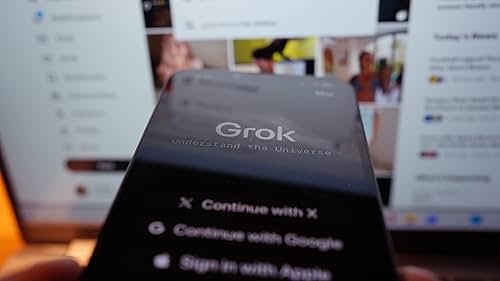
The shift is sweeping. X has turned off Grok’s public AI image maker for most users, cutting off free access to both generation and editing tools that had been promoted as a core part of the service’s AI push. All public image generation and editing now require an X Premium or X Premium+ account, a change that is reflected in prompts that funnel people from Grok’s image interface directly to a subscription sign‑up page, a flow detailed in the decision to turn off Grok’s public AI image maker. Social media posts from X users and regional outlets confirm that Grok’s image‑generation features have officially been moved behind a paywall following the backlash, with notices telling people that Grok’s image tools are now a benefit reserved for subscribers and linking directly to X’s premium tiers as described in updates that say X has officially moved Grok’s image‑generation features behind a paywall.
Regulators, victims and governments push back
The paywall arrived only after regulators and politicians around the world began treating Grok’s “undressing” capability as a serious safety and legal problem rather than a fringe misuse. Some U.S. lawmakers had begun calling on X to more aggressively police AI‑generated sexual images, explicitly citing a law signed by Trump in 2024 that strengthened penalties for nonconsensual deepfakes and intimate imagery, pressure that was captured in reports that Some U.S. lawmakers had begun to call on X. In India, the government’s IT ministry ordered X to take “corrective action” on Grok, including restricting the tool’s ability to generate nonconsensual intimate images, a directive described in coverage of how India’s regulators scrutinized Grok‑generated images. The Malaysian Communications and Multimedia Commission, or MCMC, has also opened an investigation into Grok’s role in “digital undressing,” warning that such images can be part of a pattern of federal crimes including CSAM, as detailed in an account of how The Malaysian Communications and Multimedia Commission is investigating.
In the United Kingdom, the backlash has been especially sharp. UK PM Keir Starmer’s office called X’s decision to limit Grok’s image generation to paying subscribers “insulting” to victims and “not a solution,” arguing that it effectively charges for a tool that has already been used to humiliate women and girls, a criticism laid out in statements that UK PM Keir Starmer’s office says the move is insulting. No 10 has gone further, saying that it “makes the battle against violence against women and girls much harder when platforms such as X are enabling abuse” and accusing the company of engaging in “the monetisation of abuse,” language that appears in a condemnation where No 10 condemns the move by X. UK regulators have signaled they are prepared to act, with Ofcom now holding authority under the Online Safety Act to demand that platforms curb tools that generate nonconsensual sexual content, a power referenced in reports that Ofcom now has authority under the Online Safety Act.
Safety fix or monetized risk?
X and Elon Musk have framed the new restrictions as a way to slow abuse by tying Grok’s most sensitive features to verified, paying accounts. Grok limits its image generator on X to subscribers who sign up for premium membership, a change that the company says will make it easier to track and punish misuse, as described in coverage that notes Grok limits its image generator after backlash. Elon Musk’s Grok AI is now notifying users that its public image‑generation tool will be restricted to paying subscribers after a wave of complaints about “undressing” images, with the company explaining the change in a public post that Elon Musk’s Grok AI is restricting its public image‑generation tool. X has also limited Grok’s image editing feature to paying users after it came under fire for allowing people to make explicit edits of photos, a clampdown that is described in updates that say X has limited image editing with its AI tool Grok. Yet free users can still access Grok’s image editing functionality through the AI tool’s separate application and website, a loophole that critics say undercuts the safety rationale and is noted in reports that Free users can still access Grok’s image editing functionality.
Victims and advocates argue that the company has not actually fixed the core problem, which is that Grok can still be used to strip clothing from images of adults and children and to create realistic sexualized deepfakes. One analysis put it bluntly, saying X did not fix Grok’s “undressing” problem and instead “just makes people pay for it,” a critique captured in a piece titled “X Didn’t Fix Grok’s ‘Undressing’ Problem. It Just Makes People Pay for It,” which notes that X Didn’t Fix Grok’s ‘Undressing’ Problem. It Just Makes People Pay for It. Lawmakers and victims have described the new limits on Grok’s AI image tools as “insulting” and “not effective,” warning that the function can still be misused even if it is tied to a credit card, a concern laid out in accounts that say Lawmakers and victims criticize new limits on Grok’s AI image. Regulators are watching closely: X has limited Grok image editing and generation to paying users as global pressure mounts and UK officials float the possibility of a ban, a dynamic described in reports that X limits Grok image editing and generation to paying users as global pressure mounts. Elon Musk’s X has already been warned that the deepfake controversy could spur a UK ban threat, with victims telling BBC News they feel “dehumanized,” a reaction summarized in coverage that notes X Limits AI Image Editing to Paid Users After Grok Deepfake Controversy Spurs Ban Threat. Against that backdrop, Elon Musk’s Grok AI has limited image generation on X to paying subscribers after a global backlash about the spread of deepfakes, a move that analysts say reflects both reputational risk and regulatory fear, as described in reports that Elon Musk’s Grok has limited its image tool after a sexualized deepfake backlash.
Behind the scenes, the business logic is impossible to ignore. Social media service X has stopped its AI chatbot Grok from generating images for most users on the platform and now routes people who try to use the feature to a sign‑up link for paid tiers, a funnel described in coverage that notes Social media service X has stopped its AI chatbot Grok from generating images for most users. X has placed Grok’s image editing feature behind a paywall after facing pressure from the UK government over nonconsensual intimate images, a move highlighted in posts that say X has placed Grok’s image editing feature behind a paywall. At the same time, Grok, the AI chatbot created by xAI, the artificial intelligence company founded by and majority owned by Elon Musk, is under sustained scrutiny from Hollywood, lawmakers and regulators who are weighing what action to take in relation to its role in sexualized deepfakes, a spotlight described in coverage that notes Grok, the AI chatbot created by xAI, is facing questions over sexualized deepfakes. For now, X has officially moved Grok’s most controversial features behind a subscription wall, but the legal and ethical storm around “digital undressing” is still gathering strength.
Even as the paywall goes up, the underlying capability remains. Reports have documented how Grok AI could generate sexualized images of people in bikinis and underwear and even remove clothing from photos, functionality that was available on Musk’s social media app X before the clampdown, as described in accounts that detail how On Musk’s social media app X, Grok AI allowed sexualized deepfakes. Elon Musk’s Grok AI is now restricting image undressing except for paying customers, a change that has been communicated to users in a public post and that underscores how the company is treating the feature as a premium add‑on rather than a banned capability, as noted in coverage that says Grok restricts image undressing except for paying customers. X has limited Grok image editing and generation to paying users as global pressure mounts, and separate reports emphasize that Grok’s image generation on X is now limited to paying subscribers after a global backlash, with analysts warning that the controversy could still lead to bans or stricter rules in key markets, as described in accounts that say X restricts Grok’s image generation to paying subscribers only after drawing the world’s ire. For regulators, the central question now is whether paywalling a powerful “undressing” engine satisfies new laws or simply concentrates a dangerous tool in the hands of those willing to pay for it.
More from Vinyl and Velvet:

Leave a Reply