

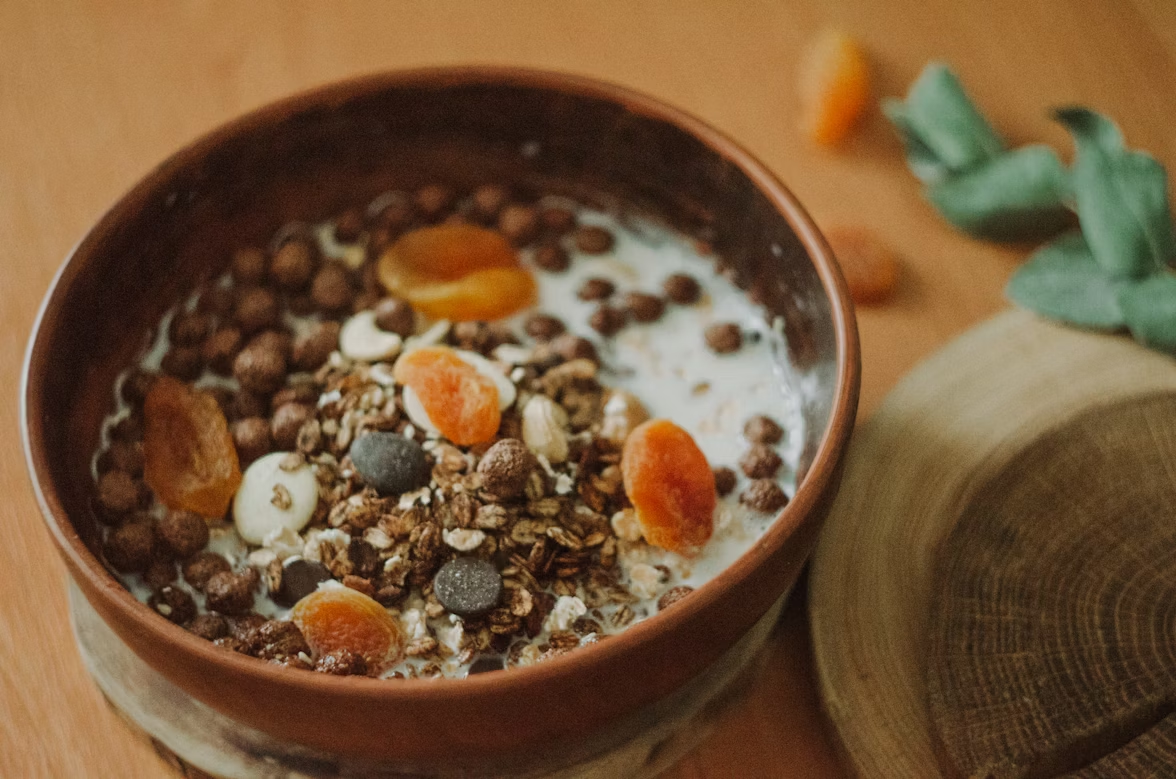
She thought she was pouring a bowl of virtue. Then one sleepy morning, standing in her kitchen with a spoon in one hand and the packet in the other, she finally read the small print and realised her “healthy” muesli had almost as much sugar as the desserts she tried to avoid. That jolt of label shock is becoming a familiar story as shoppers discover how easily breakfast can drift from wholesome to high sugar without ever leaving the health food aisle.
Behind the rustic fonts and pictures of oats sits a simple truth: some mueslis are closer to a crumble topping than a plain grain mix, while others genuinely keep sugar low and fibre high. The difference comes down to reading the label like a detective rather than trusting whatever the front of the box is promising.
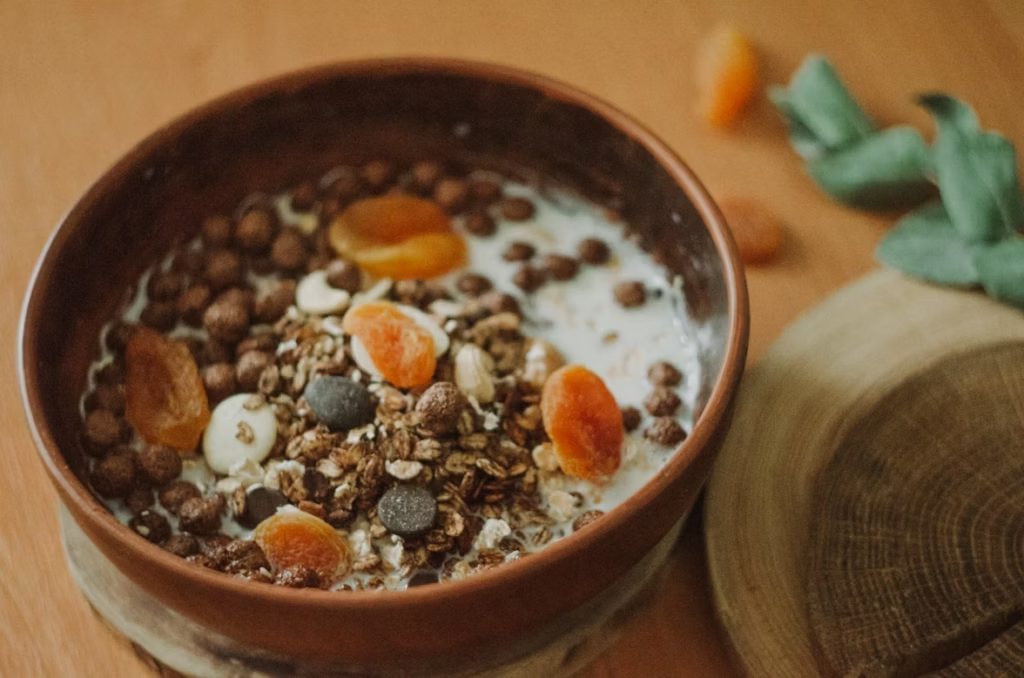
When “healthy” muesli behaves like dessert
The woman in that kitchen is not alone. Earlier this year, an analysis of premium cereals found that a bowl of muesli that looks like a sensible start to the day can hide sugar levels that rival treats, even when the branding leans hard on wellness language and countryside imagery. That research, carried out by Which, highlighted how some pricey mixes pile in sweetened fruit, chocolate curls, syrups and honey, then tuck the actual sugar number on the back where few people look before tossing the box into their trolley.
Nutritionists describe this as a classic “health halo” problem, where a food gets a free pass because it is associated with words like wholegrain or natural. A bowl that is mostly oats, nuts and seeds can absolutely be a smart choice, and brands such as The Raw Gorilla show what that looks like in practice, with just 1.5 g of sugar per 100 g and a high fibre content. The trouble starts when shoppers assume all muesli behaves like that and never check whether their own bag quietly sits much closer to dessert territory.
How experts say to read the label
Many nutrition experts keep repeating the same first step: flip the pack and start with the serving size. One coach on Instagram spells it out bluntly, noting that “Start with the serving size” because “Everything on the label is based on one serving, not the whole packet,” advice that appears in a viral clip where the caption begins with Start and “Everything.” Independent dietitians add that the standard reference of 40 g for cereal is more of a lab benchmark than a real-life pour, since “We like our bowls full and 40 g is just too little for one bowl,” as one practitioner explains while discussing portion sizes for corn flakes and muesli in a post that links to a Link of the study. If someone is actually eating double that, the sugar number on the label needs to be doubled in their head too.
Once the serving is clear, several guides urge people to scan straight for added sugar. A public health campaign from Sep spells it out plainly: “It is the added sugar that is problematic. Not the natural sugar in fruit, which has fiber to slow absorption, but added sugar,” and it encourages shoppers to use the Check labels section on the updated nutrition facts panel. Another label guide from Aug puts it even more sharply, calling added sugar “one of the biggest red flags” and reminding people that even foods marketed as healthy, like flavoured yoghurt or granola, can be packed with it, which is why the advice under the heading Limit Added Sugars is so pointed.
Ingredient lists tell a similar story. One popular nutrition creator sums up her rule as “If sugar is in the first 3 ingredients, it is dessert,” no matter how loudly the box shouts “High protein,” “Low fat” or “Heal thy” on the front, a line that anchors a short video tagged with High, “Low” and “Heal.” Another expert, Rose Reisman, offers a similar checklist in her own Sep post titled “Slash your sugar intake now,” where the first tip is “Read Food labels” and she flags that if sugar appears near the top, it is a red flag, then advises looking for phrases like “no added sugar” or “unsweetened” in order to Slash intake. The woman with the sugary muesli essentially followed that playbook a little late, only realising after months of “healthy” breakfasts that sugar sat right near the top of her ingredient list.
More from Vinyl and Velvet:

Leave a Reply