

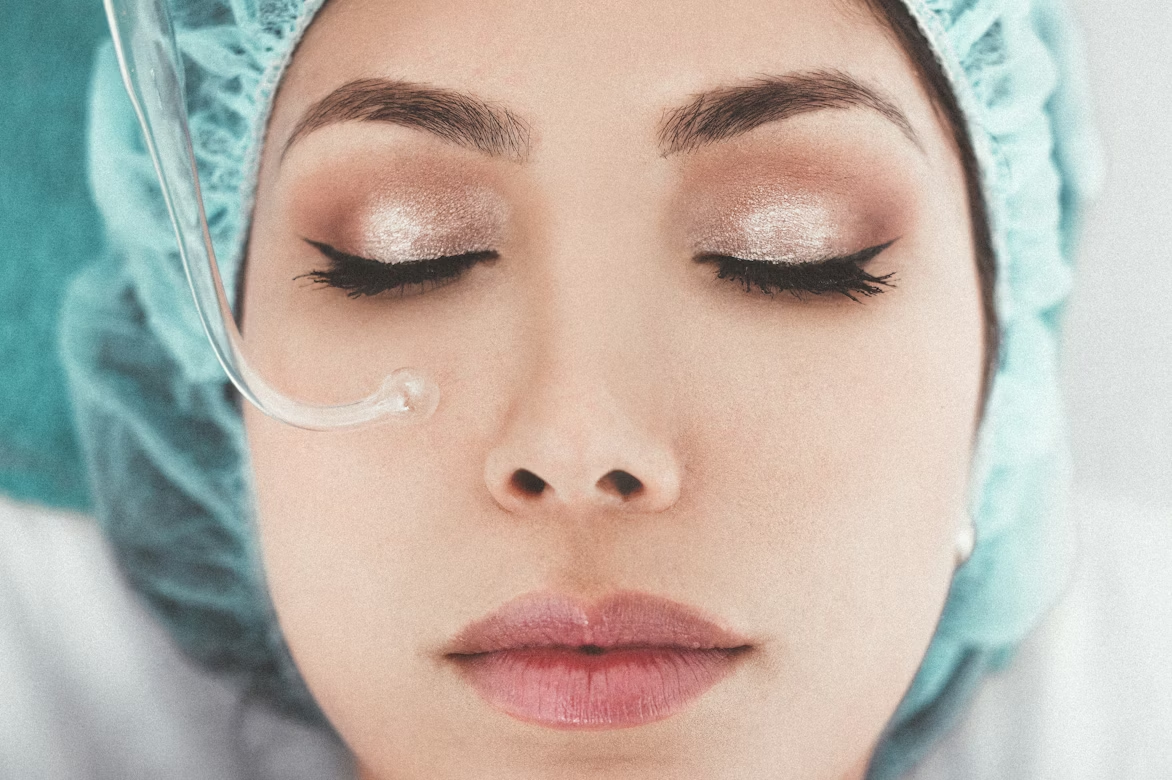
By the time the bandages came off, the woman at the center of this story says she barely recognized the person in the mirror. The nose, the jawline, even the way her face moved when she tried to smile felt foreign, as if someone had swapped out her reflection for a stranger’s. After months of physical pain and emotional fallout, she is speaking up about what she wishes she had known before chasing an ideal that existed mostly on her phone screen.
Her warning is not about vanity. It is about how quickly a choice that starts with a consultation and a deposit can spiral into nerve damage, medical tourism nightmares, social judgment and a long fight to feel at home in her own skin again.
From makeover fantasy to medical and emotional shock
Her journey started the way many do, with a promise of a “quick” transformation and a price that looked better across a border. She had seen stories of a South Florida woman who traveled for cosmetic work in Colombia and ended up hospitalized with complications, and she heard about a Colorado patient whose experience pushed investigator Karen Morett to examine the risks of out of state surgery. Those cases sounded extreme yet still distant, even as she watched a Colorado woman describe how medical tourism turned a discount procedure into a health crisis. She convinced herself that careful research and a few glowing reviews would keep her safe.
Instead, she woke up from her own operation in a clinic far from home with swelling that felt out of control and pain that did not match the breezy sales pitch. Later, she would hear about a South Florida woman who spoke publicly about the dangers of flying abroad for cosmetic procedures after complications from an operation in Colombia and realize how similar their stories sounded once things went wrong. The fantasy of a “mommy makeover” or facelift in paradise, like the trip that left one patient permanently disfigured after surgery in Mexico, can flip quickly into a scramble for emergency care, as another woman explained when she described her own medical tourism ordeal.
Living with a face that does not feel like hers
Back home, the physical recovery dragged on. Numbness settled into her cheeks and jaw, and strange sensations flickered across her skin. She recognized pieces of her experience in a 53-year-old patient, Vera Chagas, who said a botched facelift left her with persistent itching in her face, changes in the appearance of her neck and ears and numbness in her lower teeth, problems that deeply changed how she thought about cosmetic work and her own reflection. In another account, a woman described how pain after removing breast implants in 2020 did not just hurt her body, it stole her sense of self, a reminder that surgical trauma can unravel identity long after the scars close.
For this woman, the emotional shock hit hardest when she tried to go back to ordinary life. She felt the same disconnect voiced by a patient who remembered looking down after a mastectomy and feeling afraid of her own body, then slowly rebuilding trust through reconstruction and restored sensation. That kind of journey shows how surgery can either support healing or deepen alienation, depending on how informed and supported the patient is. In her case, every glance at a selfie highlighted a jawline that no longer moved the way she expected and eyes that seemed to belong to someone else, a kind of face blindness that echoes the fear people describe when they watch videos on how repeated procedures can make familiar features look unsettlingly unfamiliar, as in clips that warn about surgery blindness and distorted faces.
The pressure to “fix” a normal face and the quiet stigma that follows
She did not make the decision in a vacuum. She felt the same cultural push that tells women their faces are projects, not bodies. Research on cosmetic procedures has found that recipients are often judged more harshly than people who stay natural, even when the actual differences in appearance are subtle. One study led by Saxena reported qualitative evidence suggesting plastic surgery patients are perceived negatively by others, including comments that imply if someone has “fake” features, they have to keep getting them, a pattern that feeds both stigma and repeat procedures. That work, which appears in a paper on unfavorable perceptions of women who seek plastic surgery, helps explain why she now feels judged for the same decision she once felt pressured to make.
Online, she found story after story of people who felt trapped in that loop. One collection of accounts included a 27 recently engaged woman who said the sadness she carried after a disastrous procedure left her unsure how to move forward, a raw admission that sat uncomfortably close to her own fears. Social feeds also pushed quick fixes like fat melting injections that promised contouring without surgery, even as official health agencies received reports of serious complications from unapproved fat dissolving injections purchased online, especially when people used them on sensitive areas like the face and neck, according to warnings about fat melting injections. The same culture that nudged her toward the operating room now seemed ready to label her vain or reckless for listening.
More from Vinyl and Velvet:

Leave a Reply