

In a courtroom already packed with Hollywood names and uncomfortable details, it was a TV romance series that suddenly stole the spotlight. The phrase “Heated Rivalry” surfaced not as a punchline, but as a key part of Justin Baldoni’s legal strategy in Blake Lively’s harassment lawsuit over their work on It Ends With Us. The reference turned a niche show into Exhibit A in a fight over what counts as acceptable improvisation and what crosses the line on a film set.
At the center of it all is a single improvised moment, an on‑camera “nuzzle” that Blake Lively says she never agreed to and Justin Baldoni insists was standard acting practice. By dragging Heated Rivalry into the argument, Baldoni’s team is trying to convince a judge that the disputed intimacy was no different from what audiences see in other romantic dramas every week, and that it should not be treated as workplace harassment.
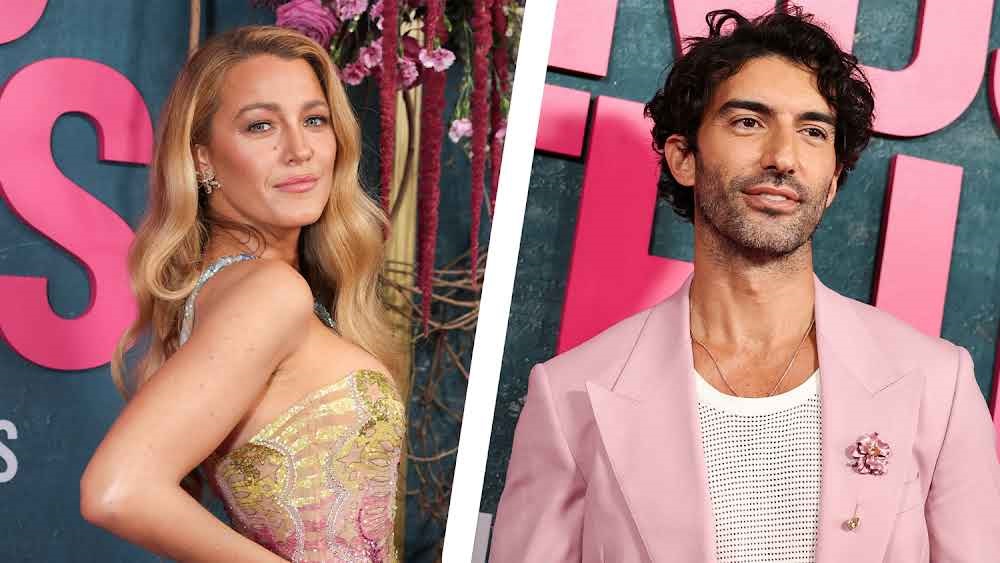
The lawsuit that put a rom‑com set under a microscope
The legal clash between Blake Lively and Justin Baldoni started with what was supposed to be a prestige book‑to‑screen adaptation and has morphed into a test case for boundaries in on‑set intimacy. Lively has accused Baldoni, who both directed and starred in It Ends With Us, of harassment tied to an improvised physical moment during filming that she says went beyond what she consented to perform. Her complaint focuses on a scene where Baldoni allegedly “nuzzled” her face and neck without prior agreement, turning a scripted beat into something she describes as invasive and professionally humiliating.
That disputed moment is now being dissected frame by frame in court filings, with Baldoni’s side arguing that the interaction was part of the natural give‑and‑take of acting rather than targeted misconduct. His lawyers have framed the case as a misunderstanding about creative choices on a romantic set, not a pattern of abuse, and they are pushing to have Lively’s lawsuit dismissed before it reaches a jury. It is in that context that the series Heated Rivalry suddenly became part of the argument.
What exactly is “Heated Rivalry” and why does it matter here
Heated Rivalry is not a legal doctrine or a workplace policy, it is an entertainment property, a romantic series built around slow‑burn tension and emotionally charged intimacy. The show leans heavily on improvised‑feeling touches, lingering looks and physical closeness that often appear spontaneous, even when they are carefully choreographed. That aesthetic is precisely why Justin Baldoni’s team seized on it, presenting the series as a cultural reference point for the kind of on‑screen chemistry audiences expect from modern romance projects.
In court, Baldoni’s lawyer pointed to Heated Rivalry as an example of how actors routinely navigate unscripted or lightly scripted physical beats in order to sell a love story. By invoking a recognizable romance series, the defense is trying to normalize Baldoni’s behavior, suggesting that what happened on the It Ends With Us set sits squarely within the genre’s norms. The argument leans on the idea that viewers of shows like Heated Rivalry already accept a level of improvisational intimacy, and that the law should not treat such moments as inherently suspect.
Inside Blake Lively’s allegations about the improvised scene
Blake Lively’s account of the disputed scene is blunt: she says Justin Baldoni went off script and physically “nuzzled” her without prior discussion, turning a controlled performance into something that felt personal and unwanted. According to details shared in court, the moment involved Baldoni moving closer than the written scene required and pressing his face against hers in a way she had not rehearsed or approved. Lively’s lawyers have framed that choice as a breach of professional trust, arguing that she was entitled to rely on the script and agreed blocking, especially in a romantic context.
Her legal team, including attorney Esra Hudson, has pushed the point that improvising intimate contact is not a harmless flourish when one actor has not consented to it in advance. They argue that Baldoni’s decision to add the “nuzzle” was not just a creative call, but a unilateral act that left Lively feeling cornered on set and then pressured to accept the footage as part of the film. That framing is central to why she views the incident as harassment rather than a simple disagreement over performance style, and it is the narrative Baldoni’s side is working hard to dismantle.
How Justin Baldoni’s lawyer tried to flip the script
Justin Baldoni’s attorney, Jonathan Bach, has responded by trying to reframe the same moment as textbook acting, not misconduct. In his telling, Baldoni’s “nuzzle” was a minor adjustment in the heat of a take, the kind of instinctive move that actors make to keep a romantic scene from feeling stiff or mechanical. Bach has argued that his client did not harass his co‑star, but instead did what performers on countless sets do when they are trying to capture believable chemistry for the camera.
To drive that point home, Bach has leaned on comparisons to other romance projects and on the broader culture of improvisation in screen acting. He has suggested that if courts start treating every unscripted touch as potential harassment, it will chill creative risk‑taking across the industry. In filings and arguments, he has insisted that Baldoni’s behavior on the It Ends With Us set was consistent with what viewers see in shows like Heated Rivalry, and that Lively’s lawsuit is stretching workplace law into territory it was never meant to police.
Why “Heated Rivalry” became the defense’s favorite example
The decision to name Heated Rivalry in open court was not random, it was a calculated move to anchor an abstract legal argument in something concrete and familiar. By pointing to a specific series, Baldoni’s team could say, in effect, “Look at what happens here all the time,” and invite the judge to compare that on‑screen behavior with the disputed It Ends With Us scene. The defense highlighted how Heated Rivalry leans on improvised‑seeming kisses, touches and close‑ups to build tension, and suggested that Baldoni’s “nuzzle” fit neatly into that same stylistic lane.
One filing described how Justin Baldoni’s lawyer uses Heated Rivalry to defend the improvised Blake Lively scene, arguing that the contested moment was part of a broader tradition of romantic storytelling rather than a personal advance. The reference was meant to show that audiences, and by extension actors, are accustomed to this level of spontaneity in intimate scenes. In that telling, the It Ends With Us set was simply operating inside the same creative space as a show like Heated Rivalry, not breaking new or dangerous ground.
Blake Lively’s camp pushes back on the comparison
Blake Lively’s lawyers have not been shy about challenging the Heated Rivalry analogy, and Esra Hudson in particular has pushed back hard. From their perspective, what happens on some other show is irrelevant if the actors on this set did not share the same understanding or consent. Hudson has argued that pointing to a series like Heated Rivalry is a distraction from the core issue, which is whether Lively agreed to the specific physical contact Baldoni chose to add.
Her side has also stressed that even if other productions tolerate or encourage improvisation, that does not create a blanket permission slip for every actor on every set. They have framed the Heated Rivalry reference as an attempt to blur the line between performance and workplace conduct, warning that normalizing unscripted intimacy without explicit consent risks exposing performers, especially women, to pressure and retaliation. In their view, the comparison only underscores how often the industry leans on “that is just how it is done” to excuse behavior that would be unacceptable in any other workplace.
The broader legal strategy: from “Heated Rivalry” to dismissal
Underneath the pop‑culture name‑dropping sits a very specific legal goal: Justin Baldoni’s team wants Blake Lively’s case thrown out before it ever reaches a jury. Their motion to dismiss argues that even if the facts are taken in the light most favorable to Lively, the conduct she describes does not meet the legal threshold for harassment. To make that case, they have tried to situate the “nuzzle” inside the ordinary rough‑and‑tumble of creative work on a romantic film, using references like Heated Rivalry to argue that the law should not second‑guess every creative choice.
In response, lawyers on Lively’s side have emphasized that their burden is to show that the conduct entered the workplace and was used to discriminate against women, not to prove that no other show has ever featured similar intimacy. One exchange highlighted how the judge pressed Baldoni’s team on whether citing a series like Heated Rivalry actually answered the legal question at hand. That back‑and‑forth underscored how the show has become shorthand for a bigger fight over where creative license ends and workplace protection begins.
What the “nuzzling” report revealed about the on‑set dynamic
Beyond the legal briefs, reporting on the It Ends With Us set has filled in some of the texture around the disputed scene. Details obtained from people familiar with the production describe Justin Baldoni “nuzzling” Blake Lively during a take, a move that was not spelled out in the script. Those accounts say the contact involved Baldoni pressing his face into Lively’s hair and neck area, a gesture that might read as tender on screen but that she experienced as crossing a personal boundary in the moment.
Jonathan Bach has used those same descriptions to argue that the physicality was modest and squarely within the range of what actors in romantic roles routinely do. He has insisted that Baldoni did not intend to make Lively uncomfortable and that any discomfort should be viewed as a miscommunication rather than harassment. The clash over how to interpret that “nuzzle” is why outside examples, including the kind of intimacy seen in Heated Rivalry, have become so central to the defense’s narrative.
How both sides are using “Heated Rivalry” to talk about consent
Underneath the dueling references to Heated Rivalry is a deeper argument about what consent looks like in a creative workplace. Baldoni’s camp is effectively saying that by signing on to a romantic drama, Blake Lively accepted a certain level of improvisational contact, especially in scenes designed to show passion or vulnerability. In that view, the norms of shows like Heated Rivalry help define what is reasonably expected on a similar set.
Lively’s side is pushing a much narrower, more explicit model of consent, one where each new form of physical contact, especially anything intimate, needs to be discussed and agreed to ahead of time. They argue that pointing to another show’s style does nothing to answer whether she personally said yes to being “nuzzled” in that particular way. For them, the Heated Rivalry comparison is useful only as a reminder of how often the industry leans on vague genre expectations instead of clear, individualized agreements, and why that habit is now being challenged in court.
What this fight signals for future romance sets
Whatever happens to Blake Lively’s lawsuit, the fact that a series like Heated Rivalry is being dissected in a harassment case sends a message to the rest of Hollywood. Intimate scenes are no longer just about what looks good on camera, they are about what can be defended in a courtroom if something goes wrong. Directors, actors and studios watching this case are likely taking notes on how specific the consent conversations need to be, and how little protection there is in pointing to “industry norms” if a performer later says a line was crossed.
The showdown has also highlighted how quickly a piece of pop culture can be repurposed as legal ammunition. A show that was built to deliver swoony escapism is now being cited in motions and arguments about workplace discrimination, with both sides trying to spin what it represents. As lawyers trade references to Heated Rivalry, the case is quietly rewriting the playbook for how intimacy is negotiated, documented and defended on every future romance set.
More from Vinyl and Velvet:

Leave a Reply