

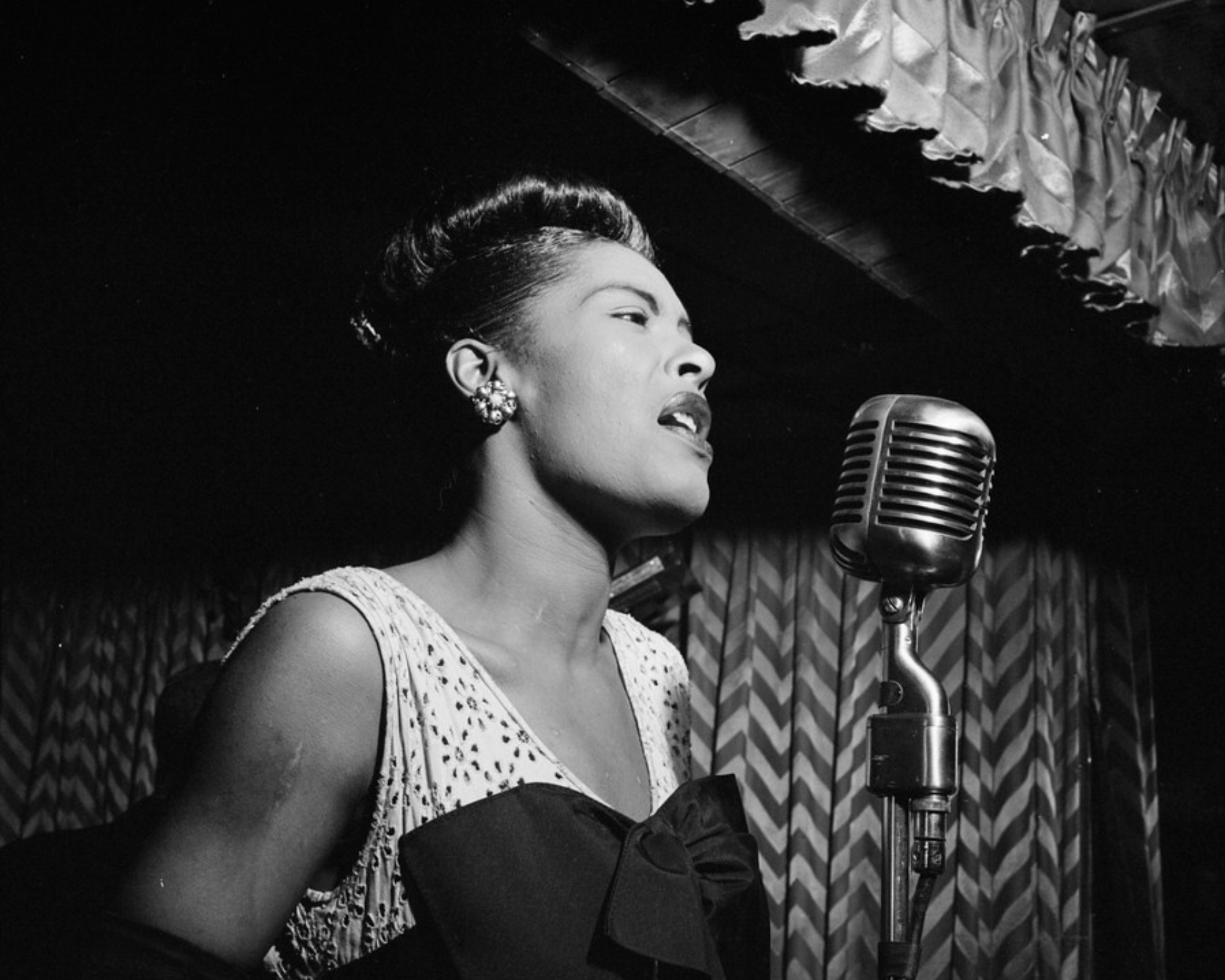
You stand at the edge of a story where music, history, and power collide. Billie Holiday kept singing “Strange Fruit” despite warnings and harassment, and federal agents used drug enforcement tactics to try to stop her; her defiance and the government’s campaign shaped both her life and the song’s place in American memory.
Her choice to perform that haunting anthem reached beyond entertainment into politics and risked legal and personal ruin—an act that compelled federal authorities to pursue her with extraordinary intensity.
Discover how a single song became a flashpoint between artistic resistance and state power, why officials targeted Holiday, and how her recording changed cultural conversations for generations.
The Power and Origins of Strange Fruit
The song began as a poem that named lynching in blunt, visual language and became a performance that forced audiences to confront racial terror. Its author, the words, and the place of first performance shaped how the song moved from page to stage and into national debate.
Abel Meeropol’s Poem and Inspiration
Abel Meeropol wrote the piece under the pen name Lewis Allan after seeing a photograph of a 1930 lynching in Indiana. He published the poem as “Bitter Fruit” in 1937 and later set it to music, keeping the stark imagery intact.
Meeropol taught at DeWitt Clinton High School in the Bronx and was politically active; his response to the photograph combined artistic impulse with moral outrage. The poem’s concise, direct lines—later adapted into the song’s opening, “Southern trees bear a strange fruit”—reflect deliberate choices to shock and name the violence.
He and his wife performed the song in left-leaning circles before Holiday adopted it. Meeropol’s Jewish immigrant background and activism shaped the poem’s insistence on witnessing; the work moved from classroom and radical journals into the public sphere because its images were unmistakable and uncompromising.
The Meaning Behind the Lyrics
The song’s principal image—“Black bodies swinging in the Southern breeze”—confronts lynching without euphemism, equating pastoral Southern imagery with brutality. That juxtaposition makes the lyric a moral indictment rather than an abstract lament.
Lines like “blood on the leaves and blood at the root” link the violence to deep social and historical causes, not isolated acts. The song refuses to separate beauty (magnolias, pastoral scene) from atrocity, forcing listeners to hold both at once.
Musically, the sparse melody and slow tempo leave space for the words to land, so each phrase functions as a declarative statement. Holiday’s phrasing and vocal tics turned the poem into an embodied witness; the lyrics demand recognition of systemic racial terror—particularly lynchings—in ways mainstream entertainment avoided.
Café Society and the First Performance
Café Society, an integrated nightclub in Greenwich Village, gave the song a setting where Black and white audiences mixed and where political material could find sympathetic ears. Billie Holiday first heard the song there and, after initial hesitation, began closing her sets with it.
The club’s policy of integration and its progressive clientele made it a rare space for direct protest in nightlife. Holiday chose to perform “Strange Fruit” once per show, in a dimmed room with a single spotlight—an arrangement that intensified attention and silenced distractions.
That first public context shaped how audiences received the song: some walked out immediately, others were stunned into silence. Café Society transformed Meeropol’s poem into a communal, live act of bearing witness that propelled the piece from radical pamphlet into mainstream controversy.
Billie Holiday’s Defiance and the Government Crackdown
Billie Holiday kept singing a song about lynching that forced white audiences to confront racial terror. Her persistence drew focused attention from federal drug authorities, who used surveillance, arrests, and regulatory tools to limit her career.
Harry Anslinger and the Federal Bureau of Narcotics
Harry Anslinger led the Federal Bureau of Narcotics and made policing drugs part of his broader moral crusade. He viewed jazz and Black performers as social problems and treated Holiday’s performances of “Strange Fruit” as a political threat rather than merely an artistic choice.
Anslinger instructed agents to monitor her closely. He believed criminal enforcement could control musicians who challenged racial norms. His memos and directives reflect a priority on using narcotics laws to neutralize dissenting Black artists.
Agents under Anslinger coordinated raids and cultivated informants to gather evidence of drug use. This campaign against Holiday later became a template for how the federal government combined law enforcement with surveillance to target activists and cultural figures.
The Threat of Protest Songs and Civil Rights
“Strange Fruit” translated photographs and newspaper accounts of lynchings into a vivid stage performance that unsettled mostly white audiences. Holiday’s rendition reframed lynching from private terror into a visible public indictment of racism in America.
Officials feared the song’s impact on public opinion and on efforts toward federal civil-rights reform. The piece amplified calls for anti‑lynching legislation and exposed the failure of local authorities to protect Black citizens. That visibility made Holiday a symbolic figure the federal apparatus wanted to control.
Cultural influence mattered to policymakers. A protest song that reached concert halls and radio waves could shift sentiment faster than legislative debate, so silencing that song became a strategic aim for those invested in preserving the racial status quo.
Surveillance, Arrest, and Loss of Her Cabaret Card
Federal agents, including Jimmy Fletcher, infiltrated Holiday’s social circle and monitored her movements. Reports and undercover operations led to multiple arrests on narcotics charges, culminating in the federal case commonly referred to as The United States vs. Billie Holiday.
After a 1947 conviction, Holiday served time and faced restrictions on performing. Authorities revoked her cabaret card—a municipal license required to sing in New York clubs—effectively barring her from the nightclub circuit. The cabaret card system gave regulators power to cut off a performer’s livelihood without broader public scrutiny.
Later raids and alleged planted evidence further damaged her reputation and access to venues. These legal and administrative tools combined to shrink Holiday’s performance opportunities even when she sought treatment or tried to comply with authorities.
Billie Holiday’s Personal Struggles
Holiday’s life included childhood sexual abuse, unstable relationships, and long-term substance use that she often said helped numb trauma. These personal wounds intersected with the government’s campaign, which exploited her addiction to justify punitive measures.
She sought treatment at times and attempted to perform sober, but arrests and interrupted medical care worsened her health. In one instance, agents arrested her in a hospital and restricted her access to methadone, a step that her supporters argue accelerated her decline.
Despite personal hardship, Holiday kept returning to “Strange Fruit” and to public performance when she could. Her resilience made her an emblem of resistance, even as the combined pressures of racism, legal persecution, and health problems narrowed her options.
Recording, Legacy, and Lasting Impact
Holiday recorded a single, stark track that changed her career and public perception. The record’s path from club finale to national controversy shaped how audiences and officials responded to protest music in the United States.
The Role of Commodore Records
Commodore Records agreed to record the song after Columbia declined, taking a commercial risk many labels avoided. They captured Holiday’s 1939 studio version with sparse accompaniment, keeping the focus on her phrasing and the song’s harrowing imagery.
That minimal arrangement — piano, sparse rhythm, and Holiday’s voice — made the lyrics unavoidable and intensified public reaction. Commodore pressed and distributed the single, which sold strongly despite radio bans in much of the South.
By releasing the record, Commodore amplified a protest song rooted in a poem about lynchings, and it helped make Holiday the public face of racial protest music even as government officials targeted her performances.
Strange Fruit as Song of the Century
“Strange Fruit” received lasting institutional recognition decades after its release, reflecting changing views of cultural and historical importance. Time magazine later named it a “Song of the Century,” and the recording entered the National Recording Registry, signaling official acknowledgement of its artistic and civic significance.
Those honors reinforced the song’s status as a landmark protest piece confronting racism in America. They also highlighted how a performance that many establishments sought to suppress became a defining artistic indictment of lynchings and white supremacist violence in the early 20th century.
Cultural Influence and Modern Recognition
The song’s imagery and Holiday’s delivery influenced generations of artists and activists who treat music as a vehicle for social critique. Covers and reinterpretations by artists across genres kept the song alive in public memory and academic study.
Institutions and scholars examine the recording as a turning point that helped remap Black consciousness and performance politics. Modern retrospectives tie the record to ongoing discussions about racism, cultural memory, and how protest songs can provoke both solidarity and state repression.
Interest in the song resurged in film and scholarship, driving renewed attention to Holiday’s life and prompting readers and listeners to subscribe to deeper archival work and critical editions that contextualize the recording.
More from Vinyl and Velvet:

Leave a Reply